Category: Uncategorized

  • Small Garden Ideas for Beginners: A Simple Plan for Beautiful Tiny Spaces

    Small Garden Ideas for Beginners: A Simple Plan for Beautiful Tiny Spaces

    Affiliate disclosure: We earn commissions when you shop through the links below.

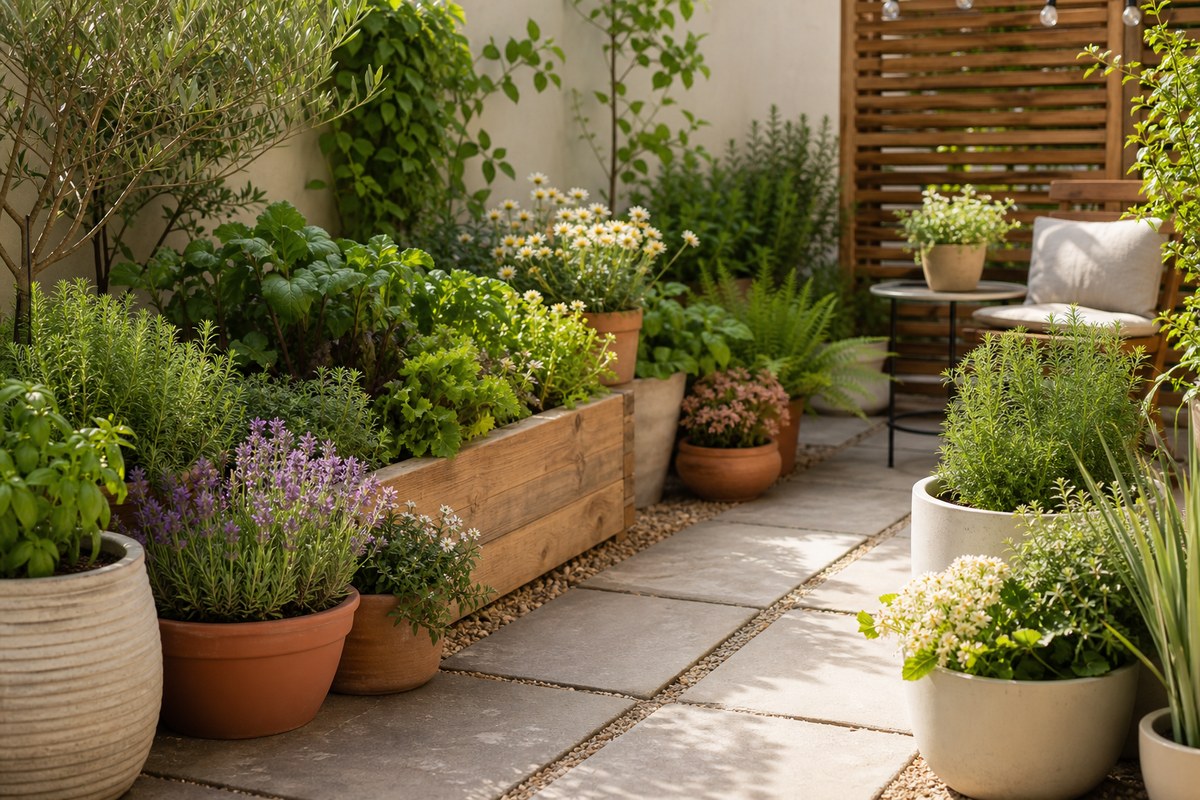
    A small garden does not have to feel like a compromise. In many homes, the smallest outdoor area is the easiest place to make beautiful because every choice is visible and every item has to earn its space.

    The mistake most beginners make is starting with random plants or decor before deciding what the garden is supposed to do. A tiny patio, balcony corner, side yard, or raised bed can become peaceful and productive, but it needs a simple plan first.

    Use this guide to choose a beginner-friendly small garden idea, match it to your space, and decide what to buy only after the layout makes sense.

    Start With One Clear Garden Job
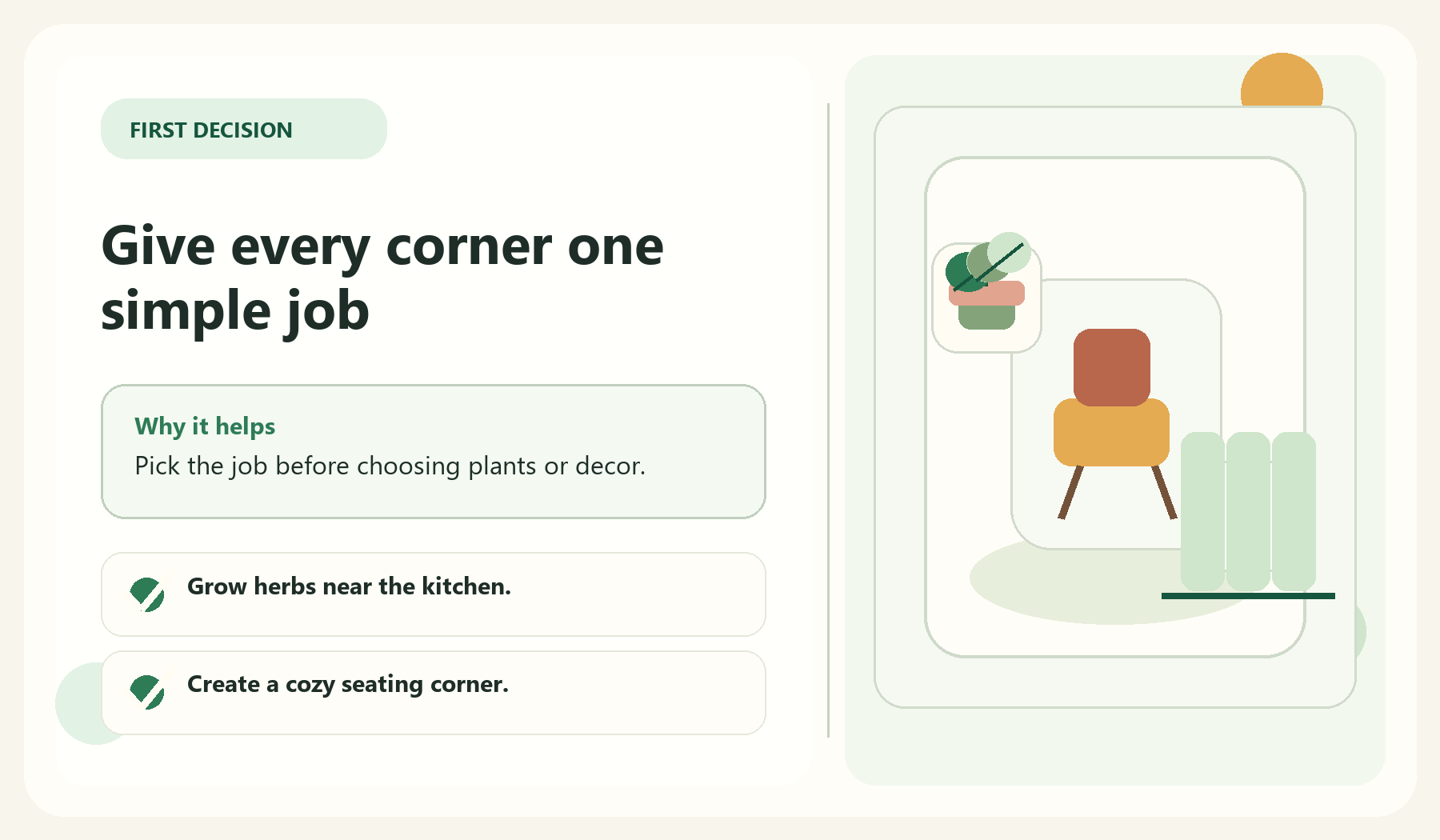
    Give every corner one simple job visual guide for Start With One Clear Garden Job

    Before choosing plants, decide what you want the small garden to do. A garden that is meant for herbs needs different containers than a garden that is meant to make a patio feel cozy. A garden that is meant to produce vegetables needs more attention to sunlight and watering than a purely decorative corner.

    Choose one job for the first version of the space. Once that works, you can add more layers later. This keeps the project calm and affordable.

    • Grow herbs near the kitchen.
    • Create a cozy seating corner.
    • Add flowers around a patio edge.
    • Build one beginner raised bed.
    • Create a container vegetable setup.

    Small Garden Goal Picker

    Pick one garden job before you buy plants

    Open the option that sounds closest to your space. The mini layouts show what to buy first, what to skip, and where the first money should go.

    Tiny-space decision path
    1Choose one use
    2Build the smallest version
    3Add beauty after it works
    Useful herb corner A sunny edge near the kitchen
    • Start with 3 herbs you already cook with.
    • Buy potting mix before decor.
    • Keep the planter close enough to harvest often.
    Calm seating corner A patio or balcony that should feel finished
    • Anchor the space with one seat first.
    • Use 2 repeated planters instead of many small ones.
    • Add lighting after the walking path is clear.
    Flower focal point The fastest visible upgrade
    • Choose one color family before shopping.
    • Place taller plants behind lower flowers.
    • Leave blank space so the display looks intentional.

    Quick rule: If one option feels useful immediately, build that first version and save the other ideas for later.

    Pick A Layout That Fits The Space
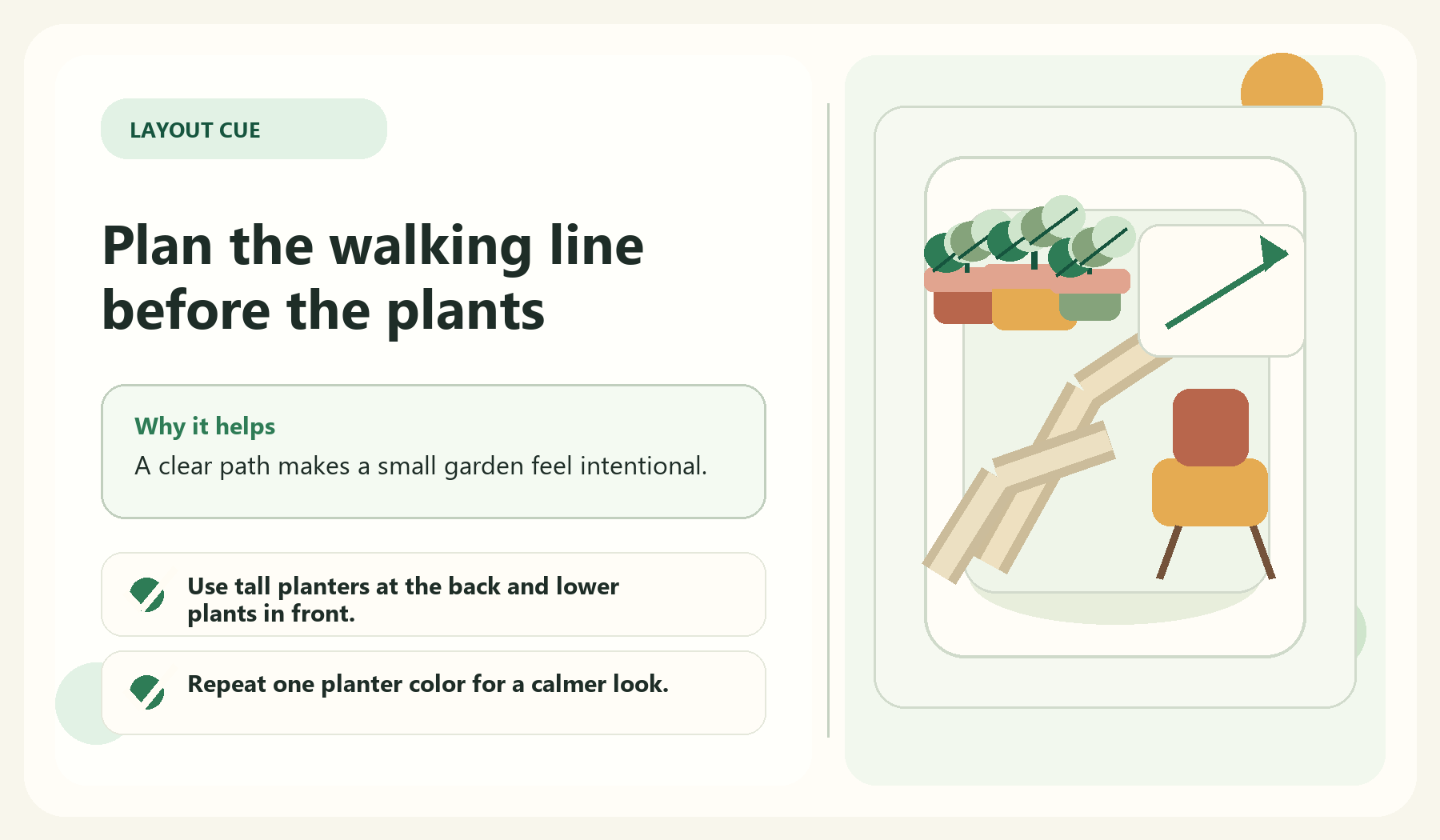
    Plan the walking line before the plants visual guide for Pick A Layout That Fits The Space

    Small gardens usually look better when they have a clear shape. Instead of scattering pots everywhere, group containers in one corner, line a path with repeated planters, or place one raised bed where it can be reached from every side.

    Measure the area before shopping. Leave enough room to walk, water, prune, and sit. The most beautiful garden will become frustrating if you have to climb around furniture to reach a thirsty plant.

    • Use tall planters at the back and lower plants in front.
    • Repeat one planter color for a calmer look.
    • Keep walking paths clear.
    • Place frequently used herbs closest to the door.
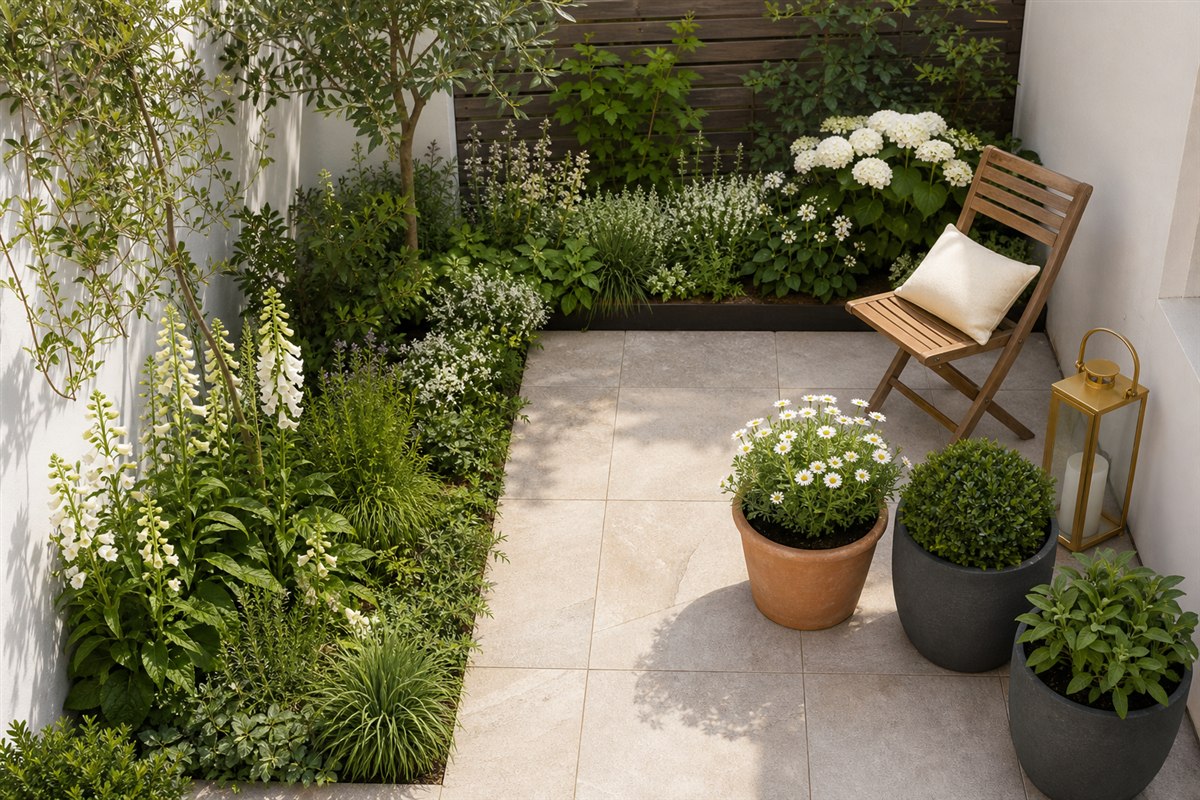
    Compact patio arranged with an L-shaped planting area, clear path, chair, and coordinated containers
    Reference: keep one route open and let the planted edge, pause point, and container group perform separate jobs.

    Beginner-Friendly Ideas That Work

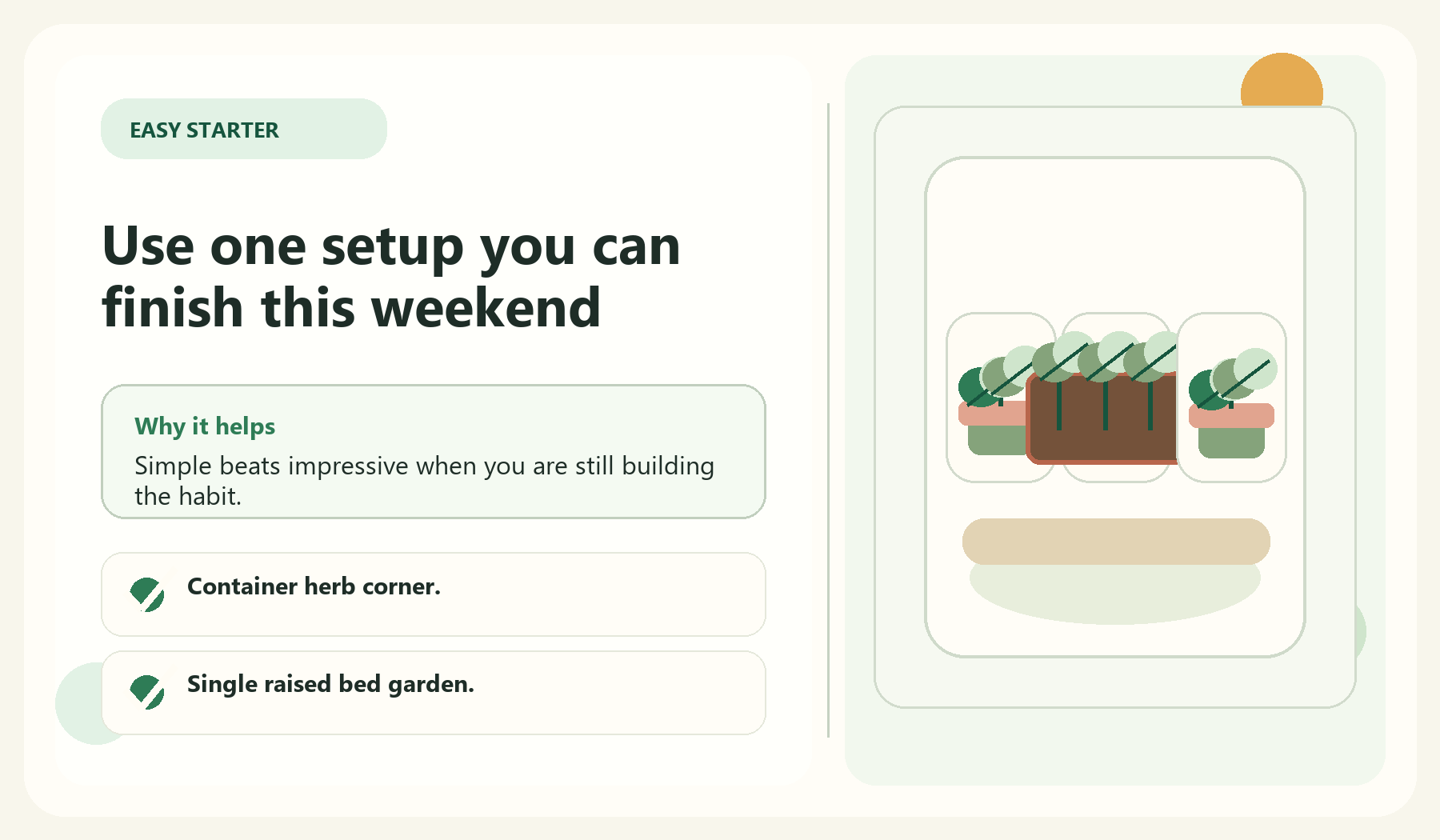
    Use one setup you can finish this weekend visual guide for Beginner-Friendly Ideas That Work

    A container herb garden is one of the easiest starting points because it is useful, compact, and simple to adjust. A one-bed vegetable garden is good for a small yard because it gives structure without turning the whole space into a project.

    If beauty is the main goal, a flower and foliage corner can make the space feel finished quickly. For a patio, start with a few containers, one seating spot, and soft lighting instead of trying to landscape everything.

    • Container herb corner.
    • Single raised bed garden.
    • Patio planter cluster.
    • Vertical wall planter.
    • Flower and greenery border.

    What To Buy First
    Buy structure before decoration visual guide for What To Buy First

    Buy structure before decoration. The first useful purchases are usually containers, soil or growing mix, a watering tool, and a small set of basic hand tools. Decor comes after you know where the plants will live.

    Do not buy a full cart of plants on the first trip. Start with a few that match the light in your space. A slower start often saves money because you learn how the area behaves before committing to a large setup.

    • Containers that fit the actual space.
    • A watering can or hose attachment.
    • Potting mix or bed mix suited to the setup.
    • Gloves and a hand trowel.
    • Plant labels or a small notebook.

    Common Small Garden Mistakes
    Edit first so the space can breathe visual guide for Common Small Garden Mistakes

    The biggest small garden mistake is overcrowding. Plants grow, containers get heavy, and decor needs breathing room. A small garden feels elegant when it is edited, not when every inch is filled.

    Another mistake is ignoring sun exposure. Spend a day noticing where light lands before buying plants. Even beginner-friendly plants struggle when they are placed in the wrong conditions.

    • Buying plants before measuring.
    • Choosing containers with poor drainage.
    • Ignoring mature plant size.
    • Mixing too many styles at once.
    • Forgetting how watering will work.

    Next Step

    Browse more beginner-friendly garden guides on GardenEleganceHub. The free Elegant Garden Starter Planner will be added once the email setup is ready.

    FAQ

    What is the easiest small garden for a beginner?

    A container herb garden or one small raised bed is usually easiest because the space is defined and the shopping list stays manageable.

    How do I make a small garden look elegant?

    Use fewer materials, repeat planter colors, group plants intentionally, and leave breathing room around seating or pathways.

    Should I buy plants or containers first?

    Choose the layout and containers first, then buy plants that fit the light, container size, and care routine.
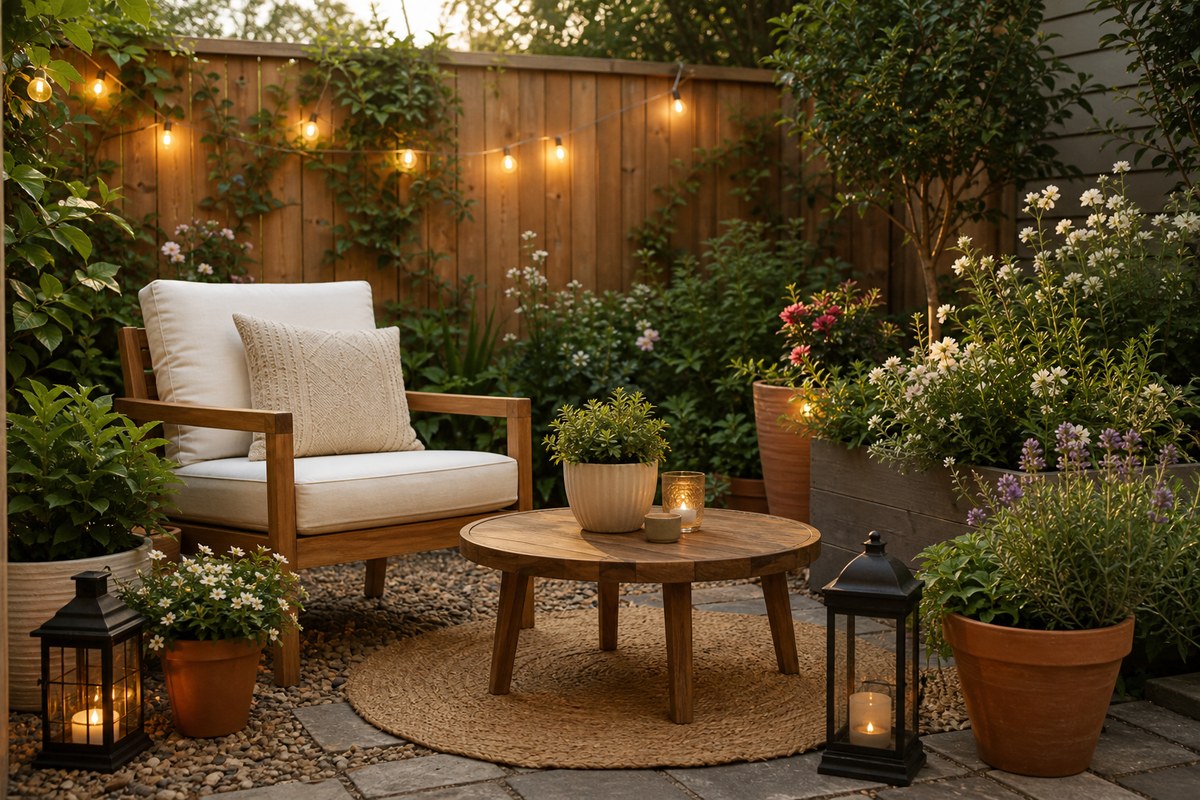
  • Best Garden Decor Ideas for a Cozy Backyard That Still Feels Practical

    Best Garden Decor Ideas for a Cozy Backyard That Still Feels Practical

    Affiliate disclosure: We earn commissions when you shop through the links below.

    Garden decor works best when it makes the outdoor space easier to enjoy. The goal is not to fill every corner with things. The goal is to create warmth, structure, and a reason to spend time outside.

    A cozy backyard can be simple. A few planters, soft lighting, one comfortable seating area, and a calm color palette often do more than a cart full of unrelated decorations.

    Use these ideas to make your garden feel elegant and practical at the same time.

    Create One Main Seating Moment

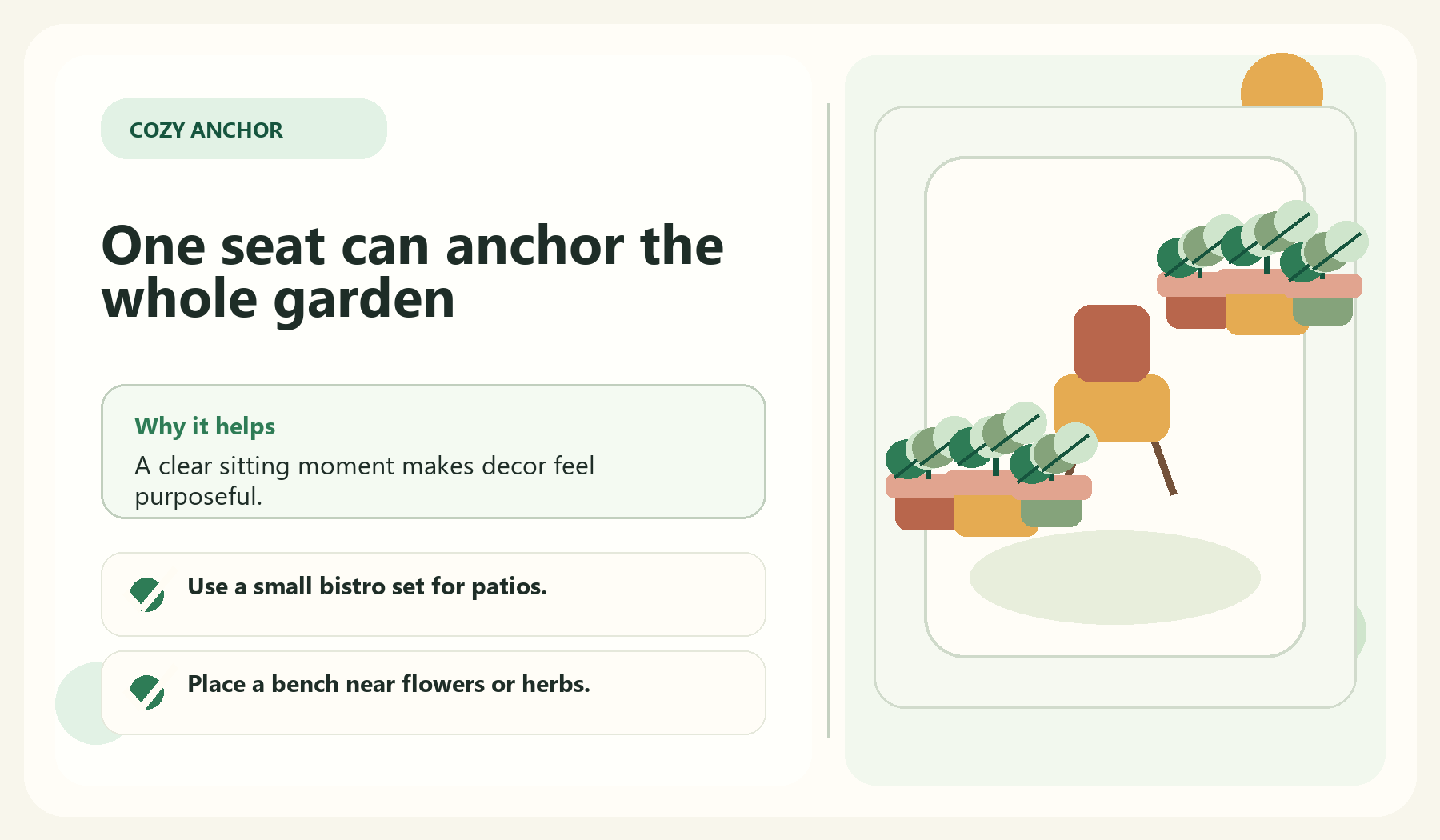
    One seat can anchor the whole garden visual guide for Create One Main Seating Moment

    A garden feels more inviting when there is a clear place to sit. This does not need to be a full outdoor living room. A bench, bistro set, or simple chair near planters can create a destination.

    Place seating where you can see the garden, not where it blocks care tasks. You should be able to water, prune, and move through the space without shifting furniture every time.

    • Use a small bistro set for patios.
    • Place a bench near flowers or herbs.
    • Keep walking paths open.
    • Add a side table only if it will be used.

    Decor Purpose Board

    Choose decor by the job it does

    Garden decor works best when every piece has a purpose. Use this board before adding more objects to the backyard.

    Decor purpose path
    1Anchor
    2Frame
    3Light
    Anchor the seating Backyards without a clear place to pause
    • Start with one comfortable seat or bench.
    • Keep the front open so the area invites use.
    • Add a small table only if it will be used.
    Frame with planters Spaces that need softness or structure
    • Use planters to mark the edge of a zone.
    • Repeat two containers for a calmer look.
    • Let plants soften hard corners.
    Add evening warmth Gardens used after sunset
    • Light the path before adding decorative extras.
    • Use warm light near seating.
    • Keep cords and solar panels easy to manage.

    Quick rule: The space feels more modern when decor creates a clear experience instead of filling gaps.

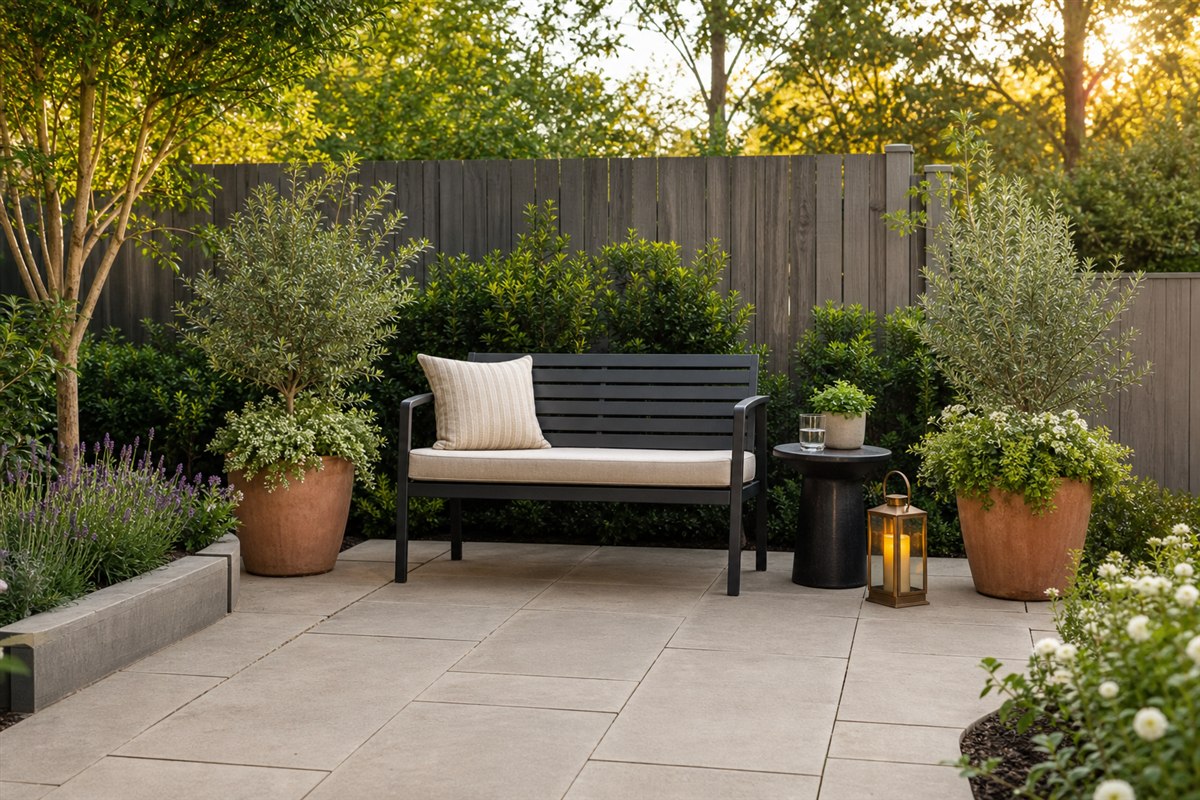
    Practical patio seating area framed by coordinated planters with a side table and warm lantern
    Reference: one comfortable pause point, two plant anchors, and an open care route feel calmer than scattered decoration.

    Use Planters As Decor And Structure

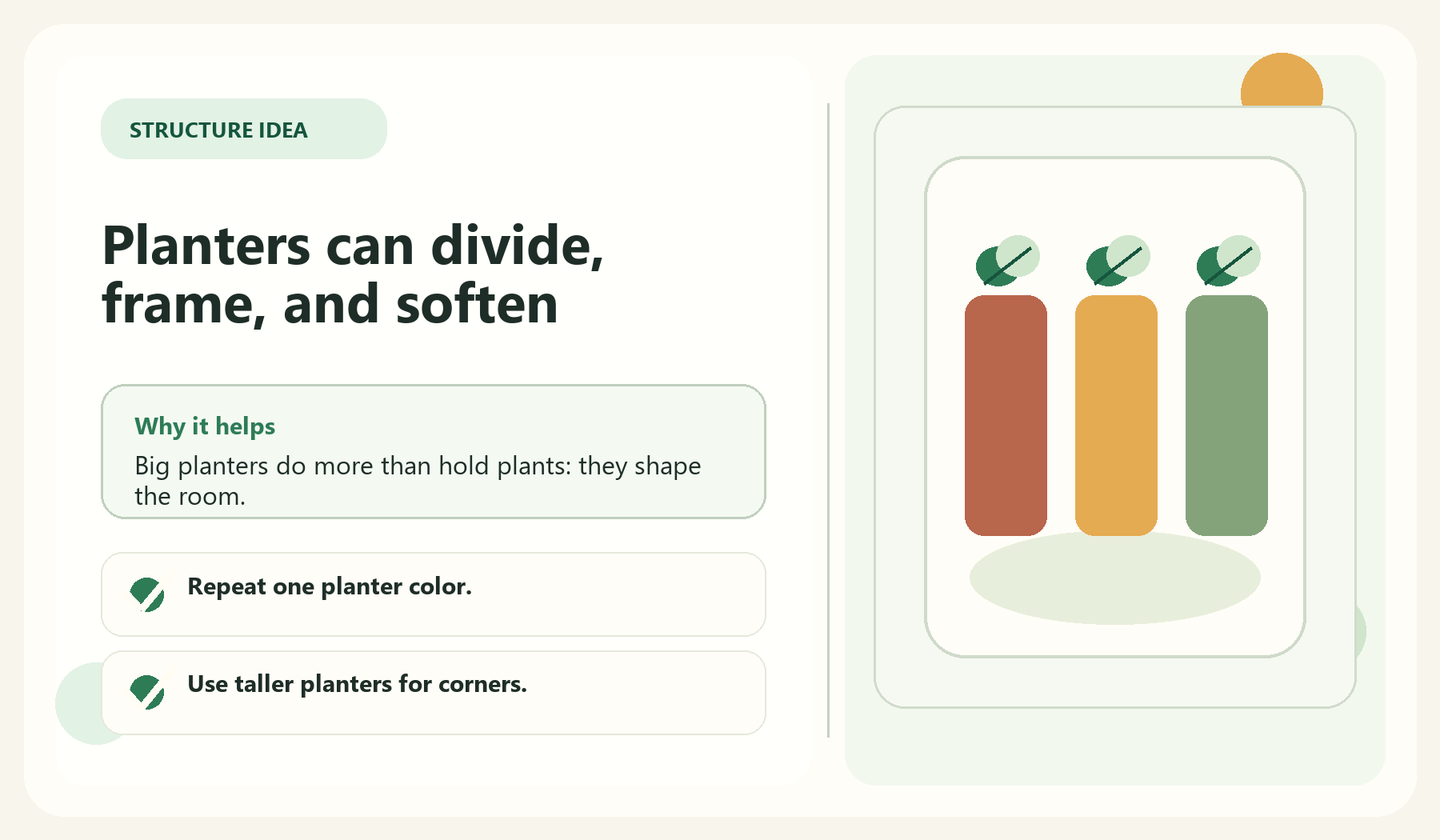
    Planters can divide, frame, and soften visual guide for Use Planters As Decor And Structure

    Planters are one of the most useful decor choices because they hold plants and shape the space. Matching or coordinated planters can make a budget garden look intentional.

    Instead of buying many tiny decorations, invest in containers that suit the garden style. A few repeated planters can frame a patio, soften a fence, or make a doorway feel more welcoming.

    • Repeat one planter color.
    • Use taller planters for corners.
    • Group containers in odd numbers.
    • Match planter size to plant size.

    Add Lighting For Evening Warmth

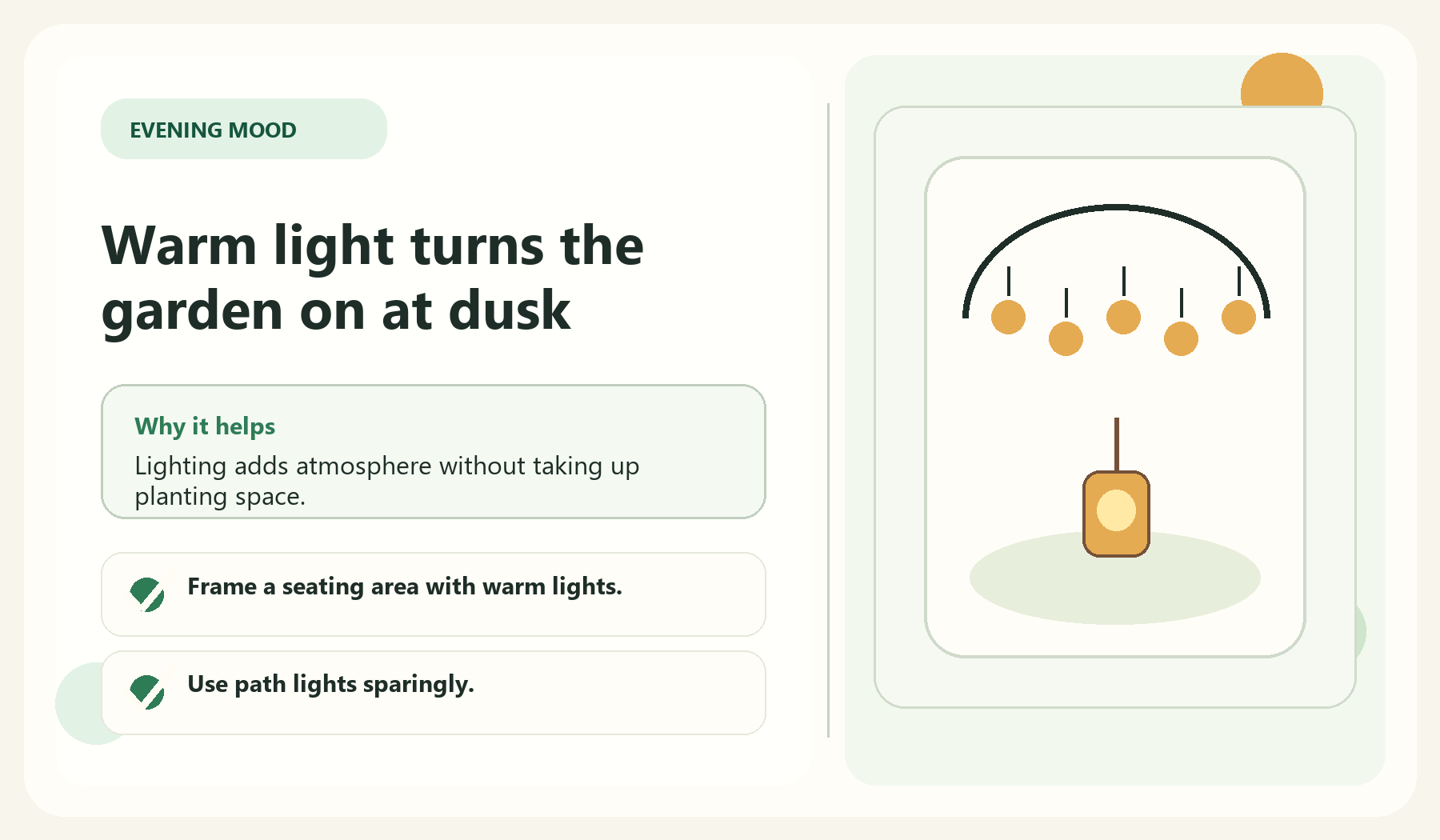
    Warm light turns the garden on at dusk visual guide for Add Lighting For Evening Warmth

    Outdoor lighting can make a backyard feel cozy quickly. Use it to guide the eye and make seating areas feel finished. Solar lights, string lights, and lantern-style pieces can work when placed thoughtfully.

    Choose safe, weather-appropriate lighting and avoid creating a tangled look. A little softness is better than over-lighting the whole yard.

    • Frame a seating area with warm lights.
    • Use path lights sparingly.
    • Avoid harsh cool-toned lighting.
    • Follow product safety instructions.

    Choose A Simple Color Palette

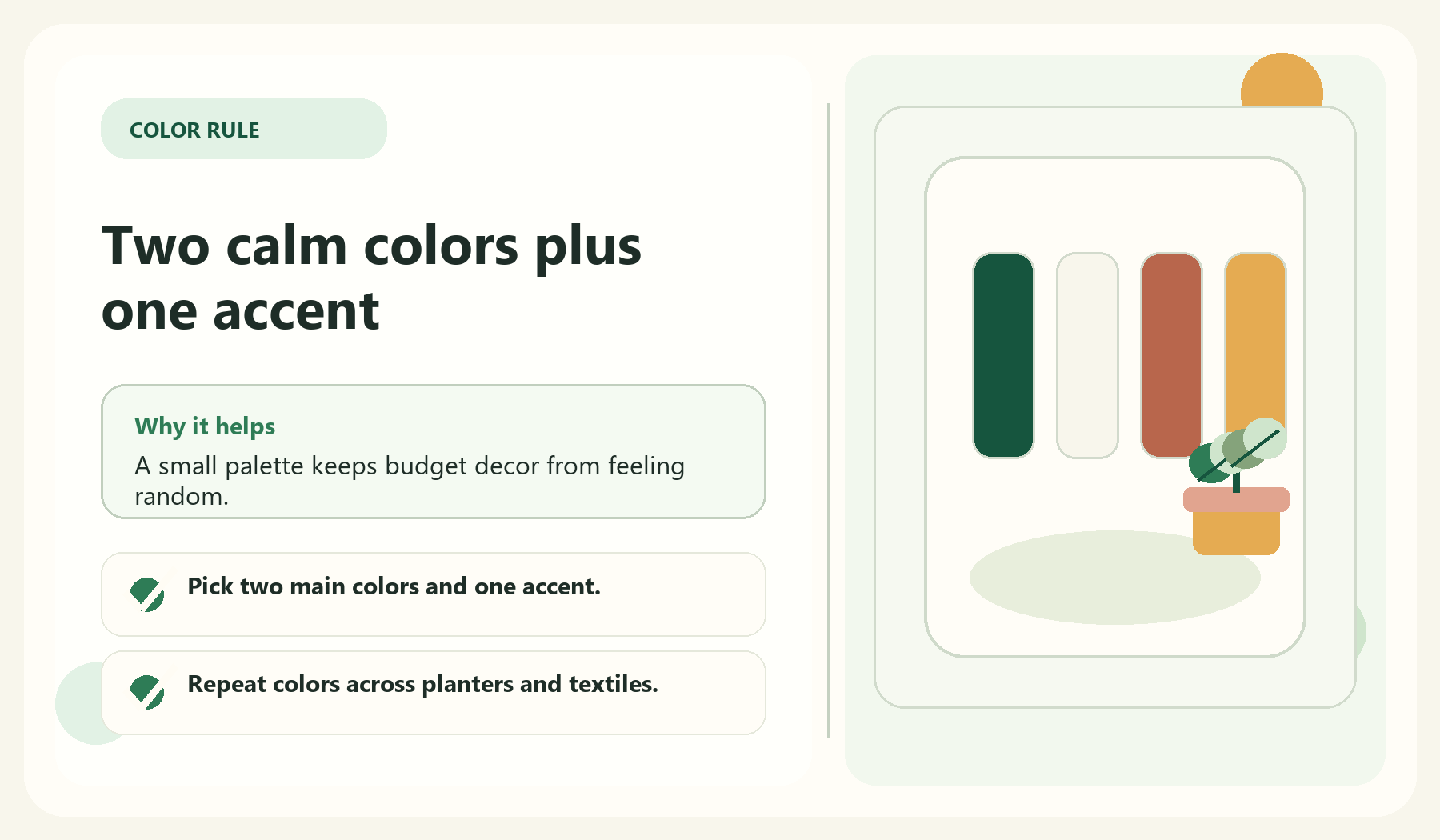
    Two calm colors plus one accent visual guide for Choose A Simple Color Palette

    An elegant garden often comes from restraint. Choose a few colors for planters, cushions, flowers, and decor. This helps even budget items look more intentional.

    Natural tones, greens, soft whites, muted terracotta, and gentle accent colors can fit the GardenEleganceHub style without feeling fake-luxury.

    • Pick two main colors and one accent.
    • Repeat colors across planters and textiles.
    • Let flowers provide seasonal color.
    • Avoid buying decor in every trend color.

    Decorate Around The Garden Routine

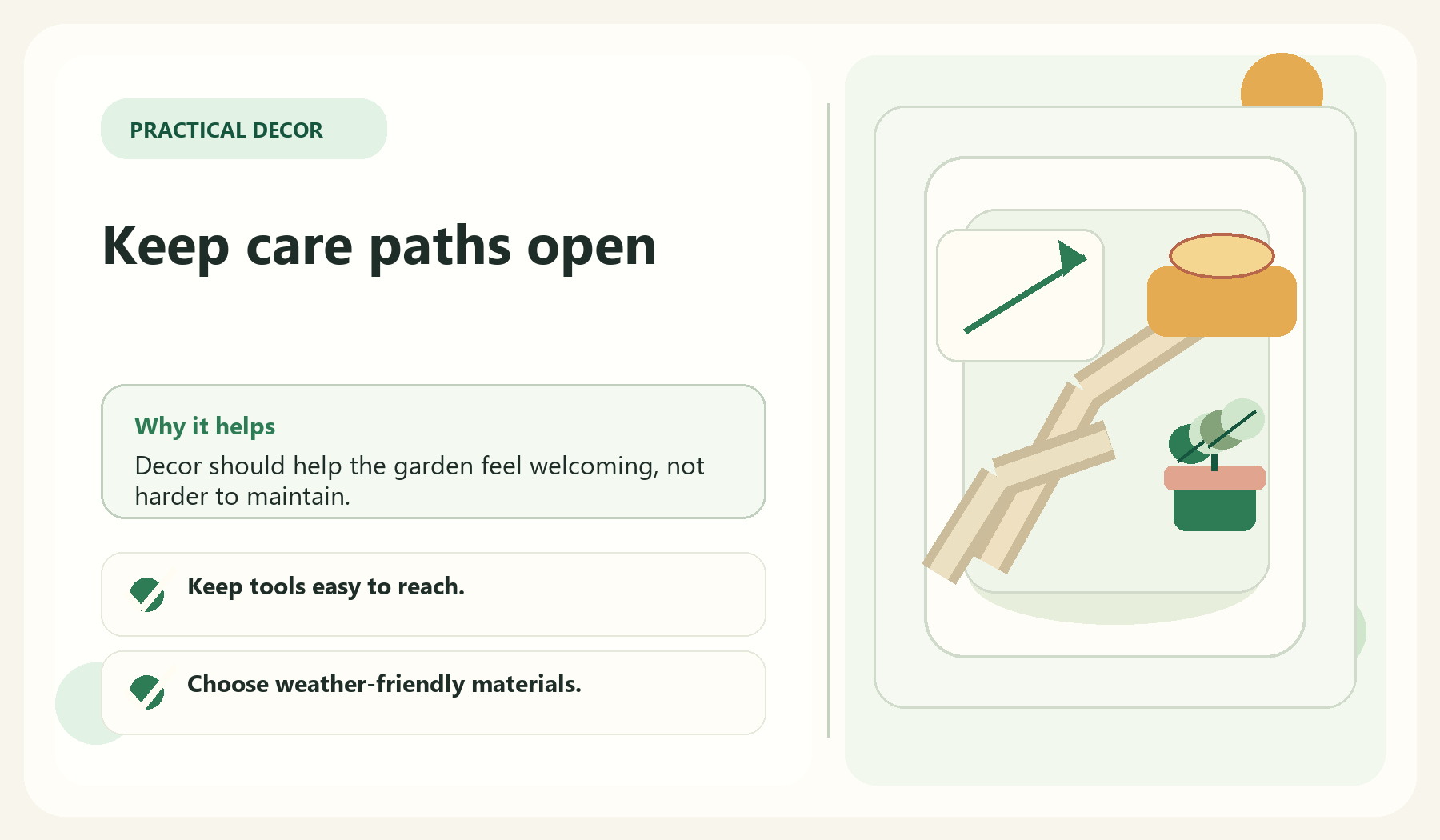
    Keep care paths open visual guide for Decorate Around The Garden Routine

    The prettiest decor will become annoying if it gets in the way of watering, sweeping, harvesting, or moving through the space. Keep maintenance in mind while styling.

    Use decor to support the garden. A storage bench, hook for tools, or attractive watering can may be more useful than purely decorative pieces.

    • Keep tools easy to reach.
    • Choose weather-friendly materials.
    • Leave room around containers.
    • Avoid fragile items in high-traffic areas.

    Next Step

    Browse more beginner-friendly garden guides on GardenEleganceHub. The free Elegant Garden Starter Planner will be added once the email setup is ready.

    FAQ

    What garden decor should I buy first?

    Start with useful pieces like planters, seating, and lighting before buying purely decorative items.

    How do I make a backyard feel cozy on a budget?

    Create one seating area, repeat planter colors, add warm lighting, and keep the layout clean.

    Can garden decor make maintenance harder?

    Yes. Avoid decor that blocks watering, pathways, drainage, or access to plants.

  • DIY Garden Fountain Ideas for Small Backyards and Patios

    DIY Garden Fountain Ideas for Small Backyards and Patios

    Affiliate disclosure: We earn commissions when you shop through the links below.

    A small garden fountain can change the mood of a patio, balcony, or backyard corner. Water adds sound, movement, and a focal point, which is why fountain ideas perform so well on Pinterest.

    The practical side matters too. A fountain needs safe power or solar placement, stable positioning, water access, cleaning, and a size that fits the space.

    Use these DIY-friendly garden fountain ideas as inspiration, then choose the simplest option that matches your budget and routine.

    Start With The Purpose Of The Fountain

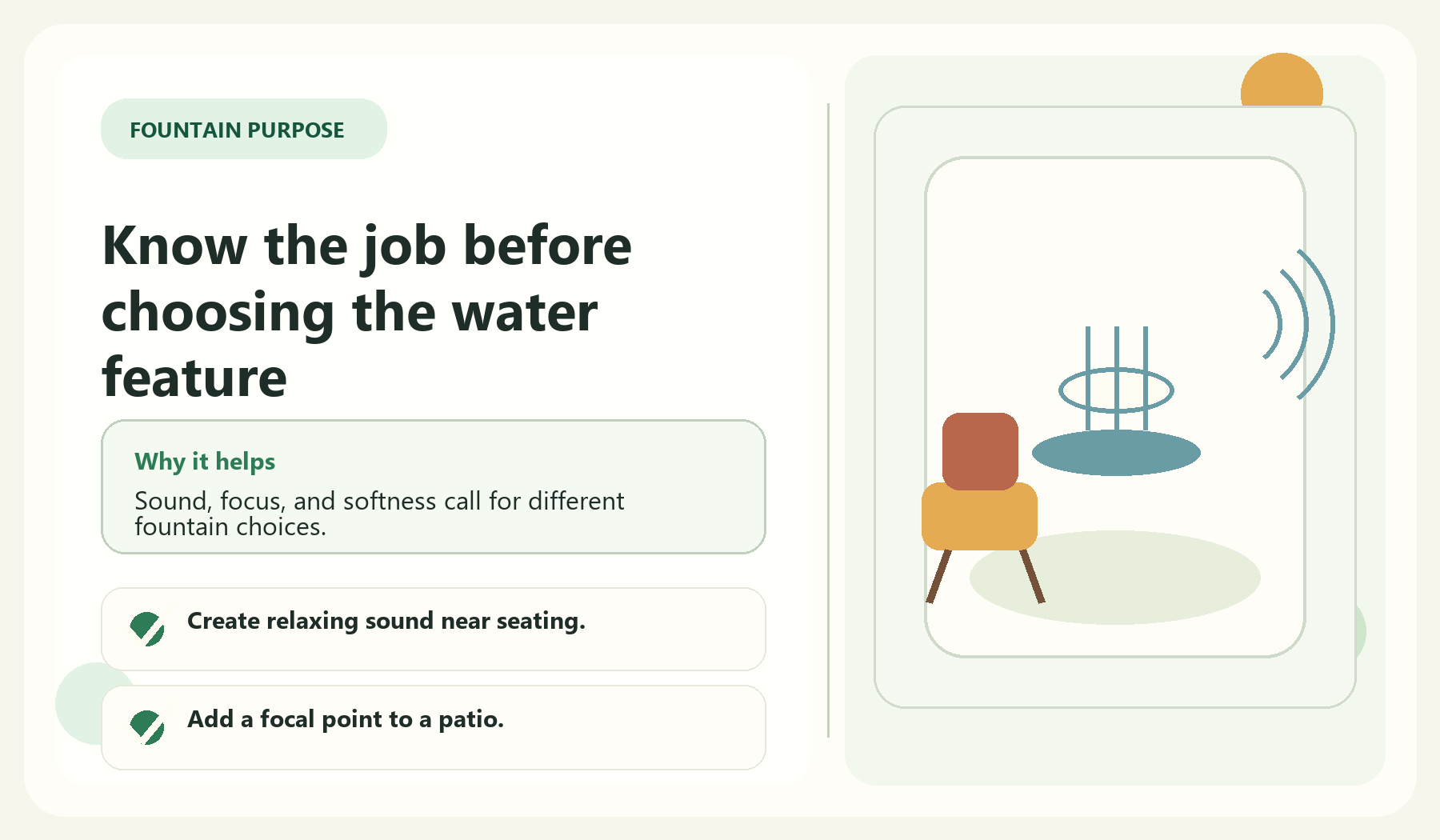
    Know the job before choosing the water feature visual guide for Start With The Purpose Of The Fountain

    Before choosing a fountain style, decide what you want it to do. Some fountains are visual focal points. Others are mainly for gentle sound near seating. A few are meant to fill an empty corner or soften a hard patio.

    The purpose will guide size, placement, and budget. A small tabletop fountain may be enough for a balcony, while a larger container fountain may suit a backyard corner.

    • Create relaxing sound near seating.
    • Add a focal point to a patio.
    • Soften a plain wall or corner.
    • Bring movement into a container garden.

    Choose A Beginner-Friendly Fountain Type

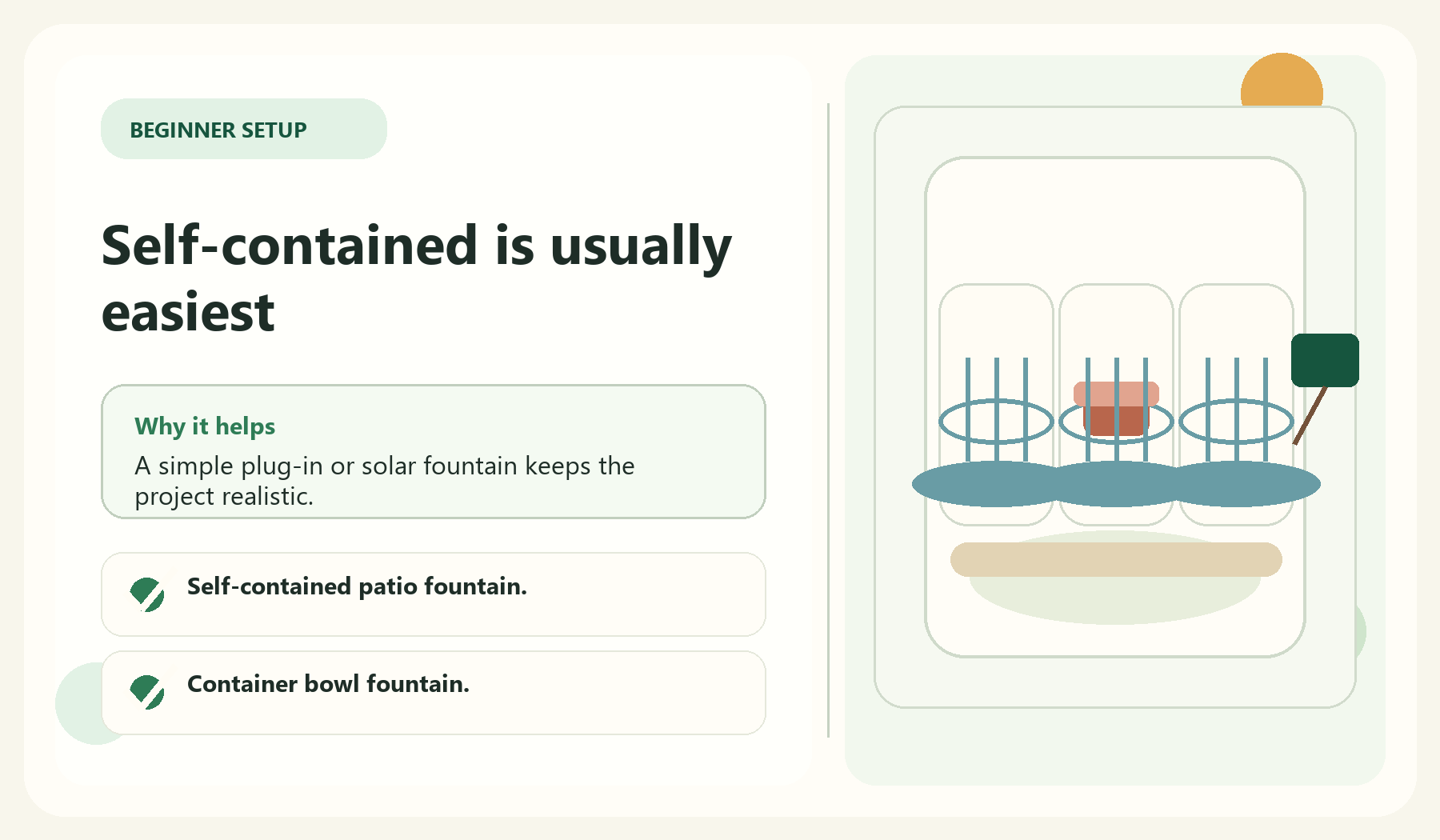
    Self-contained is usually easiest visual guide for Choose A Beginner-Friendly Fountain Type

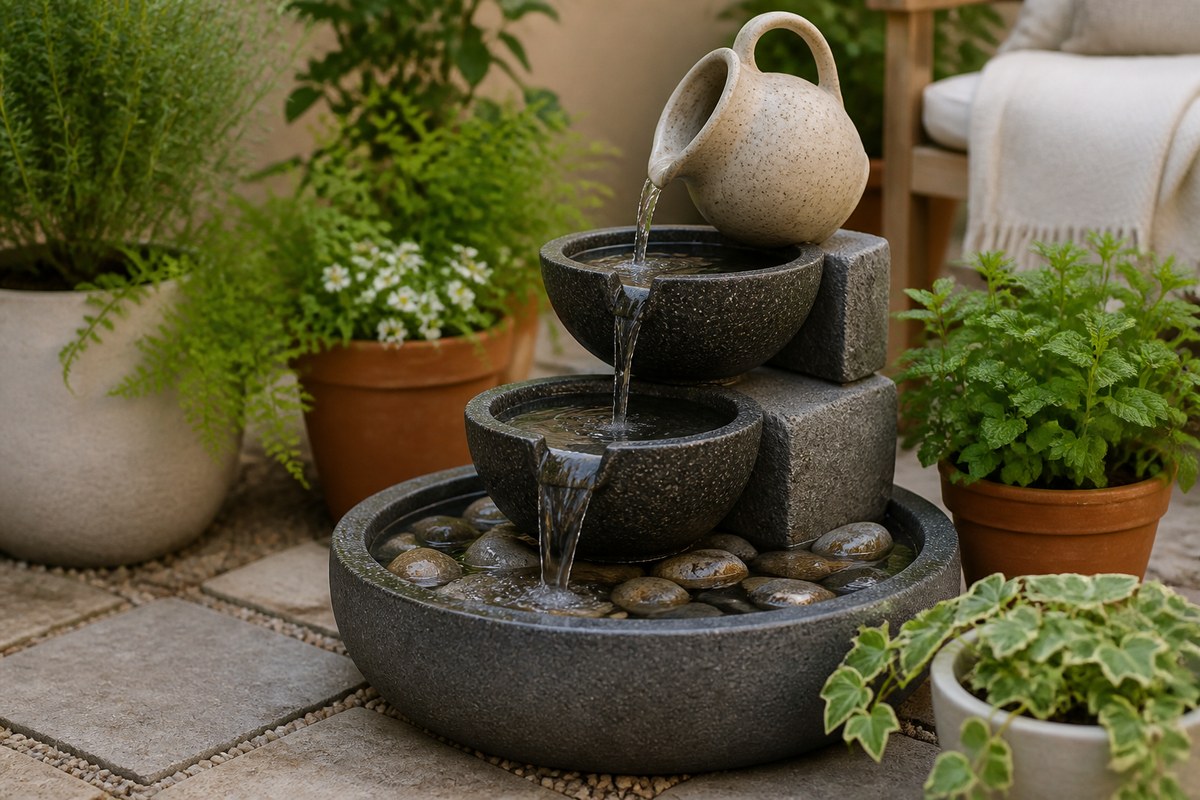
    Beginners should start with fountain ideas that do not require complicated plumbing. Self-contained fountains, container fountains, solar fountain bowls, and tabletop fountains are usually more realistic than permanent installations.

    DIY does not have to mean building every part from scratch. A smart beginner project can combine a simple container, pump, stones, and plants while keeping safety and maintenance manageable.

    • Self-contained patio fountain.
    • Container bowl fountain.
    • Tabletop fountain.
    • Solar fountain bowl.
    • Small wall-style fountain where safely installed.
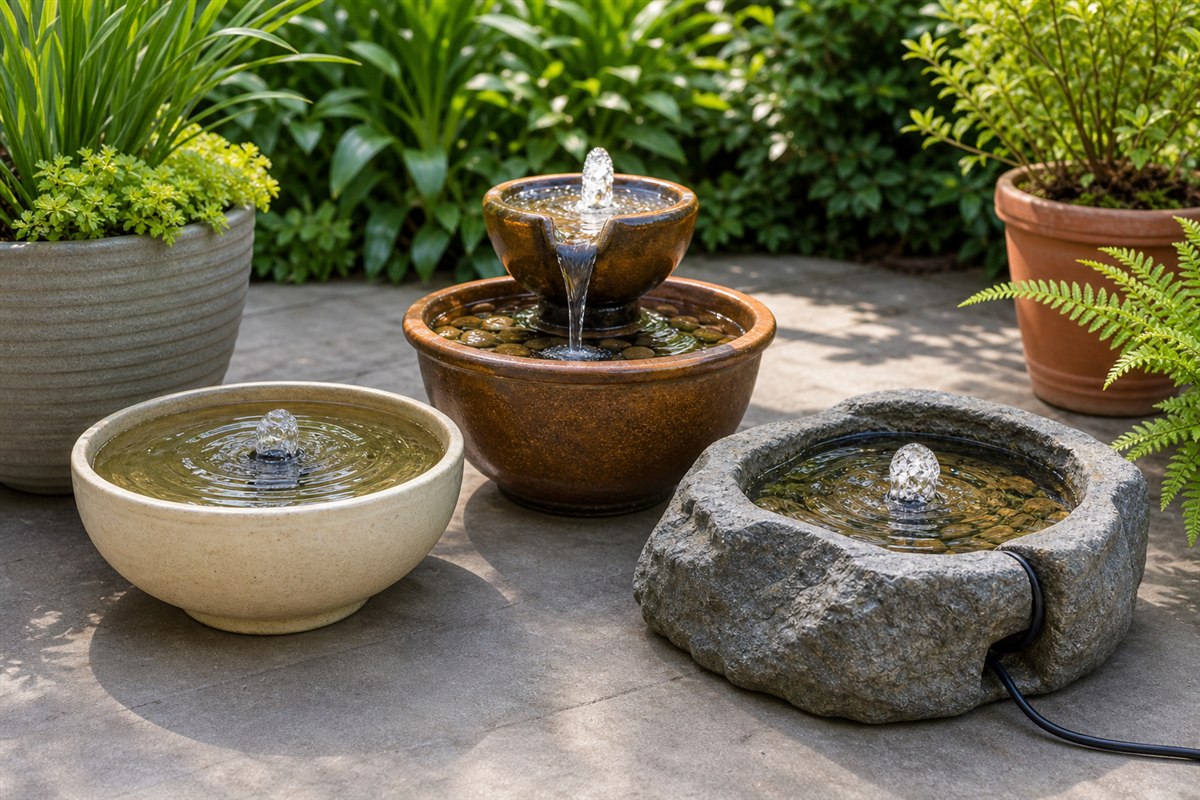
    Three small recirculating fountain types on stable patio surfaces with accessible maintenance space
    Reference: compare a bowl bubbler, a compact tier, and a stone-look basin by splash area, stability, pump access, and cleaning effort.

    Plan Placement Before Buying

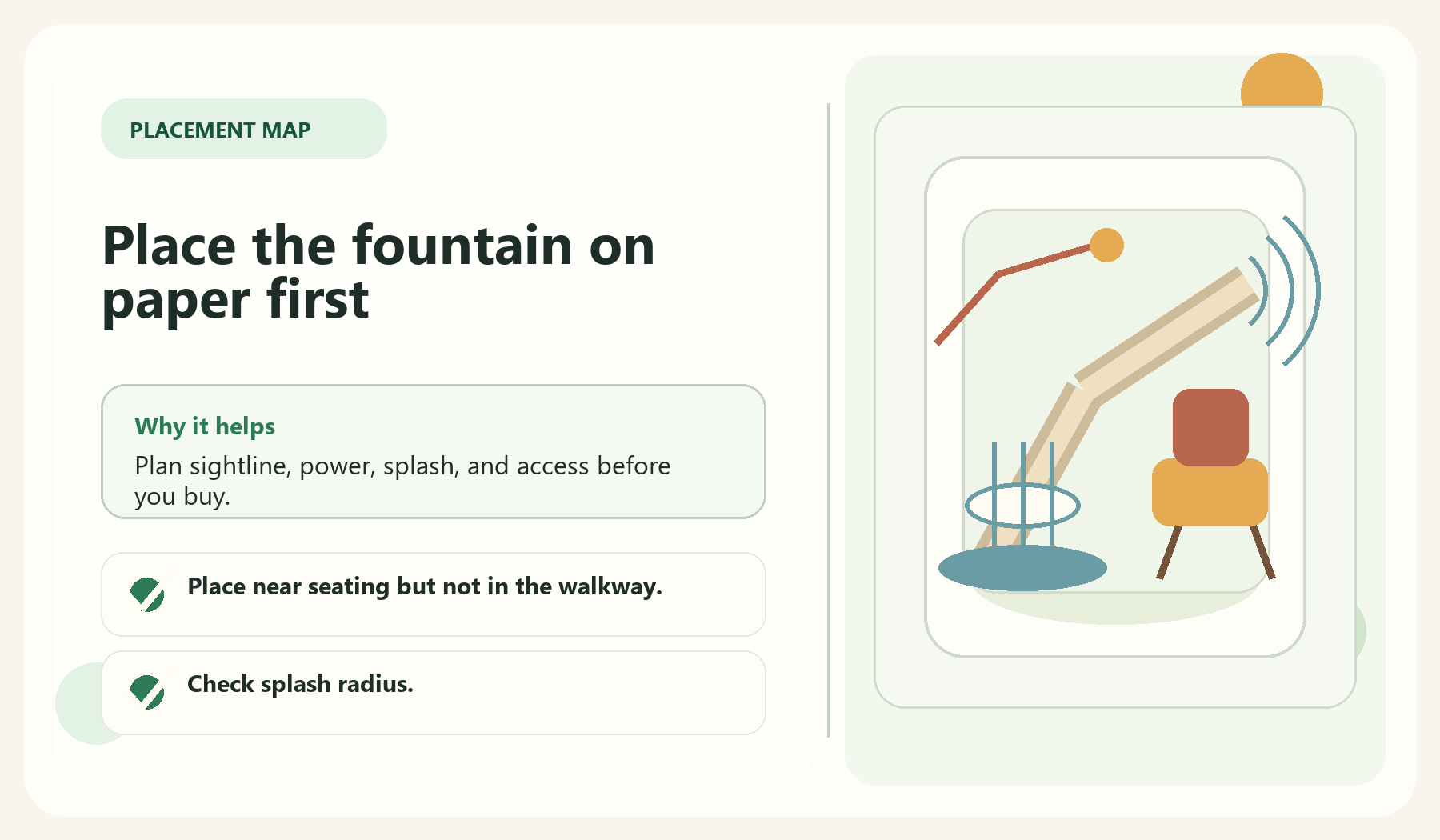
    Place the fountain on paper first visual guide for Plan Placement Before Buying

    Fountains need a stable surface. They should not sit where they create trip hazards, block pathways, or splash onto surfaces that become slippery. If electricity is involved, follow product instructions and outdoor safety guidance.

    Solar fountains need enough sun to work well. Electric fountains need safe access to power. Either way, test the spot before treating the fountain as permanent.

    • Place near seating but not in the walkway.
    • Check splash radius.
    • Keep access for cleaning.
    • Follow electrical and product safety instructions.

    Fountain Placement Map

    Map the fountain before buying it

    A small fountain affects sound, splash, power, and cleaning access. Use this map to avoid choosing a beautiful piece that is annoying to maintain.

    Fountain placement path
    1Choose view
    2Check access
    3Plan splash
    View and sound A seating area or window-facing focal point
    • Place the fountain where you will actually see it.
    • Keep sound close enough to enjoy.
    • Frame it with plants after the position is set.
    Power and water Plug-in or refillable fountains
    • Check the cord route before buying.
    • Keep refill access open.
    • Use a level base so the water flows correctly.
    Splash and cleaning Tiny patios, decks, or narrow corners
    • Leave room to wipe and remove debris.
    • Avoid splash near cushions or wood edges.
    • Choose a size you can clean without moving furniture.

    Quick rule: The easiest fountain is the one with a beautiful view and boringly simple access.

    Keep Maintenance Realistic

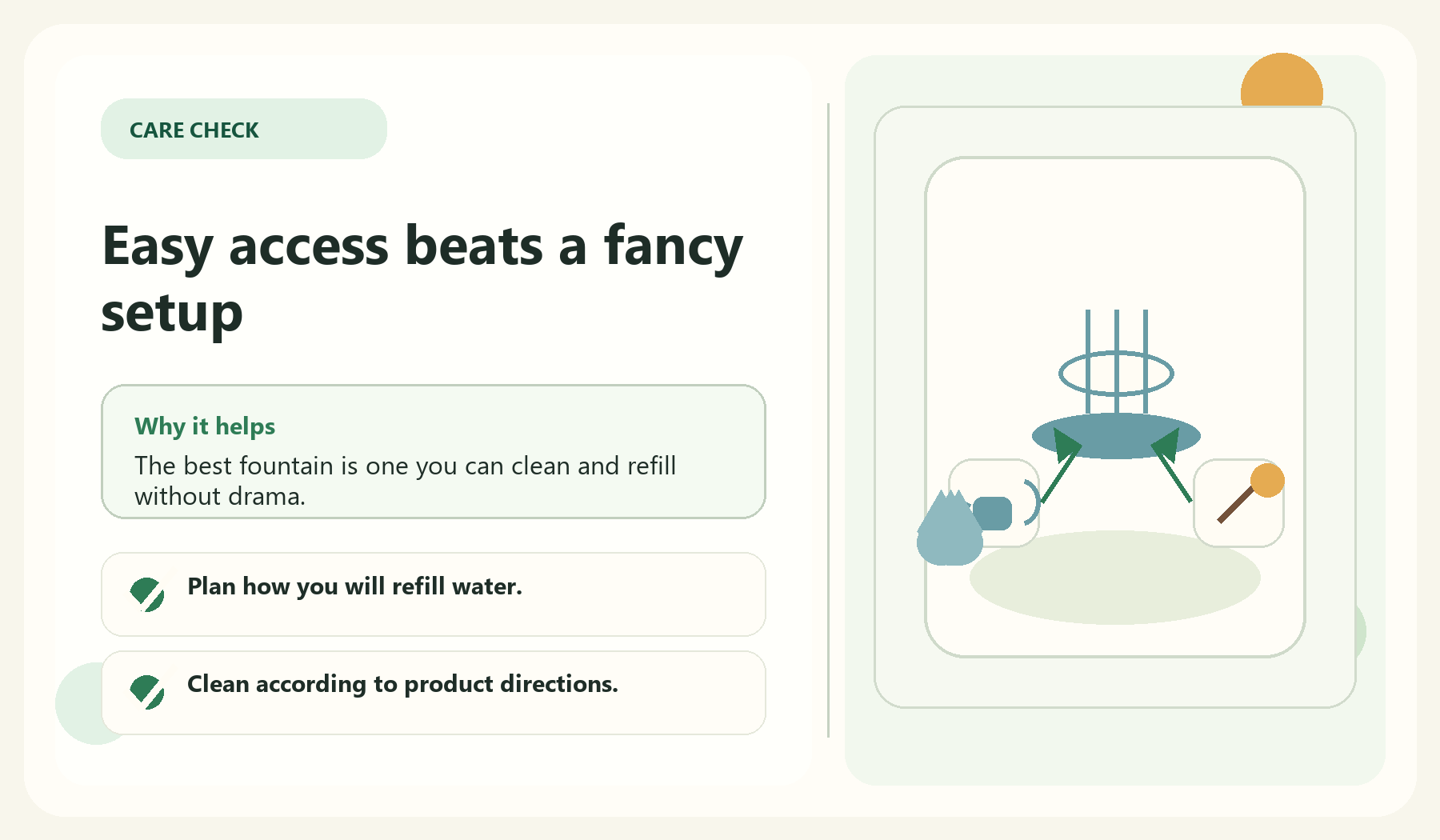
    Easy access beats a fancy setup visual guide for Keep Maintenance Realistic

    A fountain is not a no-work decor piece. Water features can need cleaning, refilling, and seasonal care. The smaller and simpler the setup, the easier it is for a beginner to maintain.

    If you know you will not clean a complicated fountain, choose a simpler bowl or tabletop option. A peaceful garden should not create a chore you dread.

    • Plan how you will refill water.
    • Clean according to product directions.
    • Avoid setups that are hard to access.
    • Consider seasonal storage needs.

    Style The Fountain With Plants

    Frame water with soft planting visual guide for Style The Fountain With Plants

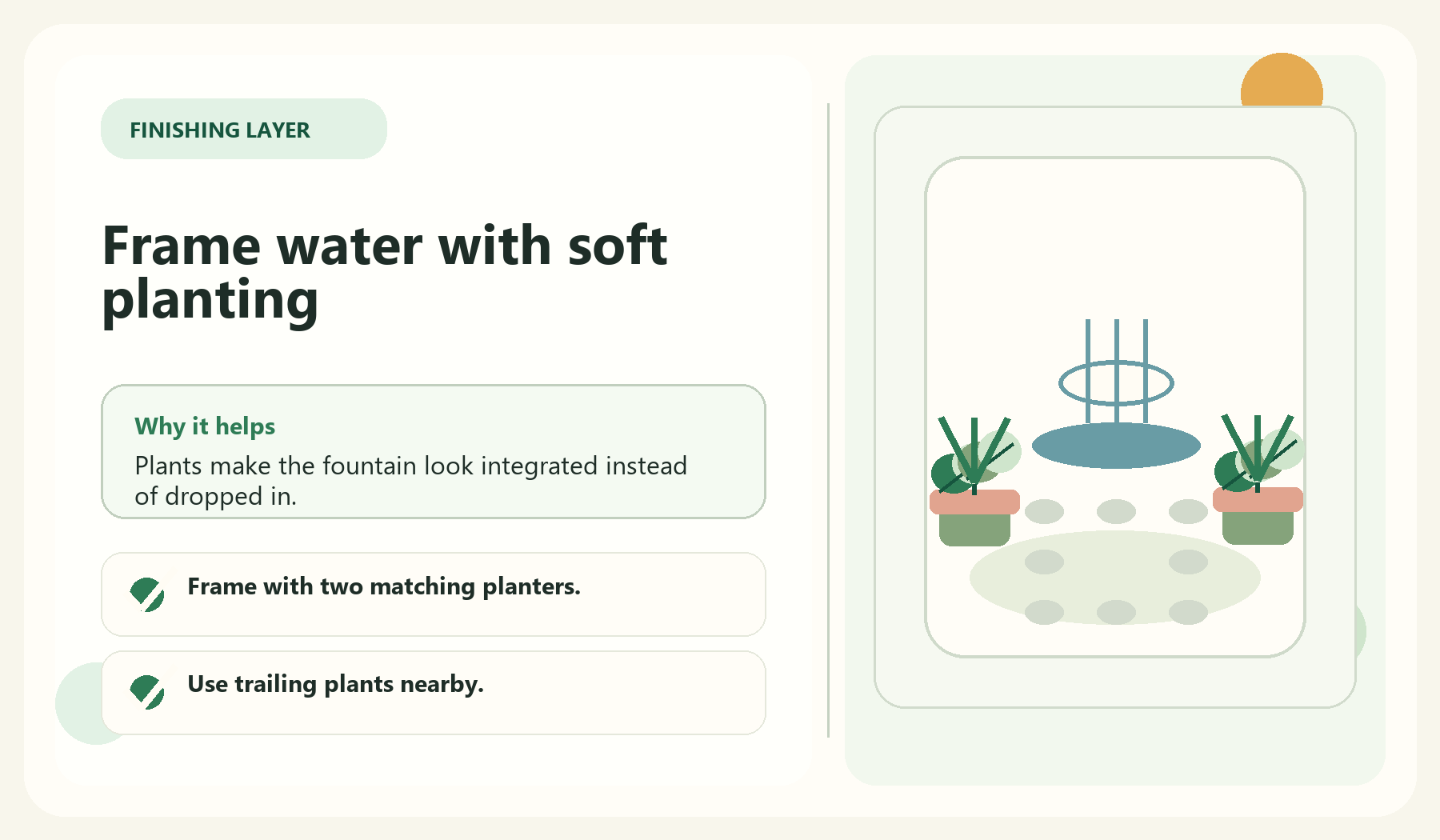
    A fountain looks more integrated when it is styled with plants around it. Use containers, trailing flowers, grasses, herbs, or foliage to soften the edges. Keep the styling simple so the fountain remains the focal point.

    Choose plants that fit the light and moisture conditions nearby. Do not place plants where constant splashing will damage them unless they can tolerate it.

    • Frame with two matching planters.
    • Use trailing plants nearby.
    • Add stones or gravel for a clean base.
    • Keep the color palette calm.

    Next Step

    Browse more beginner-friendly garden guides on GardenEleganceHub. The free Elegant Garden Starter Planner will be added once the email setup is ready.

    FAQ

    Are DIY garden fountains hard to maintain?

    They can be simple if the setup is small and accessible, but all fountains need some cleaning and refilling.

    Can I use a fountain on a balcony?

    Possibly, but check building rules, weight, drainage, splash, and safe power access first.

    What is the easiest water feature for beginners?

    A small self-contained fountain or tabletop fountain is usually easier than a permanent installation.