
In this guide
Before you act
Water feature reality check
- Check the location: Measure the space and plan a safe way to power, refill, empty, and clean the fountain.
- Keep it manageable: Choose a fountain you can empty, clean, and protect in winter without special equipment.
- Run it for a week: Check the water level, splashing, noise, and cleaning needs before adding anything else.
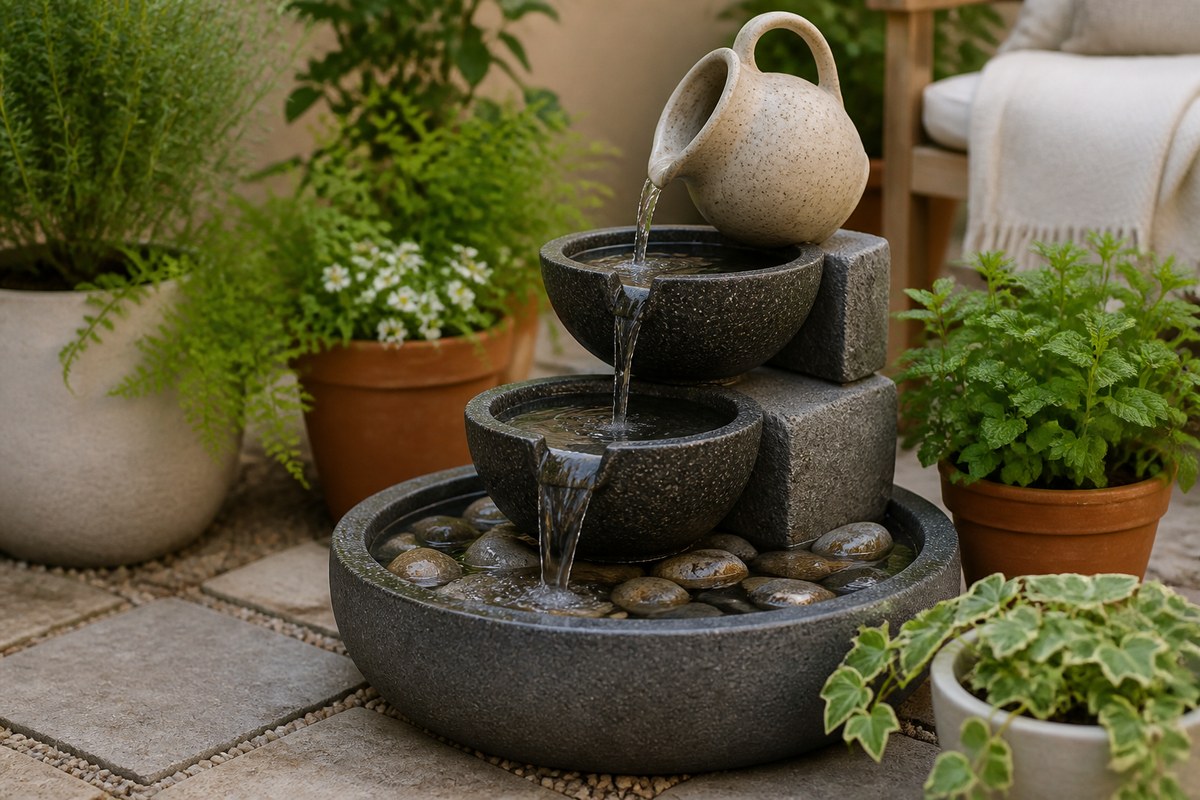
A small fountain can bring gentle sound and movement to a patio or garden corner. It also needs a level base, a safe power source or enough sun, and easy access for cleaning and refilling.
Choose the simplest fountain that suits your space and routine. A small bowl or self-contained unit is often easier for a first project than a permanent installation.
Decide what the fountain should do

Do you want to hear water beside a chair, add movement to a patio, or soften an empty corner? Your answer decides the size and the best position. A tabletop fountain may be enough for a balcony; a wider container can suit a garden corner.
Put it into practice
- Create relaxing sound near seating.
- Add a focal point to a patio.
- Soften a plain wall or corner.
- Bring movement into a container garden.
Choose a simple fountain type

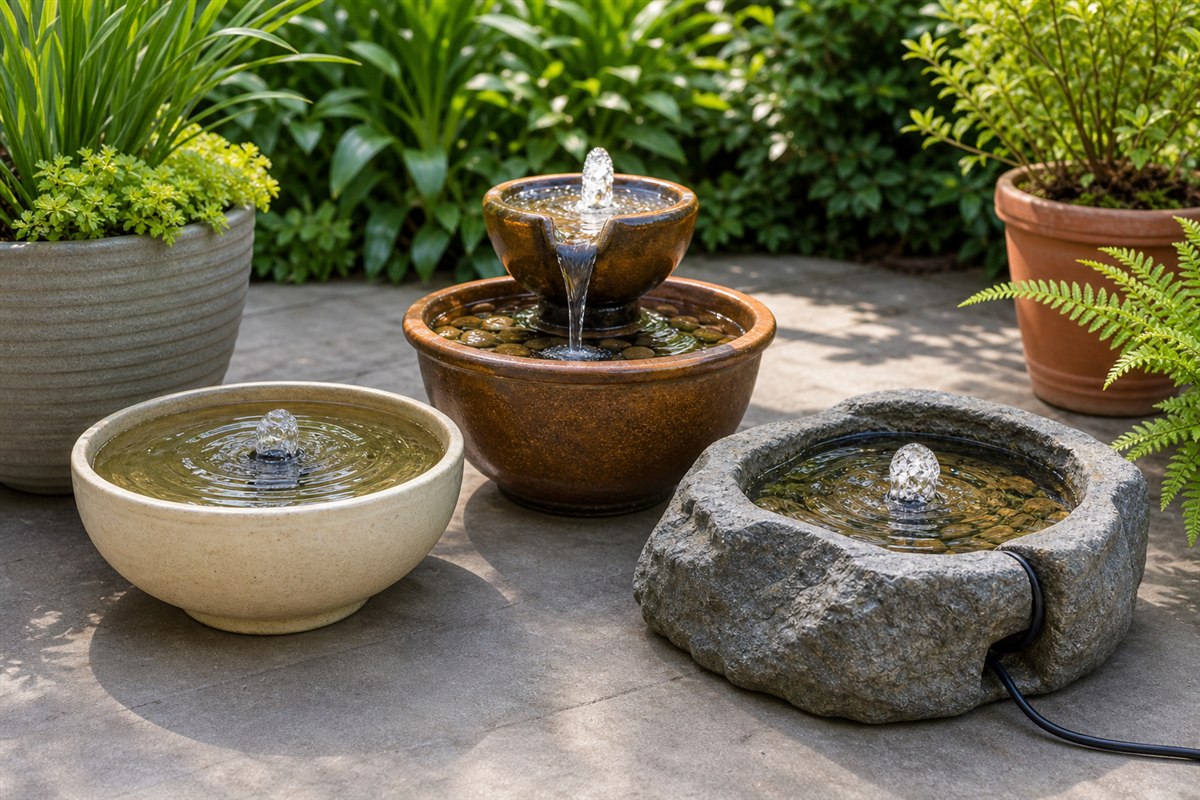
Look for a self-contained fountain, a bowl with the right pump, or a small tabletop model. A DIY project can be as simple as assembling safe, compatible parts. Leave pump construction and electrical work to a qualified professional.
Put it into practice
- Self-contained patio fountain.
- Container bowl fountain.
- Tabletop fountain.
- Solar fountain bowl.
- Small wall-style fountain where safely installed.
Test the position before buying

Mark the fountain’s width on the ground. Check that the base is level, the path stays open, and splashes will not make the surface slippery. Solar pumps need direct sun. Mains-powered fountains need an outdoor-rated setup installed and used according to local electrical rules and the maker’s instructions.
Put it into practice
- Place near seating but not in the walkway.
- Check splash radius.
- Keep access for cleaning.
- Follow electrical and product safety instructions.
Make cleaning and refilling easy

Leave enough room to reach the pump and lift out debris. Decide how you will refill the water before placing a heavy container. Follow the product directions for cleaning, cold weather, and storage.
Put it into practice
- Plan how you will refill water.
- Clean according to product directions.
- Avoid setups that are hard to access.
- Consider seasonal storage needs.
Soften the edges with plants

Place one or two pots beside the fountain to connect it to the garden. Choose plants that suit the light and can tolerate any splash. Keep leaves clear of the pump and leave access for cleaning.
Put it into practice
- Frame with two matching planters.
- Use trailing plants nearby.
- Add stones or gravel for a clean base.
- Keep the color palette calm.
Fountain Placement Map
Map the fountain before buying it
A small fountain affects sound, splash, power, and cleaning access. Use this map to avoid choosing a beautiful piece that is annoying to maintain.
View and sound A seating area or window-facing focal point
- Place the fountain where you will actually see it.
- Keep sound close enough to enjoy.
- Frame it with plants after the position is set.
Power and water Plug-in or refillable fountains
- Check the cord route before buying.
- Keep refill access open.
- Use a level base so the water flows correctly.
Splash and cleaning Tiny patios, decks, or narrow corners
- Leave room to wipe and remove debris.
- Avoid splash near cushions or wood edges.
- Choose a size you can clean without moving furniture.
Quick rule: The easiest fountain is the one with a beautiful view and boringly simple access.
Related garden guides
What to do next
Choose another beginner guide, or use the free Garden Starter Planner to turn what you learned into a first-week plan.
FAQ
Are DIY garden fountains hard to maintain?
They can be simple if the setup is small and accessible, but all fountains need some cleaning and refilling.
Can I use a fountain on a balcony?
Possibly, but check building rules, weight, drainage, splash, and safe power access first.
What is the easiest water feature for beginners?
A small self-contained fountain or tabletop fountain is usually easier than a permanent installation.