In this guide
Before you act
Diagnose the container before the plant
- Check the whole pot: Look at the drainage holes, root space, growing mix, daily light, and how quickly it dries.
- Change one thing at a time: You will be able to see what actually helped.
- Give the plant time: Watch its moisture and new growth for a week before making another change.
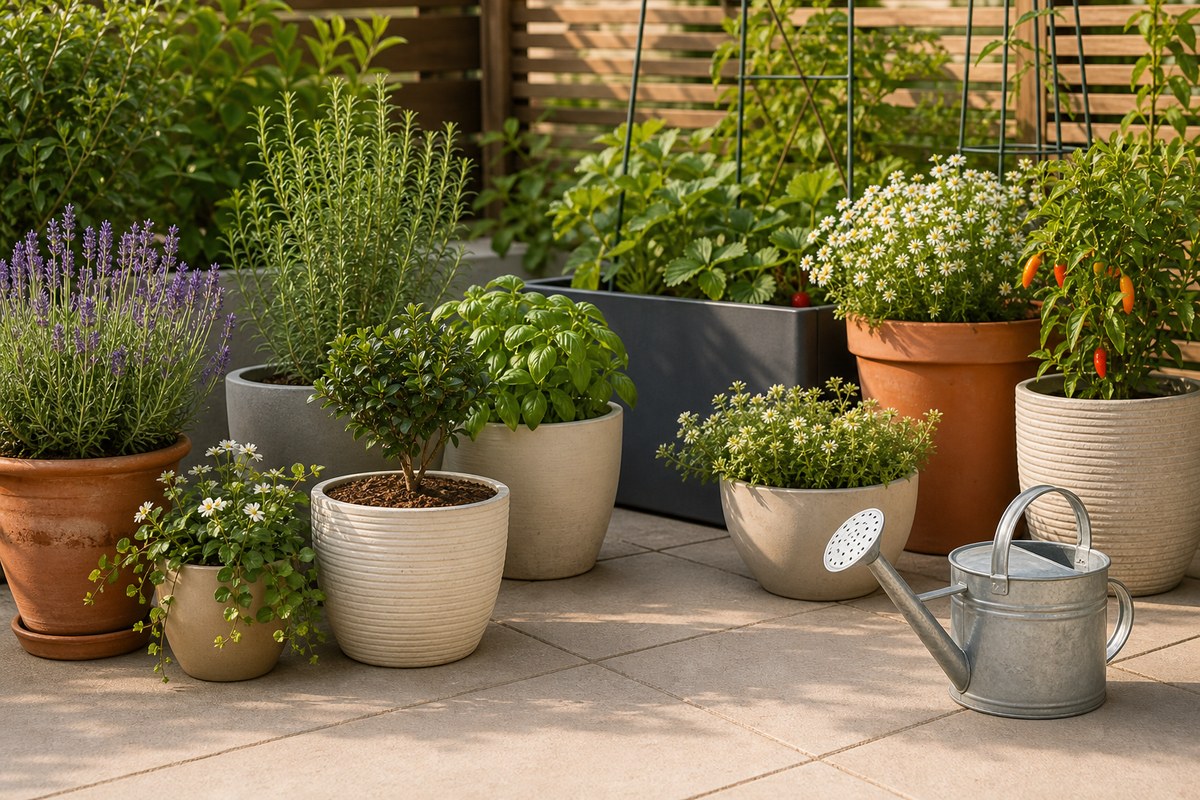
Most container problems start with one of five choices. The pot is too small, water cannot drain, the soil is too heavy, the plants need different care, or there are simply too many pots to manage.
Check these five points before you plant. Fixing them now is easier than rescuing a stressed plant later.
Mistake 1: Choosing a pot only for its looks

A good pot needs room for the roots, holes for excess water, and a stable base. Small pots dry quickly. Tall, light pots may tip in wind. Large filled pots can be too heavy to move and may need a balcony load check.
Choose the plant first. Then choose a pot that fits its mature size and your space.
Put it into practice
- Check drainage holes.
- Match pot size to plant size.
- Consider weight when filled.
- Avoid unstable tall containers in windy spaces.
Mistake 2: Giving water nowhere to escape

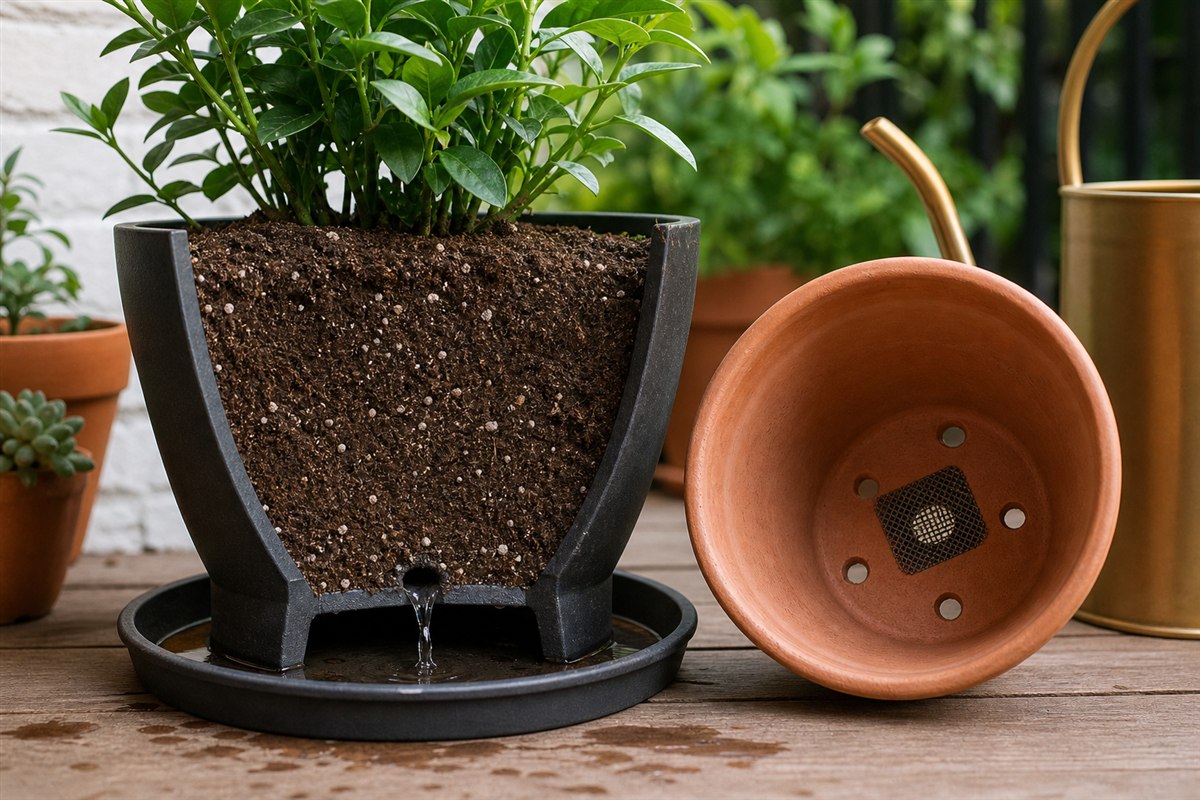
Use a pot with drainage holes and a potting mix made for containers. After watering, empty a full saucer instead of leaving the roots in standing water. Check the soil before watering again; a wet surface does not always mean the whole root ball is wet.
Put it into practice
- Look for drainage holes.
- Use a potting mix made for containers.
- Avoid letting containers sit in standing water.
- Check moisture before watering again.
Mistake 3: Filling pots with garden soil

Soil taken from the garden can become dense in a pot. Roots need a mix that holds some moisture but still lets air and excess water move through it. Use a bag labelled for containers and check whether your plant needs a special mix.
Put it into practice
- Use container-friendly potting mix.
- Avoid heavy yard soil in small pots.
- Refresh mix when needed.
- Read labels before buying.
Mistake 4: Mixing plants that need different care

Plants in one pot share the same sun, soil, and water. Group plants only when those needs match. A simple combination—one main plant with one or two smaller companions—is easier to keep healthy than a crowded mix.
Put it into practice
- Group sun-loving plants together.
- Group moisture-loving plants together.
- Avoid overcrowding mixed containers.
- Check mature plant size.
Mistake 5: Starting with too many pots

Every pot needs checking. Five pots can become a daily job during hot weather, especially when they are scattered around the garden. Start with three to five pots in one place. Add more only after the first group fits your routine.
Put it into practice
- Start with three to five containers.
- Keep water access convenient.
- Use a simple tracking routine.
- Add more only after the first group works.
Container Drainage Check
Run the drainage check before planting
This quick check turns a common container mistake into a simple yes-or-no decision before soil and plants go in.
Holes are open Any pot holding herbs, flowers, or vegetables
- Confirm every hole is open before filling.
- Avoid decorative cachepots as the main planter.
- Do not rely on gravel to fix a sealed pot.
Water can leave Patios where runoff needs control
- Use feet if the pot sits flat on stone.
- Empty saucers after heavy rain.
- Keep drainage away from walls and thresholds.
Mix stays airy Containers that dry fast or stay soggy
- Use potting mix instead of yard soil.
- Leave room at the top for watering.
- Refresh tired mix when plants stall.
Quick rule: A pretty container is only useful when water can move through it cleanly.
Related garden guides
What to do next
Choose another beginner guide, or use the free Garden Starter Planner to turn what you learned into a first-week plan.
FAQ
Why do my container plants keep dying?
Check the drainage, pot size, soil moisture, and light first. Also check whether plants sharing a pot need the same care.
Do containers need drainage holes?
Most do. Drainage holes give excess water a way out and make watering easier to manage.
How many containers should a beginner start with?
Three to five pots in one area is a practical start. You can add more after you know how often they need water.