
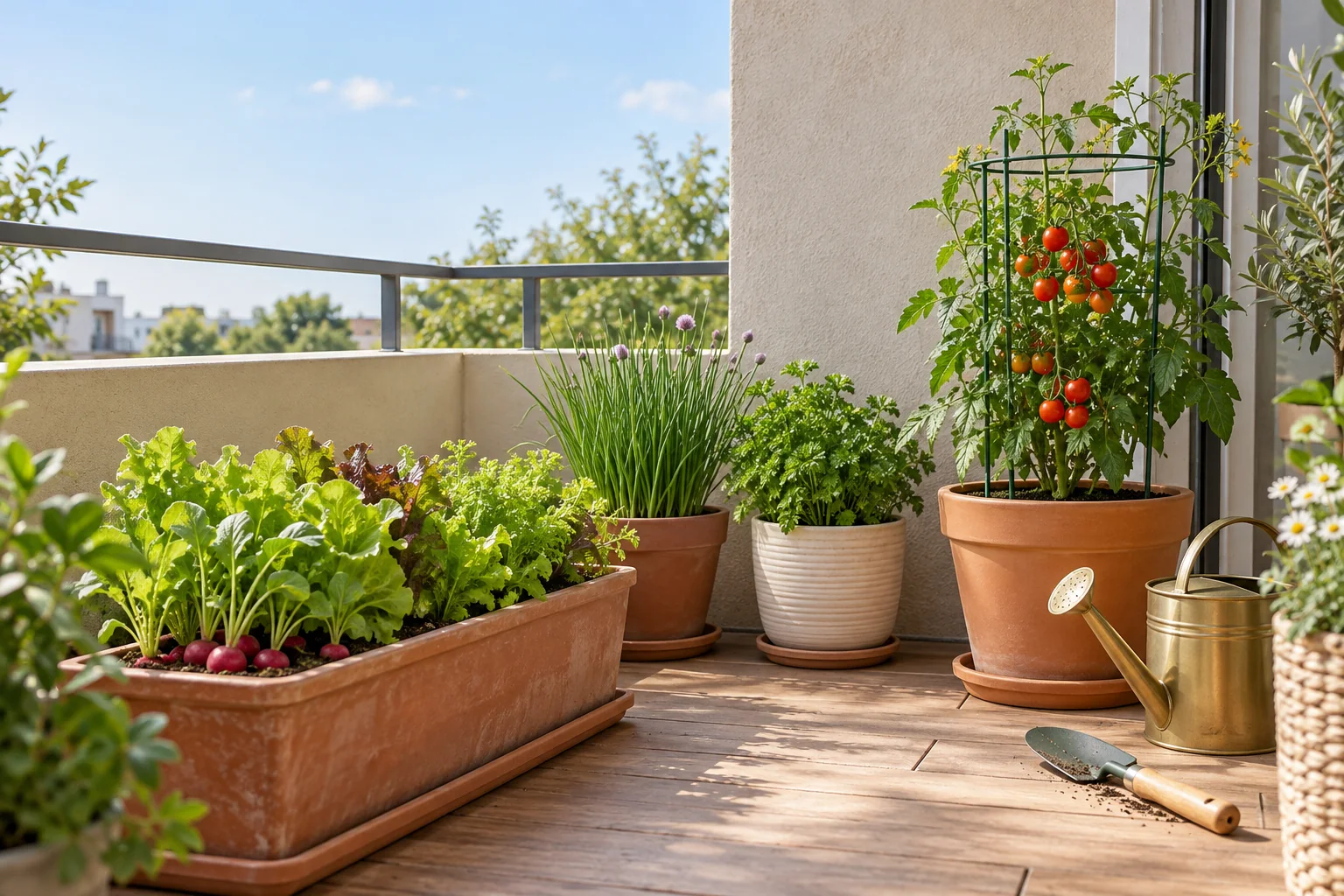
Grow a useful mini vegetable garden in pots or one small bed by matching crops to sunlight, container depth, water access, and your kitchen.
In this guide
- Measure the usable space
- Pick containers that hold enough soil
- Choose crops you will actually harvest
- Build one useful combination
- Plant in the right season
- Water without guessing
- Feed container crops carefully
- Support plants before they lean
- Harvest often and replant small gaps
- Common small-space mistakes
- Your first 30-minute setup
- Frequently asked questions
- Continue planning your garden
A mini vegetable garden can fit in a few pots, a window box, or one sunny corner of a small bed. Begin with the light and water you actually have, then grow three or four foods you use often. Leaf lettuce, radishes, herbs, compact peppers, and bush beans are easier to place than large pumpkins or sprawling squash.[9][10]
The goal is a garden you can reach, water, and harvest without moving furniture every day. A smaller setup that stays healthy will produce more useful food than a crowded collection of pots.
Check permission and weight first. On a balcony or roof terrace, confirm building rules and safe load limits before adding wet soil and large containers. Keep drainage water away from neighbors, walls, and walking routes.
Measure the usable space
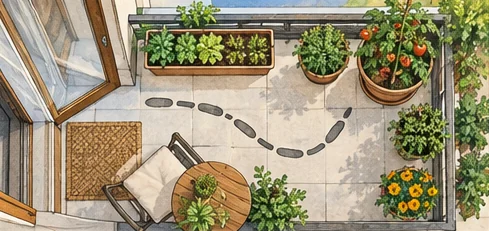
Measure the floor, ledge, or bed rather than estimating it from a photo. Mark doors, vents, railings, and the path you need for watering. Leave enough room to turn and reach every plant.
Observe direct sun for several ordinary days. Most fruiting crops, including tomatoes and peppers, need strong light. Leafy greens and some herbs can manage with less, especially in hot weather. A bright wall does not always mean the leaves receive direct sun.
Use this first decision:
| Your space | A practical starting point |
|---|---|
| Six or more hours of direct sun | One compact tomato or pepper, herbs, and quick greens |
| Four to six hours | Leaf lettuce, chard, parsley, chives, and radishes |
| Less than four hours | Focus on herbs and leafy crops that tolerate lower light; expect slower growth |
| Strong afternoon heat | Larger light-colored pots, mulch, and crops that tolerate heat |
| Windy balcony | Low crops, stable containers, and supports fixed to the pot rather than the railing |
Local heat, shade, and season can change these choices. Use seed packets and regional planting calendars before sowing.
Pick containers that hold enough soil
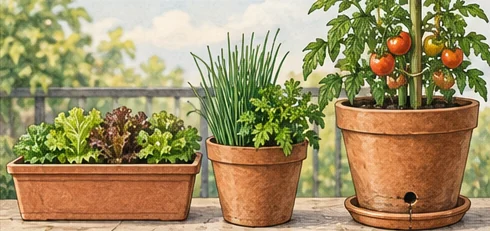
Every container needs drainage holes. Roots need both water and air, and a sealed pot can become waterlogged after one storm. Place a saucer where runoff must be contained, but empty standing water so the pot does not remain soaked.
Use food-safe containers when growing edible crops. Reused buckets should have a known history and a food-safe plastic designation. Containers that held chemicals, paint, oils, or unknown materials should not be used for food plants.[10]
Match pot size to the mature plant. Lettuce and shallow-rooted herbs can grow in a broad window box. A tomato needs a much larger volume of potting mix and a support. One large container is often easier to keep moist than several tiny pots.
Do not fill containers with garden soil. It can compact, drain poorly, and become too heavy. Use a potting mix made for containers.
Choose crops you will actually harvest
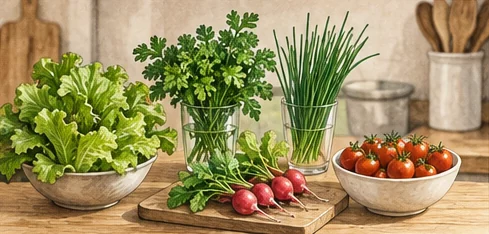
Make a short list from your kitchen. If you regularly buy basil, lettuce, parsley, chives, or small tomatoes, those crops have a clear purpose. Skip vegetables you rarely eat, even if they look appealing on a seed rack.
Beginner-friendly choices include:
- Cut-and-come-again lettuce for repeated small harvests.
- Radishes for a quick crop in a cool season.
- Parsley and chives for steady kitchen use.
- Bush beans where the season is warm enough.
- A compact tomato or pepper in the sunniest large pot.
Words such as bush, dwarf, patio, and compact can indicate a variety bred for smaller spaces, but always read the mature size. “Compact” does not mean it will fit in a coffee mug.[10]
Build one useful combination
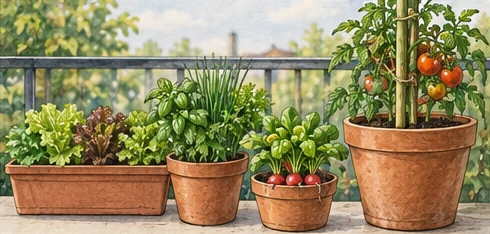
Avoid filling one pot with crops that have different water and root-space needs. A thirsty tomato can overwhelm small herbs planted around it. Give the tomato its own large container, then group herbs or greens separately.
A simple four-container setup might include:
- One large pot with a compact tomato and its support.
- One window box with leaf lettuce.
- One medium pot with parsley and chives.
- One shallow, wide container for a short run of radishes.
This arrangement creates different watering zones. It also lets you replace a finished radish crop without disturbing the tomato.
If space is extremely tight, choose one crop with a long harvest period and one quick crop. Two healthy containers are enough for a real start.
Plant in the right season
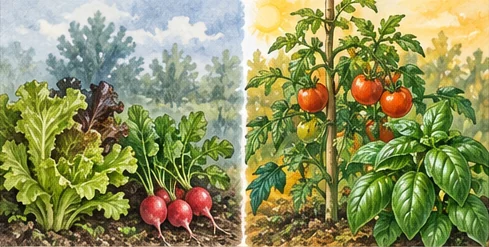
Cool-season crops and warm-season crops should not be forced into the same calendar. Lettuce and radishes prefer cooler conditions. Tomatoes, peppers, basil, and beans need warmer soil and frost-free weather.[9]
Use a local planting calendar and the seed packet. Balcony temperatures can differ from ground-level gardens because walls store heat and wind dries pots quickly. A sheltered south-facing balcony may warm early, while a shaded upper floor may stay cool.
For seeds, sow at the depth and spacing on the packet. For transplants, keep the top of the root ball level with the potting mix unless the label says the crop can be planted deeper. Water gently after planting.
Water without guessing
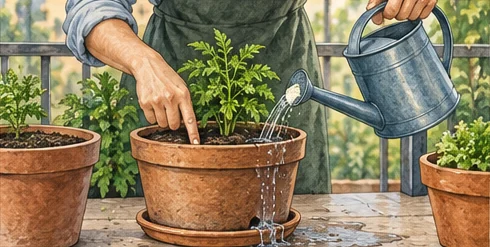
Containers dry faster than garden beds. Check them by pushing a finger into the top inch of mix and lifting smaller pots to learn their dry and wet weight. Water until excess begins to leave the drainage holes, then let the pot drain.
Morning is convenient because you can correct a dry pot before the hottest part of the day. In hot or windy weather, some containers may need another check later. Do not water every pot merely because one thirsty crop is dry.
Yellow leaves can come from too much water, too little water, poor drainage, low nutrients, or disease. Feel the mix and inspect the roots and drainage before changing the routine.
Feed container crops carefully
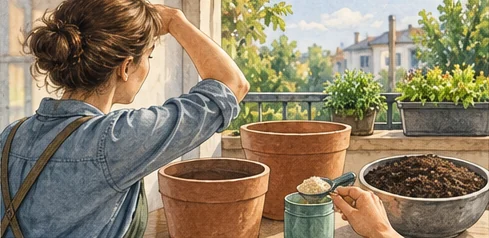
Potting mix holds a limited supply of nutrients. Use the fertilizer type and rate recommended for edible container crops, and follow the label. More fertilizer does not create a healthier plant. It can damage roots and encourage weak growth.
Slow growth may also come from low light, a pot that is too small, cool weather, or crowded roots. Check those conditions before adding more feed.
Support plants before they lean
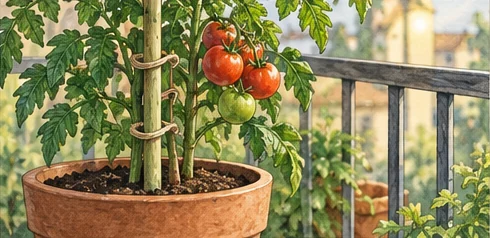
Install a tomato cage, stake, or small trellis at planting time so you do not damage a large root system later. Keep the support anchored in the pot. Do not attach a heavy plant to a balcony railing unless the building rules and hardware allow it.
Place tall plants where they will not shade greens. In the Northern Hemisphere, the north or west side of a small garden often reduces shading, but buildings and railings can change the pattern.[9]
Harvest often and replant small gaps
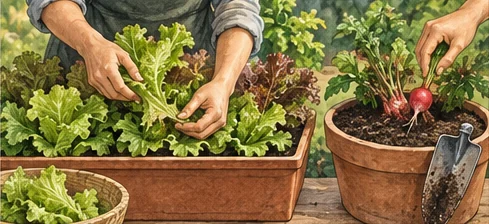
Pick outer lettuce leaves while the center continues growing. Cut herbs above healthy leaf nodes, taking only enough for the plant to recover. Harvest beans and radishes while they are tender.
When a quick crop finishes, remove the roots, refresh the top layer of mix if needed, and replant only if the season still suits the next crop. This is succession planting: one small space produces more than one crop at different times.[9]
Keep a note of planting and harvest dates. After one season, the record will tell you which containers earned their space.
Common small-space mistakes
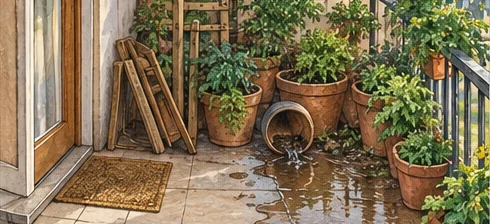
- Buying plants before measuring light and floor space.
- Using tiny decorative pots for mature vegetables.
- Growing food in containers with an unknown previous use.
- Mixing crops with very different water needs in one pot.
- Letting runoff sit against a wall or spill onto a neighbor’s space.
- Choosing large vining crops without a safe support.
- Filling every gap and losing access for watering.
Your first 30-minute setup
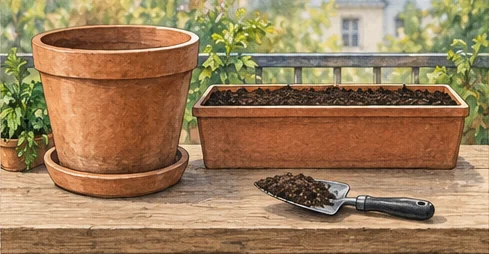
Choose the sunniest safe corner. Measure it, confirm water access, and select one large pot plus one window box. Plant one crop you cook with often and one quick leafy crop. Add more only after you can keep those two healthy for several weeks.
Frequently asked questions
What vegetables grow in very small pots?
Small pots suit compact herbs and short-lived leafy crops better than tomatoes or peppers. Even small crops grow more steadily when the pot holds enough mix to stay moist.
Can I grow vegetables on a north-facing balcony?
It may be difficult if the leaves receive little direct sun. Try shade-tolerant greens and herbs, track their growth, and avoid promising space to fruiting crops that need stronger light.
How often should I replace potting mix?
Replace mix that is compacted, contaminated, diseased, or no longer drains well. Healthy used mix may be refreshed for some crops, but rotate or discard it when disease has been present.
Can I grow vegetables indoors by a window?
Some herbs and greens may grow in a very bright window, but most vegetables need more light than an ordinary room provides. Indoor seed-starting lights can help, but they create a different setup.
Continue planning your garden
- Set up a balcony garden with safe access and watering.
- Choose beginner garden tools before buying duplicates.
- Build your free garden starter plan.
Sources
[9] University of Maryland Extension: How to Start a Vegetable Garden [10] University of Maryland Extension: Growing Vegetables in Containers and Salad Tables
Editorial note: planting dates and crop choices vary by climate. External sources are included for evidence and reader verification. This article contains no affiliate link, product price, or paid-product promotion.
Leave a Reply