
In this guide
Before you act
The smallest useful tool kit
- List this month’s jobs: Include anything that is hard to grip, reach, lift, or store.
- Buy for work you already do: Skip tools meant for a garden you may never have.
- Try the tool on a normal week: Make sure it feels comfortable and has a place to be stored.
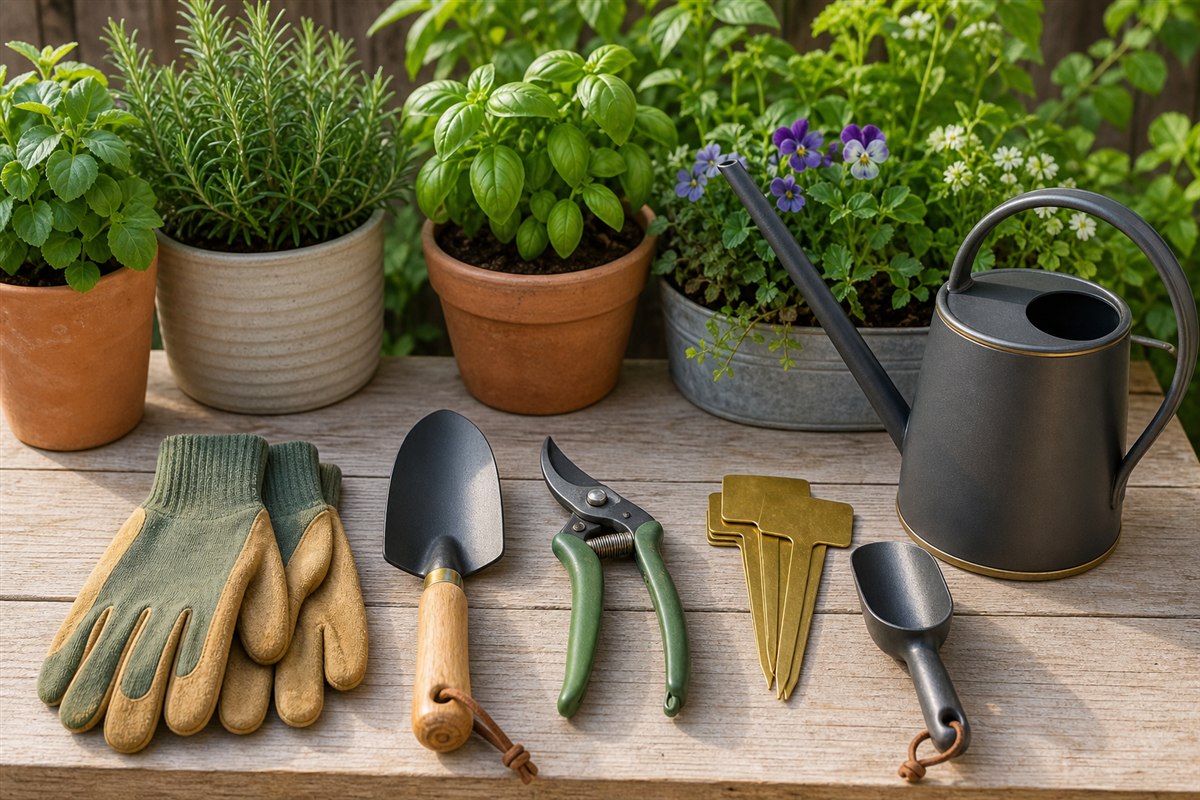
You do not need a large tool set to start gardening. Buy only what helps you plant, water, trim, carry, and protect your hands. The rest can wait until a real job shows you what is missing.
Use this list to choose a small starter kit for pots, a balcony, or one raised bed.
Match the tools to your garden

A few balcony pots need a watering can and hand tools. One raised bed may also need a watering wand and a bucket. Do not buy large-yard tools for a small container garden.
Put it into practice
- Container garden.
- Balcony garden.
- Raised bed garden.
- Small flower garden.
- Herb or vegetable starter garden.
Start with these six useful tools

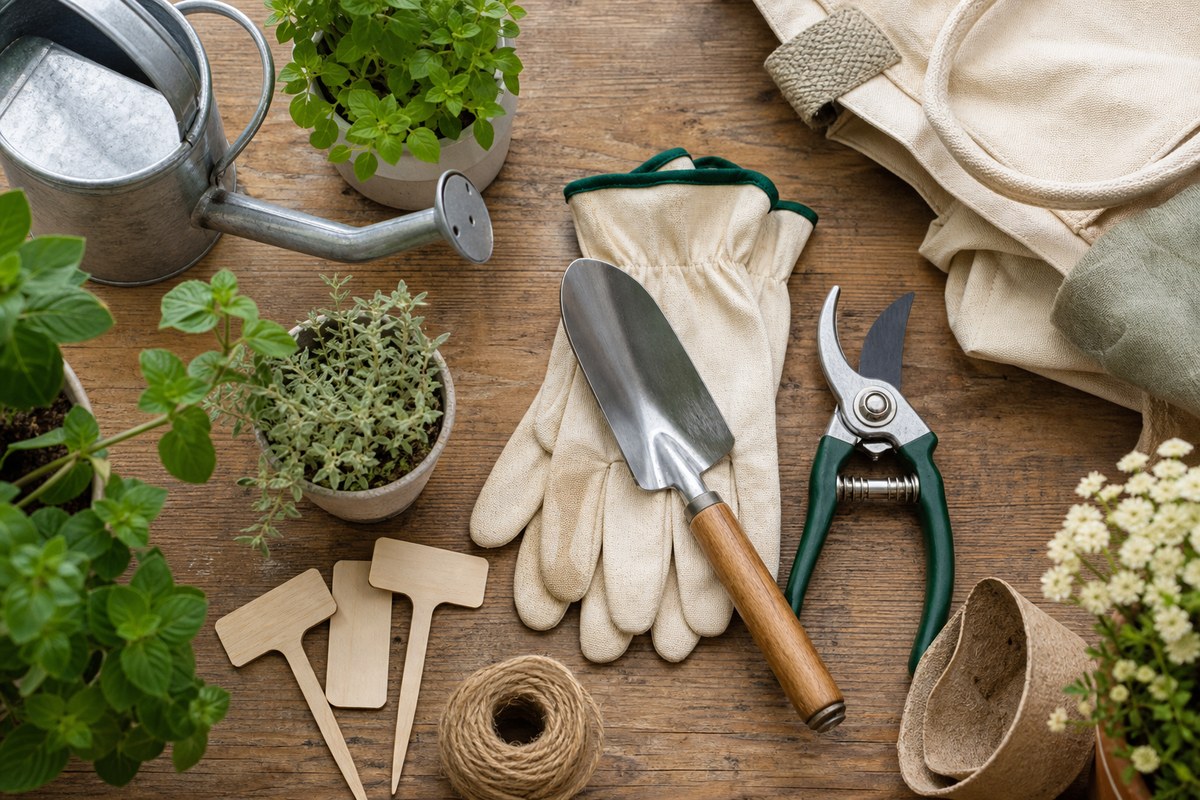
Most beginners need gloves, a hand trowel, pruning snips, a watering can or wand, plant labels, and a bucket or basket. Hold hand tools before buying when you can. They should feel comfortable and should not be heavier than the job requires.
Put it into practice
- Garden gloves.
- Hand trowel.
- Pruning snips.
- Watering can or watering wand.
- Plant labels.
- Bucket, trug, or small basket.
For pots and balcony gardens

A small trowel or scoop and a watering can with a narrow spout will handle most jobs. A potting mat can contain spills indoors. Put large pots in their final place before filling them; wet soil makes them much heavier.
Put it into practice
- Watering can suited to the space.
- Small trowel or scoop.
- Potting mat if working indoors.
- Labels or marker.
For one raised bed

A hand trowel is often enough for planting in a small bed. Use a watering wand for a gentle flow that does not wash soil away from seedlings. Keep labels and a simple notebook so you know what you planted and when.
Put it into practice
- Gloves.
- Hand trowel.
- Watering wand.
- Pruning snips.
- Labels and notebook.
Wait before buying these

Skip large bundles filled with tools you cannot name. You probably do not need specialist pruners, powered equipment, or decorative hand tools on day one. If the same garden job becomes awkward every week, then look for the tool that solves that specific problem.
Watch out for
- Large tool bundles with items you cannot name.
- Specialty pruning tools before you know your plants.
- Decorative tools that are uncomfortable.
- Large-yard tools for tiny container setups.
Beginner Tool Kit Selector
Choose tools for the garden you actually have
The useful beginner kit changes by garden type. Open your setup and skip tools that solve problems you do not have yet.
Balcony or patio Containers, railing planters, small corners
- Choose compact tools that store easily.
- Use a small watering can if water is carried indoors.
- Add a potting mat before messy repotting.
Raised bed One bed with vegetables, herbs, or flowers
- Choose tools that make reaching and watering comfortable.
- Keep hand tools close to the bed.
- Wait before buying large digging tools.
Mixed beginner garden A few pots plus a small border
- Start with gloves, trowel, snips, and watering.
- Label plants until you learn their needs.
- Buy upgrades only after a repeated task annoys you.
Quick rule: A smaller kit is better when every tool has a real job this month.
Related garden guides
What to do next
Choose another beginner guide, or use the free Garden Starter Planner to turn what you learned into a first-week plan.
FAQ
What tools does a beginner gardener really need?
Start with gloves, a hand trowel, pruning snips, a watering can or wand, labels, and a bucket or basket.
Should I buy a full garden tool set?
Only if you will use every tool. Buying a few useful tools separately often gives you a better fit and less clutter.
What tools do balcony gardeners need?
A compact watering can, a small trowel or scoop, labels, and comfortable gloves will cover most early jobs.