
In this guide
Before you act
Design around an ordinary week
- Count your available time: Be honest about the minutes you can spend watering, weeding, pruning, and tidying in a busy week.
- Make the garden fit that time: Use fewer plant types and remove chores you cannot repeat each week.
- Try the routine for a week: Add more only if the work still feels easy to keep up.
A low-maintenance garden still needs care, but the work should fit your life. Start with one small area, choose plants that suit it, and make watering easy.
If you have only ten minutes on most days, plan for ten minutes. A small garden that stays healthy will bring you more joy than a large one that feels like a chore.
Start with one small area

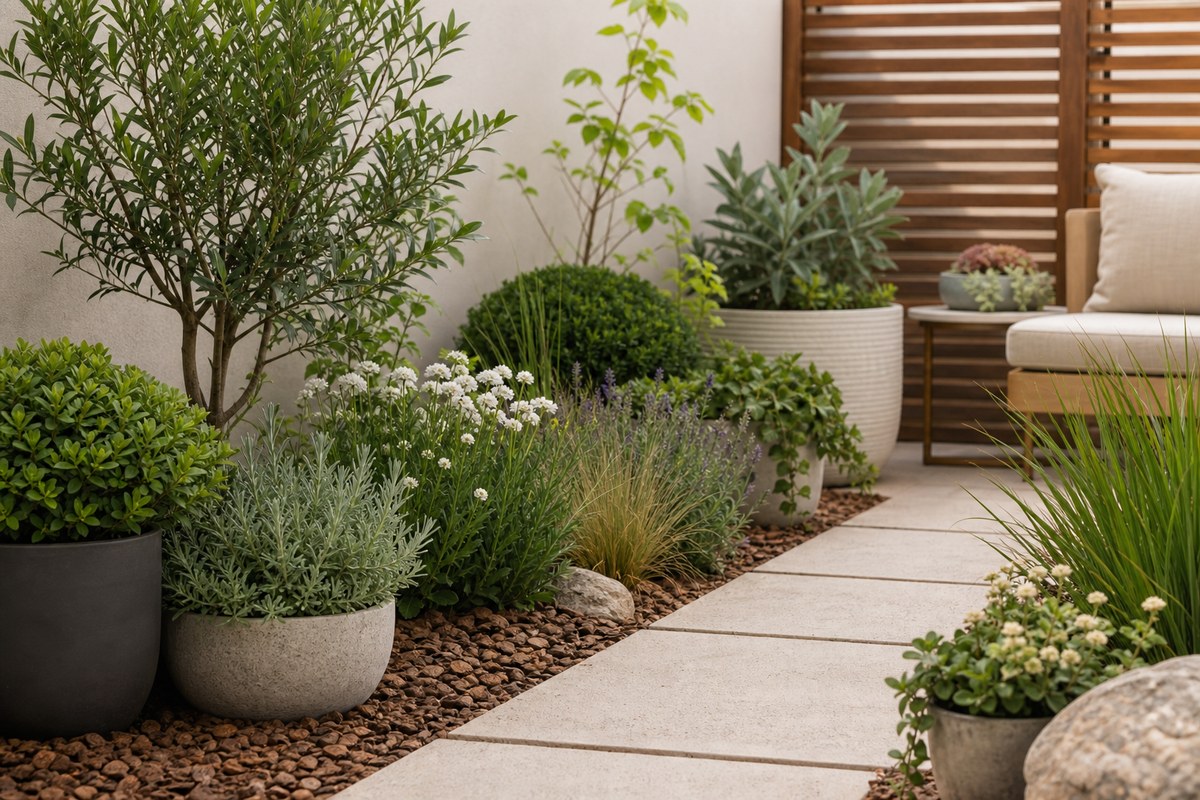
Choose one raised bed, one group of patio pots, or one herb corner. You can always add more after you know how much care the first area needs.
Put it into practice
- Choose one garden zone.
- Use fewer containers.
- Keep paths simple.
- Expand only after the first area works.
Choose plants that suit the spot

A plant is easy to care for only when it suits the space. A sun-loving plant in shade will struggle. A thirsty plant in a hot pot will need constant watering.
Watch the light before you shop. Check the plant’s mature size and ask a local nursery whether it suits your climate.
Put it into practice
- Track sunlight.
- Consider water access.
- Check mature size.
- Avoid plants that need constant special care.
Make watering quick

Keep pots close to a tap or to the place where you fill your watering can. Put plants with similar water needs together, so you can water one group at a time.
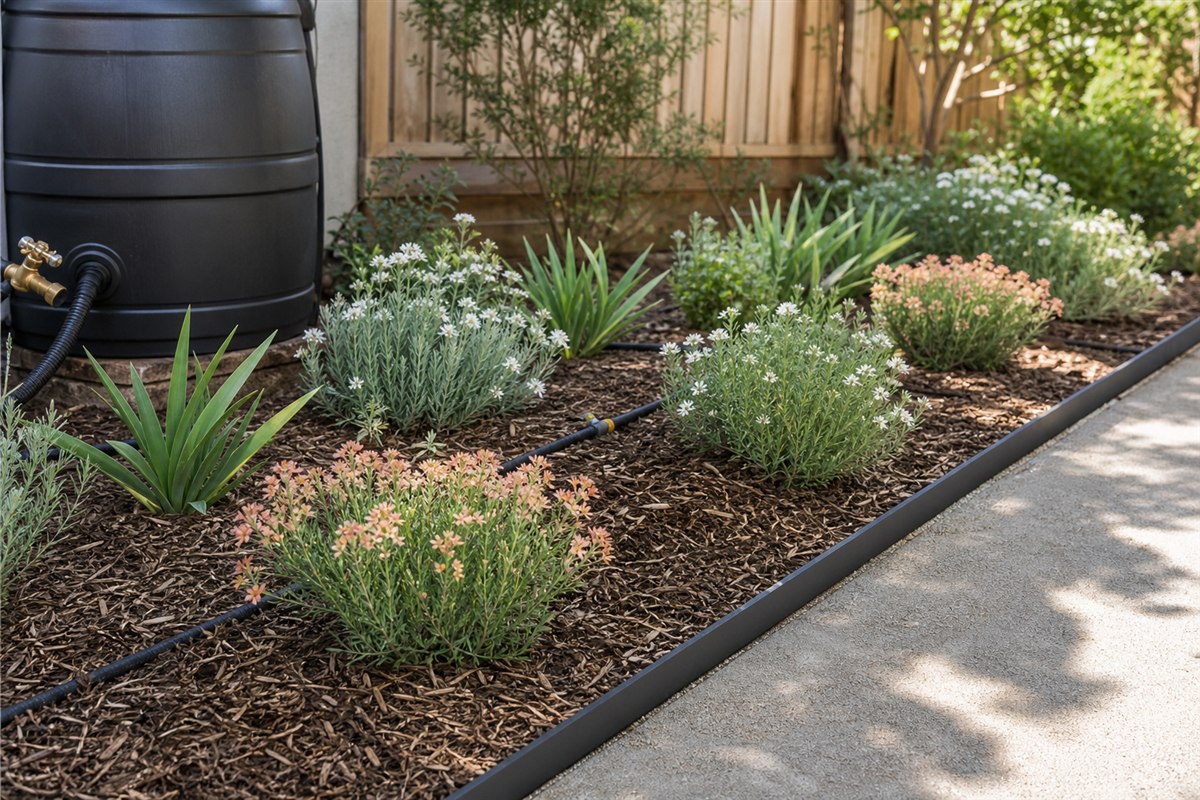
Mulch, self-watering pots, or a simple drip line can reduce the work, but check the soil yourself until you learn how quickly it dries.
Put it into practice
- Group similar plants.
- Keep watering tools nearby.
- Use mulch only where it suits the plants and soil.
- Avoid too many tiny pots.
Repeat a few plants and colours

You do not need many different plants to make a garden look finished. Repeat one planter colour, two or three reliable plants, and a small colour palette. The result feels calm and is easier to shop for and maintain.
Put it into practice
- Repeat planter colors.
- Use a limited plant palette.
- Choose simple edging or containers.
- Avoid too many decor themes.
Follow a short weekly routine

Once a week, walk around the garden with a watering can and a small container for dead leaves. Check the soil, look under a few leaves, harvest anything ready, and note one job for later. Ten focused minutes can prevent a much bigger cleanup.
Put it into practice
- Check watering needs.
- Remove dead leaves.
- Harvest herbs or greens.
- Write down what needs attention.
Weekly Care Micro-Routine
Build a 10-minute weekly garden reset
A low-maintenance garden still needs rhythm. Use this tiny routine so care feels obvious instead of becoming a weekend project.
Look first Any low-maintenance garden
- Walk the same route each week.
- Check the plants at the edge of the path.
- Notice one problem before it spreads.
Water or trim Gardens with containers or fast growers
- Water grouped pots together.
- Cut one messy stem instead of pruning everything.
- Top up mulch where soil is exposed.
Reset the view Spaces meant to feel calm
- Sweep the main path or seating area.
- Turn one container toward the best side.
- Remove one item that makes the space look crowded.
Quick rule: The routine works because it is small enough to repeat before the garden feels messy.
Related garden guides
What to do next
Choose another beginner guide, or use the free Garden Starter Planner to turn what you learned into a first-week plan.
FAQ
What makes a garden low-maintenance?
A low-maintenance garden is small enough to manage, easy to water, and filled with plants that suit the light and climate.
Can a beginner have a low-maintenance garden?
Yes. Start with one small area, choose plants that suit it, and check the garden at the same time each week.
Are container gardens low-maintenance?
They can be. Choose larger pots with drainage holes and keep them near water. Very small pots dry out quickly and usually need more attention.
Comments
One response to “Low-Maintenance Garden Ideas for Beginners Who Want Beauty Without Overwhelm”
[…] Review the low-maintenance garden guide before choosing a rock-heavy planting bed. […]