
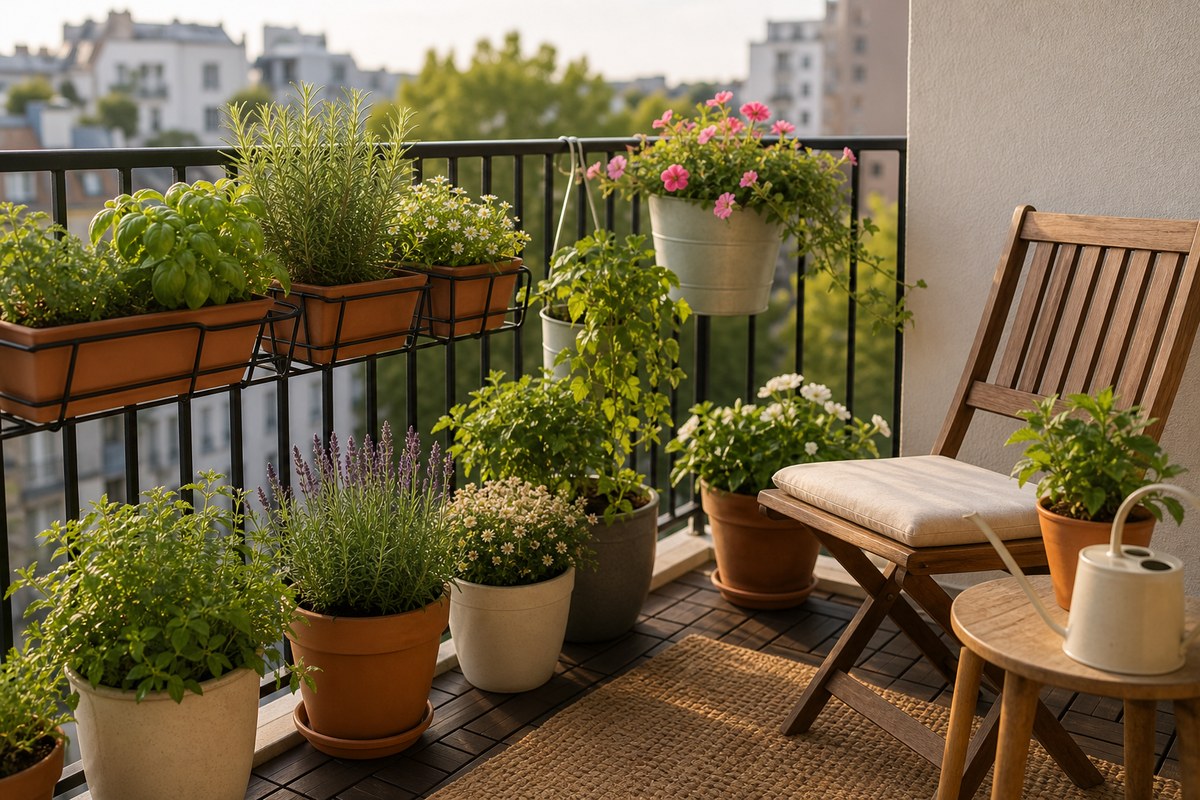
In this guide
Before you act
Balcony safety and access
- Check the space: Measure the usable floor, note the wind, and confirm the railing and weight rules.
- Plan one pot group: Keep it movable and leave a clear path to the door and water source.
- Watch it for a week: Check for tipping, difficult watering, and blocked walking space before adding more.
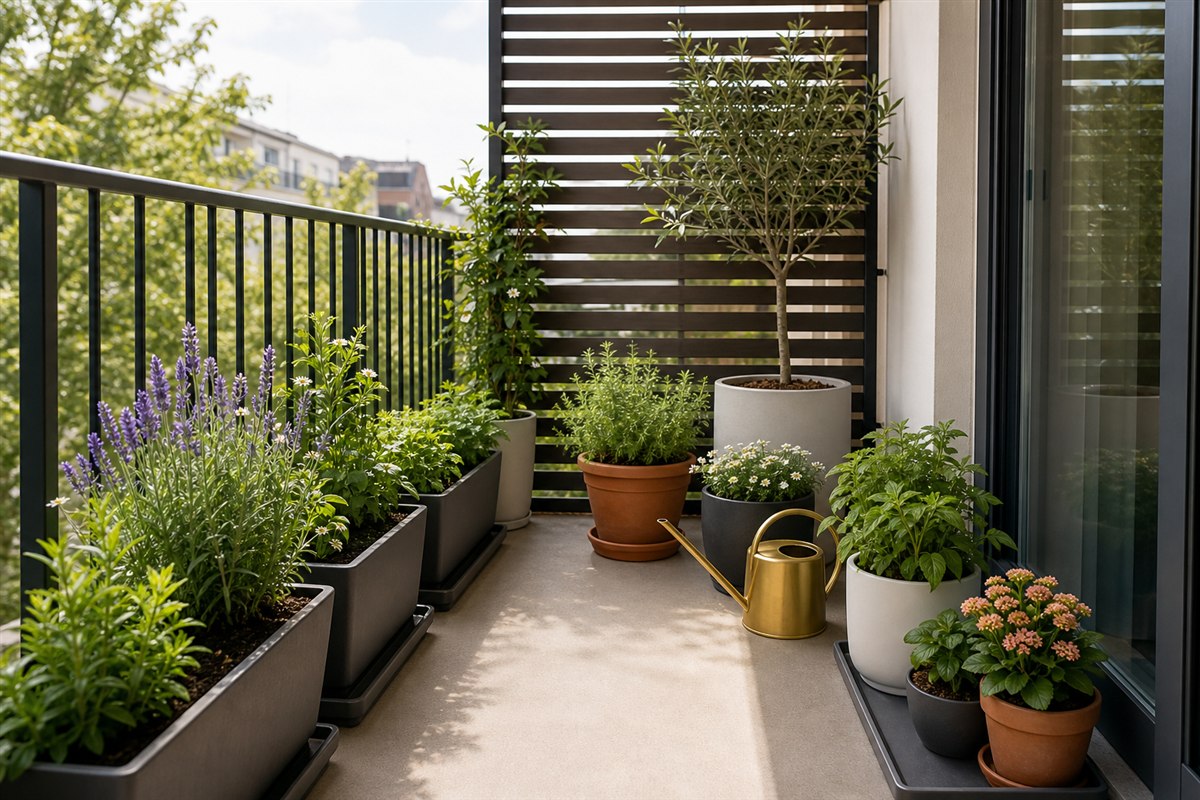
A balcony can become a lovely outdoor room, even when it is small. Begin with safety: check the building rules, the weight the balcony can hold, and where extra water will go.
Next, notice the sunlight and wind and decide how you will carry water outside. These checks make it much easier to choose pots, plants, and a comfortable place to sit.
Check the building rules first

If you rent or share a building, ask what you may place or attach outside. Check before adding railing boxes, trellises, hanging pots, or large containers.
Ask about weight limits and drainage too. Soil and pots become much heavier when wet, and water must not fall onto neighbours or damage the building.
Put it into practice
- Check weight restrictions.
- Ask about railing planters.
- Confirm drainage rules.
- Avoid blocking exits or walkways.
Watch the sun and wind

Watch the balcony in the morning, around midday, and later in the day. Notice where direct sun reaches, which corners become hot, and where the wind is strongest.
Think about watering before adding plants. If you must carry water through the home, begin with only a few pots that are easy to reach.
Put it into practice
- Track direct sun hours.
- Notice windy corners.
- Plan where extra water goes.
- Group plants with similar watering needs.
Choose what the balcony should do

Choose one main purpose before shopping. You might grow cooking herbs, add flowers, harvest a few vegetables, or make a quiet place to sit.
Starting with one purpose keeps the balcony clear and the cost under control. You can add more after you learn how the space behaves.
Put it into practice
- Herb garden for cooking.
- Flower garden for color.
- Vegetable containers for food.
- Cozy patio-style balcony.
- Vertical garden for limited floor space.
Choose safe pots for the plants and balcony

Choose steady pots with drainage holes and enough room for the plants at full size. Check how much each pot will weigh when filled, and make sure the wind cannot tip it over.
A self-watering pot may help during hot weather, but you still need to check the soil and learn how much water each plant uses.
Put it into practice
- Start with fewer containers.
- Avoid oversized heavy planters.
- Use saucers only where allowed.
- Choose stable containers for windy areas.
Add comfort after the plants have a place

Once the pots are safely placed, add one or two comforts, such as a small chair, an outdoor rug, or a weather-safe light.
Repeat a few colors or materials instead of filling the balcony with unrelated objects. Keep the exit, walking space, and access to every plant clear.
Put it into practice
- Use one or two planter colors.
- Keep floor space open.
- Add lights only where safe.
- Choose decor that can handle weather.
Balcony Condition Check
Check the balcony before choosing plants
Balconies fail when the plant plan ignores real conditions. Open each check and match your setup to what the space actually gives you.
Sun check Balconies with strong afternoon light
- Track when direct sun hits the floor.
- Use heat-tolerant herbs or flowers for hot walls.
- Keep shade-loving plants away from reflective glass.
Wind check High floors, open railings, or exposed corners
- Choose heavier pots before tall decor.
- Keep delicate stems away from the railing edge.
- Use grouped containers to reduce drying.
Water check Balconies without an outdoor tap
- Keep the watering route short.
- Use saucers where runoff would bother neighbors.
- Start with fewer pots if water must be carried.
Quick rule: A balcony garden is easier when the plants match the harshest condition, not the prettiest corner.
Related garden guides
What to do next
Choose another beginner guide, or use the free Garden Starter Planner to turn what you learned into a first-week plan.
FAQ
Can I start a balcony garden in an apartment?
Yes. Check the building or rental rules first, especially for weight, drainage, railing planters, and anything attached to the building.
What should I grow first on a balcony?
Try herbs, compact flowers, or one or two vegetables that grow well in pots. Choose them only after checking the sunlight.
How many containers should a beginner start with?
Start with three to five pots that you can reach and water easily. Add more only when caring for them still feels manageable.