
In this guide
Before you act
One reachable raised bed
- Mark the bed on the ground: Make sure you can reach the middle without stepping on the soil.
- Check the basics before buying: Confirm the sunlight, water access, path width, and amount of soil you will need.
- Walk around the outline for a week: Move it now if it blocks a path or is awkward to water.
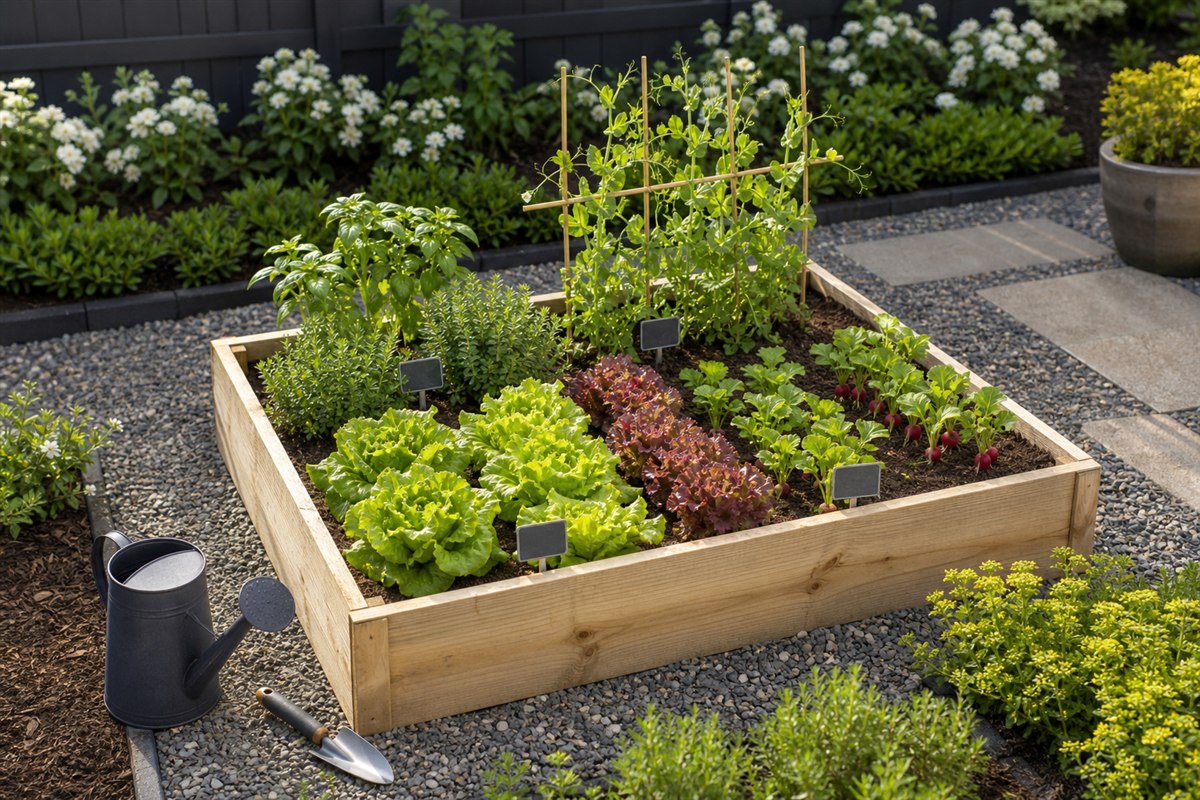
A raised bed gives your first garden a clear shape. It can hold herbs, flowers, salad leaves, or a few vegetables in one easy-to-see place.
Begin with one bed. Put it near water, make sure the plants will get enough sun, and keep the middle within reach. You can add another bed next year if you enjoy caring for the first one.
Choose the best place for the bed

Choose a place you can reach comfortably and see often. Keep it close enough to a hose or watering can so watering does not become a difficult job.
Watch the sunlight before deciding. Many vegetables and herbs need plenty of direct sun, while some leafy vegetables and flowers can grow with less.
Put it into practice
- Check sun exposure.
- Keep water access close.
- Leave room to walk around the bed.
- Avoid areas with poor drainage or heavy tree roots.
Make the first bed easy to reach

You should be able to reach the middle without stepping on the soil. Check this from every side you will use before building or buying the bed.
Also work out how much soil the bed needs. A large or deep bed can cost much more to fill than expected.
Put it into practice
- Avoid starting with several beds at once.
- Choose a width you can reach across.
- Plan paths before placing the bed.
- Estimate soil needs before buying materials.
Choose a simple first crop

Decide whether the bed is mainly for herbs, salad leaves, flowers, or vegetables. This choice tells you how much spacing, sunlight, and water the plants need.
Pick only a few kinds of plants in the first season. Choose things you will enjoy eating or seeing, because you are more likely to notice and care for them.
Put it into practice
- Herbs for cooking.
- Lettuce and greens for quick harvests.
- Flowers for beauty and motivation.
- A few beginner vegetables.
Buy only what the bed needs

Start with the bed or building materials, soil made for raised beds, a way to water, labels, and a few seeds or plants.
A ready-made kit can save time. Building your own may cost less if you already have the right tools and know how to make it stable and safe.
Put it into practice
- Raised bed frame or materials.
- Growing mix suited to raised beds.
- Watering can, hose, or wand.
- Gloves and hand trowel.
- Seeds or starter plants.
Keep a few notes during the first season

Write down what you planted, when you watered, what grew well, and which jobs took too much time. A few simple notes will make next season easier and cheaper.
One struggling plant does not mean the whole bed failed. Look for the cause, change one thing, and keep what worked.
Put it into practice
- Track planting dates.
- Write down watering patterns.
- Note pest or disease issues without panic.
- Record what you would repeat.
Raised Bed Size Checker
Choose a raised bed size you can actually reach
A raised bed should make care easier. Use these size checks before buying lumber, soil, or a kit.
2 x 4 starter bed Tiny yards or first-season testing
- Good for herbs, greens, and a first test crop.
- Needs less soil, so mistakes cost less.
- Works well when space is narrow.
3 x 6 everyday bed A balanced beginner vegetable bed
- Large enough for variety without feeling huge.
- Keep access on both long sides.
- Plan watering before adding more beds.
4 x 8 only if reachable Open yards with room on every side
- Avoid placing a wide bed against a wall.
- Confirm you can reach the center comfortably.
- Budget for the soil volume before buying.
Quick rule: The best first bed is the one you can weed, water, and harvest without stepping into it.
Related garden guides
What to do next
Choose another beginner guide, or use the free Garden Starter Planner to turn what you learned into a first-week plan.
FAQ
What size raised bed should a beginner start with?
Choose a bed that lets you reach the middle without stepping on the soil. One reachable bed is enough for a first season.
Are raised beds expensive?
They can be. Keep the cost down by starting with one bed, calculating the soil before shopping, and buying only the basic tools.
What should I plant first in a raised bed?
Herbs, salad leaves, compact flowers, radishes, and bush beans can be good first choices when they suit your season and sunlight.