
In this guide
Before you act
Give the space one job
- Choose the garden’s first job: Measure the usable space, then pick food, flowers, seating, privacy, or a quiet place.
- Finish one small area first: Make that first purpose work before adding another.
- Use the space for a week: Keep what works and change anything that blocks movement or care.
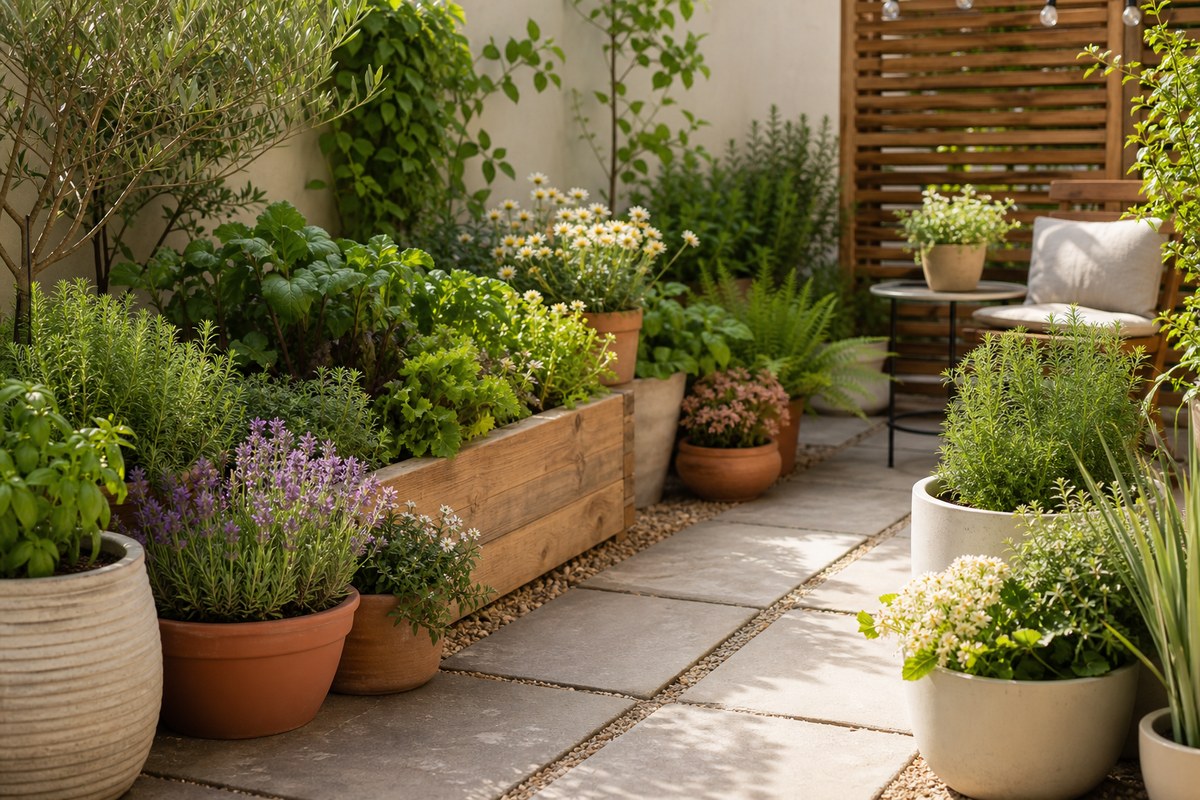
A small garden can be one of the easiest places to begin. You can see the whole space, reach every plant, and notice quickly what works.
Start by choosing one job for one small area. You might grow herbs, add flowers, make a quiet seat, or plant a few vegetables. Once that part works, you can add more without wasting money or crowding the space.
Choose one job for the space

Decide what you want most before choosing plants. Herbs need to be easy to reach. Vegetables often need more sun and water. A place to sit needs enough open floor space.
Pick one goal now. The rest can wait until the first area is growing well and still feels easy to care for.
Choose what fits
- Grow herbs near the kitchen.
- Create a cozy seating corner.
- Add flowers around a patio edge.
- Build one beginner raised bed.
- Create a container vegetable setup.
Draw a simple layout

Measure the area and mark the path you need for walking and watering. Then choose one clear arrangement: a group of pots, a row beside a path, or one raised bed you can reach from every side.
Leave room to sit, turn, carry a watering can, and reach every plant. A crowded garden becomes tiring very quickly.
Put it into practice
- Use tall planters at the back and lower plants in front.
- Repeat one planter color for a calmer look.
- Keep walking paths clear.
- Place frequently used herbs closest to the door.
Five easy ways to begin

Choose the idea that best matches your space and what you want from it:
Put it into practice
- Container herb corner.
- Single raised bed garden.
- Patio planter cluster.
- Vertical wall planter.
- Flower and greenery border.
Buy the useful basics first

Start with the pots or bed, the right soil mix, and an easy way to water. Add decorations after you know where the plants will live.
Buy only a few plants on the first trip. Choose plants that match the sunlight and have enough room at their full-grown size.
Put it into practice
- Containers that fit the actual space.
- A watering can or hose attachment.
- Potting mix or bed mix suited to the setup.
- Gloves and a hand trowel.
- Plant labels or a small notebook.
Avoid these common mistakes

Overcrowding causes many small-garden problems. Plants grow wider, pots become heavy when filled, and you still need room to move and water.
Also check the sunlight before shopping. An easy-care plant can still struggle when the space is too dark, too hot, or too dry for it.
Watch out for
- Buying plants before measuring.
- Choosing containers with poor drainage.
- Ignoring mature plant size.
- Mixing too many styles at once.
- Forgetting how watering will work.
Small Garden Goal Picker
Pick one garden job before you buy plants
Open the option that sounds closest to your space. The mini layouts show what to buy first, what to skip, and where the first money should go.
Useful herb corner A sunny edge near the kitchen
- Start with 3 herbs you already cook with.
- Buy potting mix before decor.
- Keep the planter close enough to harvest often.
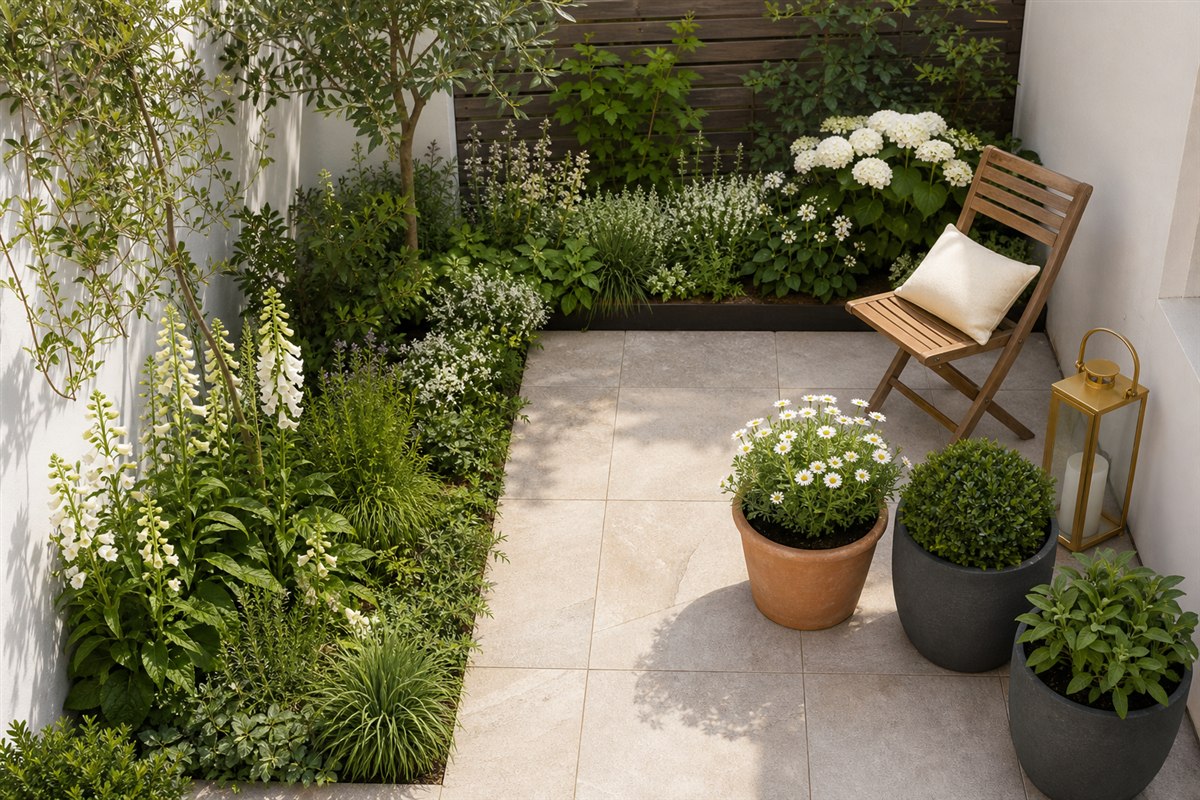
Calm seating corner A patio or balcony that should feel finished
- Anchor the space with one seat first.
- Use 2 repeated planters instead of many small ones.
- Add lighting after the walking path is clear.
Flower focal point The fastest visible upgrade
- Choose one color family before shopping.
- Place taller plants behind lower flowers.
- Leave blank space so the display looks intentional.
Quick rule: If one option feels useful immediately, build that first version and save the other ideas for later.
Related garden guides
What to do next
Choose another beginner guide, or use the free Garden Starter Planner to turn what you learned into a first-week plan.
FAQ
What is the easiest small garden for a beginner?
A few herb pots or one small raised bed are good first projects. Both are easy to see, reach, and water.
How do I make a small garden look elegant?
Repeat one or two pot colors, keep plants in clear groups, and leave open space around seats and paths.
Should I buy plants or containers first?
Plan the layout and choose the pots first. Then buy plants that fit the sunlight, pot size, and time you have for care.