Skip to content

Category: Garden Design

  • Indoor-Outdoor Plant Decor Ideas That Feel Calm and Collected

    Indoor-Outdoor Plant Decor Ideas That Feel Calm and Collected

    ← All garden guides5 min read
    In this guide
    1. 1. Start with the main sightline
    2. 2. Create a readable height rhythm
    3. 3. Style the window without blocking the light
    4. 4. Let useful pieces carry the decor
    5. 5. Check plant and household safety
    6. A simple weekend decor plan
    7. Continue with the matching guide
    8. Separate the styling decision from the plant-care decision
    9. Sources and verification

    Before you act

    Connect the spaces without compromising plant care

    1. Compare both sides of the door: Check light, moisture, temperature changes, drainage, and access for children or pets.
    2. Link the look, not the growing conditions: Repeat pot colours or leaf shapes while keeping each plant in the place it needs.
    3. Check the arrangement after a week: Move anything that blocks a door, makes watering difficult, or leaves a plant struggling.

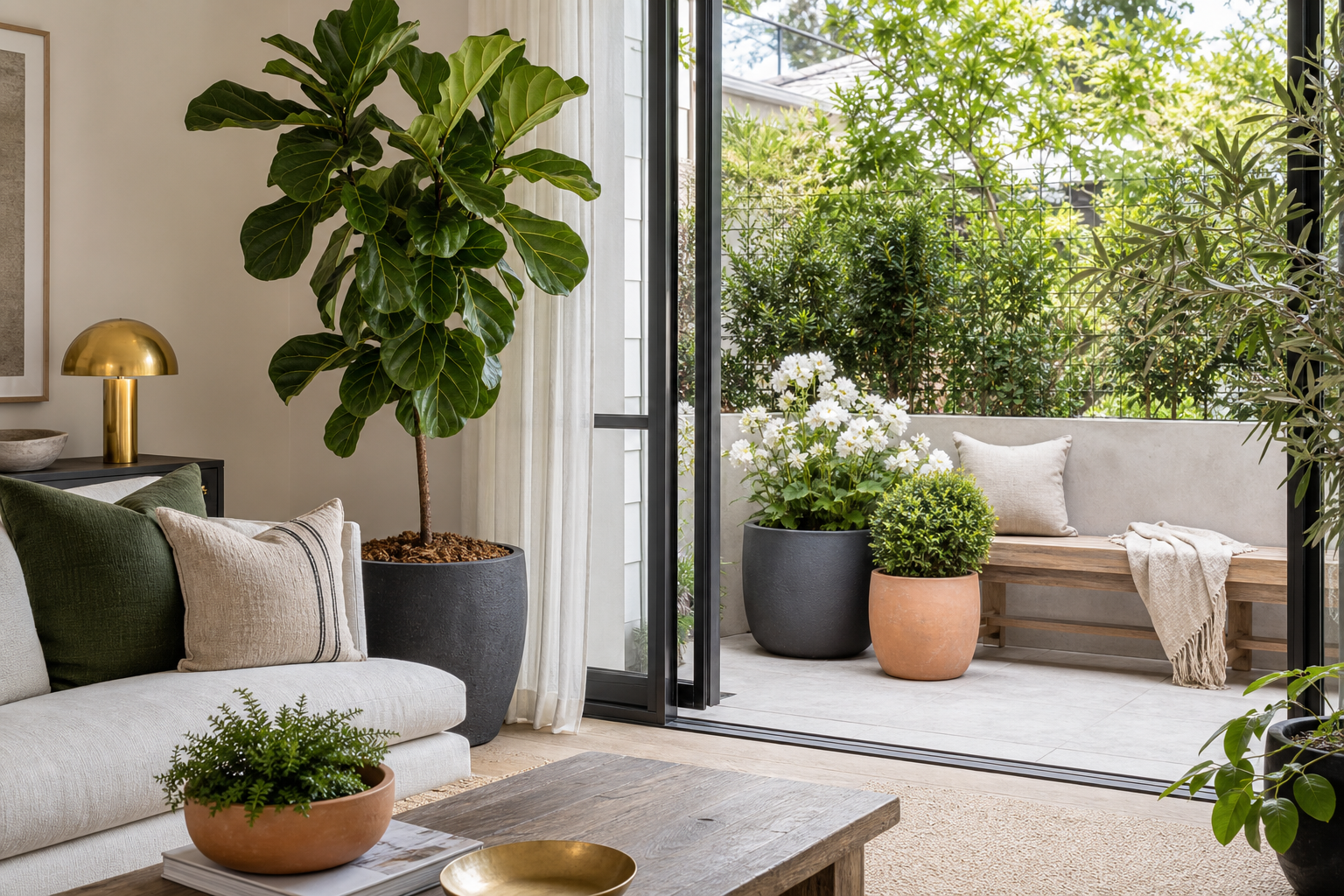
    The easiest way to make home and garden decor feel connected is to repeat a few decisions across the window or doorway. You do not need matching furniture or dozens of plants. One planter family, one foliage shape, and one warm accent can make an indoor room and outdoor corner feel like one calm composition.

    Visual bridge

    Repeat four details, not every object

    Move from the room to the garden with a quiet sequence the eye can follow.

    1. Start with the main sightline

    Living-room view toward a patio framed by one tall plant with the doorway kept open
    See it in practiceFrame the viewPlace one strong plant where it leads the eye without narrowing the way through.

    Sit in the room you use most and look toward the garden, balcony, or window. The outdoor focal point should land inside that view. It might be a flowering container, a small tree, or a bench framed by plants. Move the focal point before adding smaller decor.

    If there is no direct outdoor view, use the same idea at the entrance: a strong plant group near the threshold makes the transition feel deliberate.

    2. Create a readable height rhythm

    Use one tall element, one medium mass, and one low edge. Indoors, that might be a floor plant, a plant on a console, and a low bowl. Outdoors, it could be a compact shrub, a medium planter, and a trailing edge plant. Avoid placing every pot on the floor at the same height.

    Keep visual height away from door swings, curtains, heaters, air vents, and narrow walking routes. Plants still need light and care access after the styling photograph is taken.
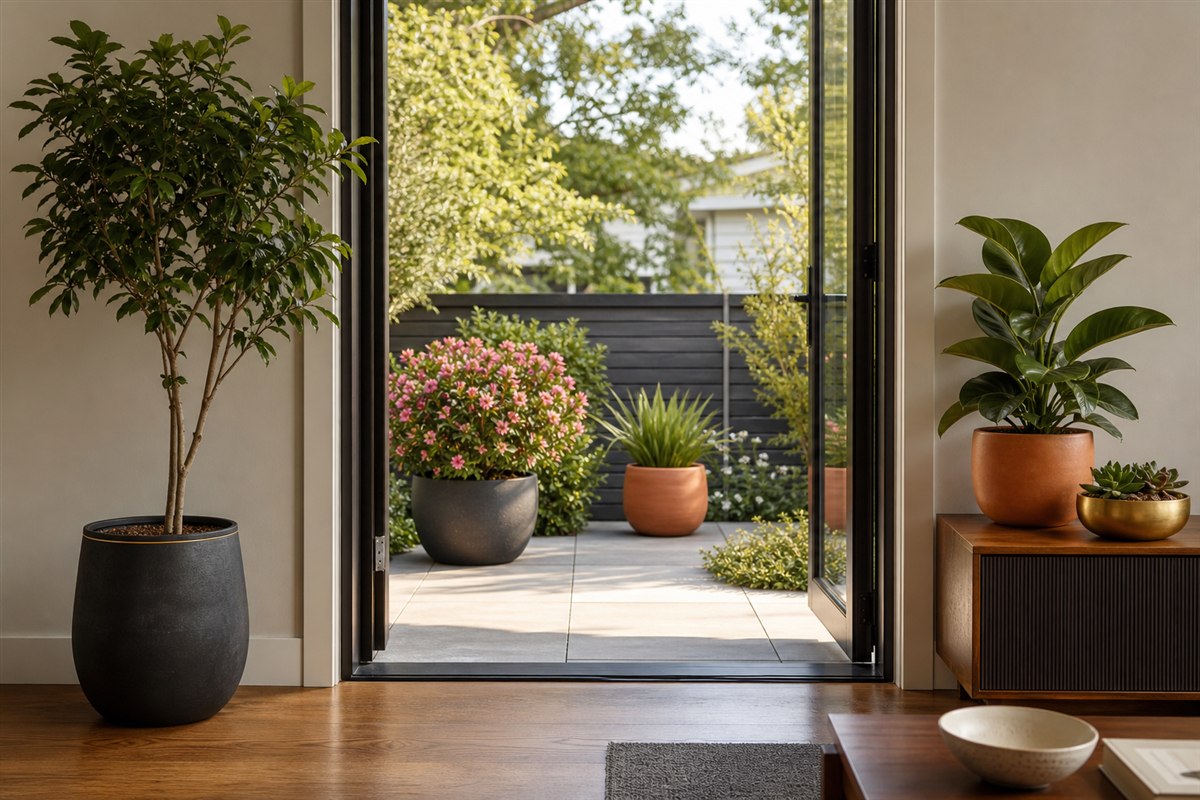
    Indoor and patio plants arranged in tall, medium, and low layers around an open doorway
    Reference: repeat planter materials and plant heights across the doorway while preserving the sightline and walking route.

    3. Style the window without blocking the light

    Two small plants at the sides of a bright window with daylight entering between them
    See it in practiceKeep the daylight openMove pots to the sides of the window so leaves get light without darkening the room.

    A crowded windowsill can reduce useful light and make watering awkward. Use fewer, wider-spaced plants and leave the latch, blind, and glass accessible. Outdoors, position the strongest plant group slightly off-center so it frames the view rather than covering it.

    4. Let useful pieces carry the decor

    Plant stand, woven basket, tray and watering can supporting a tidy group of healthy plants
    See it in practiceLet useful pieces do moreA tray, stand, basket and watering can can keep the area tidy and finished.

    A good planter, watering can, storage bench, plant shelf, or weather-safe light can be both useful and beautiful. Choose one finish and repeat it. Before buying, ask what job the object performs and where it will live in winter.

    For balconies and patios, confirm wet weight, wind exposure, railing safety, and runoff. For indoor plants, protect surfaces and floors while still allowing excess water to leave the root zone.

    5. Check plant and household safety

    Stable floor planter and hanging foliage arranged away from a walkway and a curious cat
    See it in practiceCheck everyday safetyKeep pots stable, floors dry and tempting leaves away from pets and children.
    • Check whether each plant is safe around the pets and children in your home.
    • Confirm that outdoor nursery plants match your growing zone and are not being treated as indoor plants.
    • Keep heavy pots on stable surfaces and away from railing edges.
    • Use weather-rated lighting and keep cords away from water routes.
    • Leave enough room to clean glass, sweep floors, and inspect leaves.

    A simple weekend decor plan

    A small indoor corner being measured, planted and reviewed from a few steps away
    See it in practiceBuild one corner at a timeMeasure the corner, place two or three plants, then step back and adjust the balance.
    1. Remove unrelated objects from the main sightline.
    2. Choose one planter material and one accent color already present in the room.
    3. Place one tall anchor, then one medium group, then one low detail.
    4. Live with the arrangement for two days and test watering and walking.
    5. Add only the missing useful piece; do not refill every empty corner.

    Transition workbook

    Separate the styling decision from the plant-care decision

    Indoor and outdoor areas can look connected without asking one plant to tolerate two incompatible environments. Repeat a planter color, leaf shape, material, or height rhythm first. Choose the actual plants only after comparing conditions on both sides of the door.

    ConditionIndoor checkOutdoor checkDecision
    LightNote direct sun on the leaves, not general room brightness.Record midday heat and reflected light from walls or glass.Use different plants if the exposures do not match.
    WaterProtect floors and confirm drainage can be emptied safely.Check rain exposure, runoff, and how quickly containers dry.Keep similar-looking pots but adjust the growing mix and care routine.
    TemperatureNotice heating, cooling, and drafts near the doorway.Consider wind and ordinary seasonal swings.Move plants gradually only when their requirements allow it.
    SafetyCheck pets, children, and unstable stands.Check railing edges, wind, and trip routes.Change placement before adding decorative layers.

    A calmer styling sequence: begin with one repeated material, add a single height echo, then use foliage as the final connector. Review the view from indoors and outdoors separately. If an object blocks watering, catches a door, or creates an unstable perch, it does not belong in the finished arrangement even when it matches the palette.
  • Budget Garden Makeover Ideas That Look Elegant Without Overspending

    Budget Garden Makeover Ideas That Look Elegant Without Overspending

    ← All garden guides4 min read
    In this guide
    1. Clear the space before shopping
    2. Choose one result
    3. Repeat colours and materials
    4. Spend first on changes you will use
    5. Avoid cheap purchases that create clutter
    6. Related Beginner Garden Guides
    7. Next Step
    8. FAQ
    9. Sources and verification

    Before you act

    A makeover with a stopping point

    1. Choose one problem: Set your full budget, then name the one view or practical issue you most want to improve.
    2. Spend in a useful order: Clear clutter, fix access or soil problems, then make one visible improvement.
    3. Live with the change for a week: Add something else only if the space still needs it.
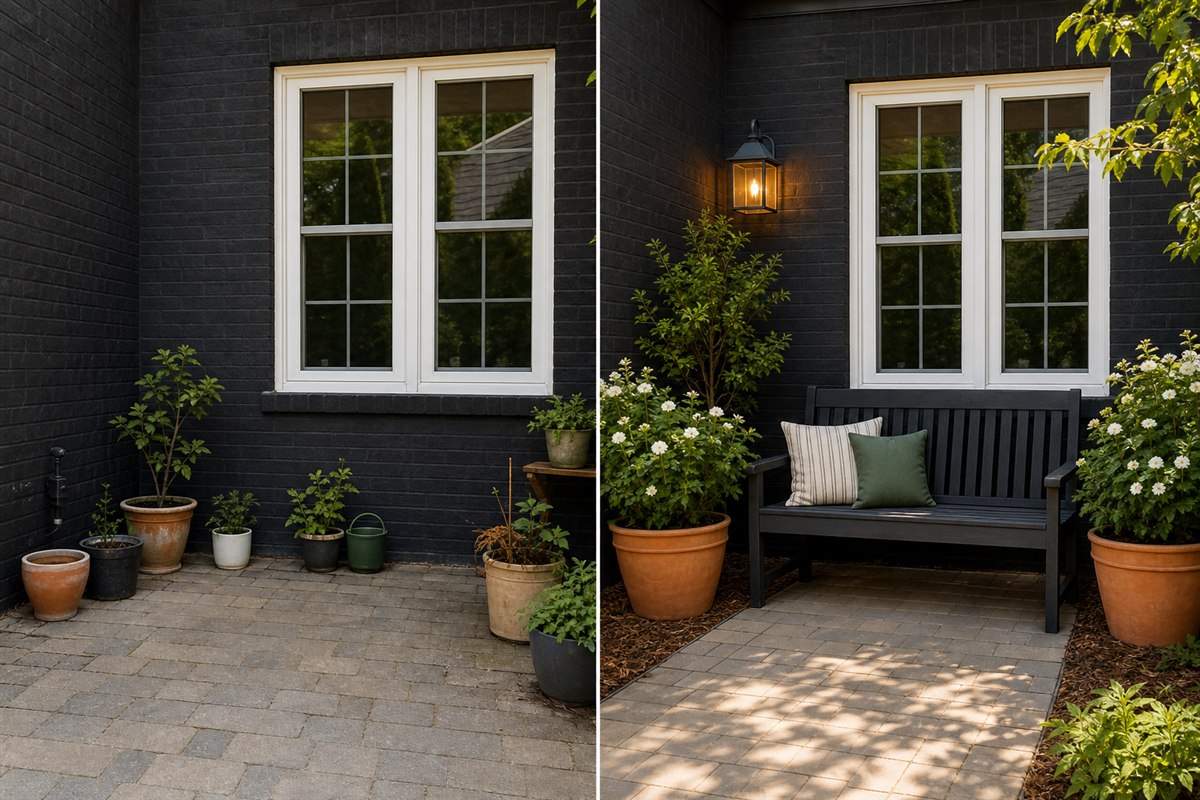
    Before and after small patio showing repeated planters, a repainted bench, mulch, and simple lighting
    Reference: cleaning, repetition, one useful seat, and one warm light can change the space without major construction.

    You can improve a garden without replacing everything. Clear the space, choose one area to change, reuse what still works, and spend only on items that solve a real problem.

    Follow this order so small purchases create one finished result instead of more clutter.

    Clear the space before shopping

    A gloved hand placing unused garden tools and an empty small pot into one storage basket beside a swept patio.

    Remove dead plants, broken pots, and anything you no longer use. Put tools together and clear the paths. Once the area is calm, you can see what is missing and what can be reused.

    Put it into practice

    • Remove broken or unused items.
    • Group tools in one place.
    • Clear pathways.
    • Keep useful containers that fit the plan.

    Choose one result

    One simple comfortable chair and one flowering pot forming a modest corner of an otherwise open patio.

    Pick one clear result: a comfortable chair beside flowers, a welcoming front step, a small herb corner, or a tidier balcony. Every purchase should help create that result.

    Choose what fits

    • Cozy seating corner.
    • Container garden cluster.
    • Budget herb garden.
    • Simple raised bed setup.
    • Front step planter refresh.

    Repeat colours and materials

    A hand painting an old planter muted sage green, beside two already painted pots in the same colour.

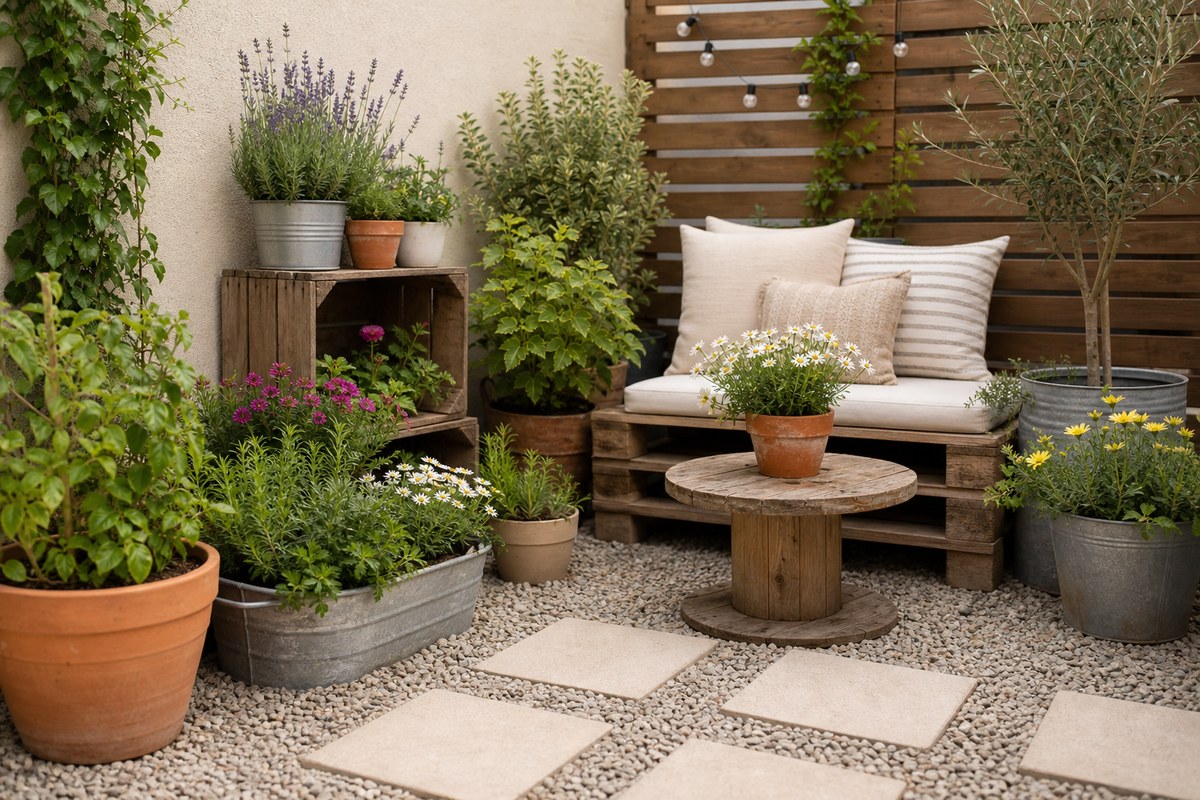
    Paint or group mismatched pots in one colour family. Repeat two or three plant types and one material, such as terracotta or natural wood. Repetition makes separate budget finds look like one plan.

    Put it into practice

    • Repeat one planter color.
    • Use two or three flower colors.
    • Choose similar materials.
    • Keep decor styles consistent.

    Spend first on changes you will use

    A practical long-spouted watering can beside a healthy new flowering plant and an existing garden chair.

    Spend on the problem you actually need to solve. A healthy plant can fill an empty corner, while a chair can make the garden usable. A better watering tool may save more time than decoration. Fresh mulch can tidy a bed and help suitable plants hold moisture.

    Put it into practice

    • Planters.
    • Starter plants.
    • Outdoor lights.
    • Add mulch or gravel only where it suits the plants and drainage.
    • Watering supplies.

    Avoid cheap purchases that create clutter

    A tape measure stretched across the floor beside a chair footprint marked in removable tape; a small pot stands outside the walking route.

    Measure before buying furniture or pots. Check the light before buying plants. Skip an item if it has no clear place, blocks a job, or needs more care than you can give it. Fewer useful pieces usually create a stronger makeover.

    Watch out for

    • Buying plants before planning light and space.
    • Buying tiny decor instead of useful structure.
    • Choosing furniture too large for the patio.
    • Ignoring care requirements.

    Budget Priority Selector

    Put the budget where it changes the view

    Use this selector before shopping. It keeps the makeover focused on visible, useful changes instead of small impulse buys.

    Budget filter
    1Remove clutter
    2Pick one focal zone
    3Repeat one upgrade
    Clean and edit A messy space that already has usable pieces
    • Remove broken decor before buying anything.
    • Trim edges and clear the main sightline.
    • Keep the strongest existing planter or chair.
    Repeat planters A space that feels random or mismatched
    • Buy fewer pieces in a repeated finish.
    • Use repetition near the entrance or seating.
    • Let plants add variety, not every container.
    One focal upgrade A patio that needs one visible improvement
    • Choose the upgrade seen from indoors.
    • Spend on one bigger improvement instead of many tiny ones.
    • Stop after the focal zone looks finished.

    Quick rule: A budget garden looks more expensive when the first dollars create order.

    Related garden guides

    What to do next

    Choose another beginner guide, or use the free Garden Starter Planner to turn what you learned into a first-week plan.

    FAQ

    What is the cheapest way to improve a garden?

    Clean, edit, group containers, repeat colors, and focus on one high-impact area before buying new decor.

    What should I buy first for a budget garden makeover?

    Buy practical structure first, such as planters, healthy plants, lighting, or watering supplies that support your plan.

    How can I make cheap garden decor look better?

    Use repetition, a limited color palette, and fewer pieces placed intentionally.

  • Best Garden Decor Ideas for a Cozy Backyard That Still Feels Practical

    Best Garden Decor Ideas for a Cozy Backyard That Still Feels Practical

    ← All garden guides4 min read
    In this guide
    1. Make one comfortable place to sit
    2. Use planters to shape the space
    3. Add a small amount of warm light
    4. Repeat two colours and one accent
    5. Keep everyday care easy
    6. Related Beginner Garden Guides
    7. Next Step
    8. FAQ
    9. Sources and verification

    Before you act

    Decor that earns its space

    1. Start with one view: Take a photo and mark where people walk, sit, and carry water.
    2. Add one useful feature: Try seating, a group of planters, or safe outdoor lighting before buying smaller decorations.
    3. Look again after a week: Keep what makes the space easier or nicer to use, and leave out the rest.
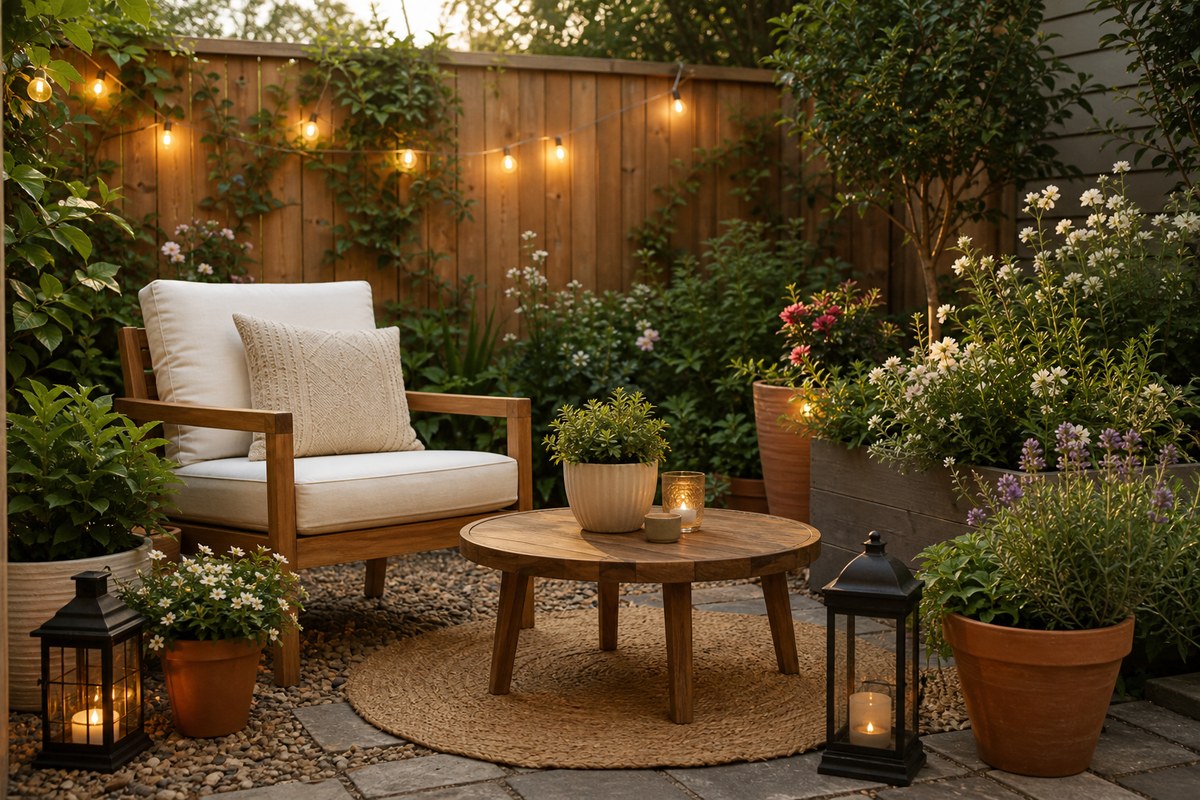
    Practical patio seating area framed by coordinated planters with a side table and warm lantern
    Reference: one comfortable pause point, two plant anchors, and an open care route feel calmer than scattered decoration.

    The best garden decor gives you a comfortable place to sit, keeps paths clear, and makes plants feel connected. You do not need to fill every corner.

    Begin with one seat, a few well-placed planters, and warm light. Add something only when it makes the space more useful or more inviting.

    Make one comfortable place to sit

    One small bistro chair and round table beside a single flowering planter, set clear of a garden walkway.

    A bench, bistro set, or simple chair can turn an unused corner into a place you want to visit. Face the seat toward the plants or the best view. Leave enough room to walk, water, and prune without moving furniture.

    Put it into practice

    • Use a small bistro set for patios.
    • Place a bench near flowers or herbs.
    • Keep walking paths open.
    • Add a side table only if it will be used.

    Use planters to shape the space

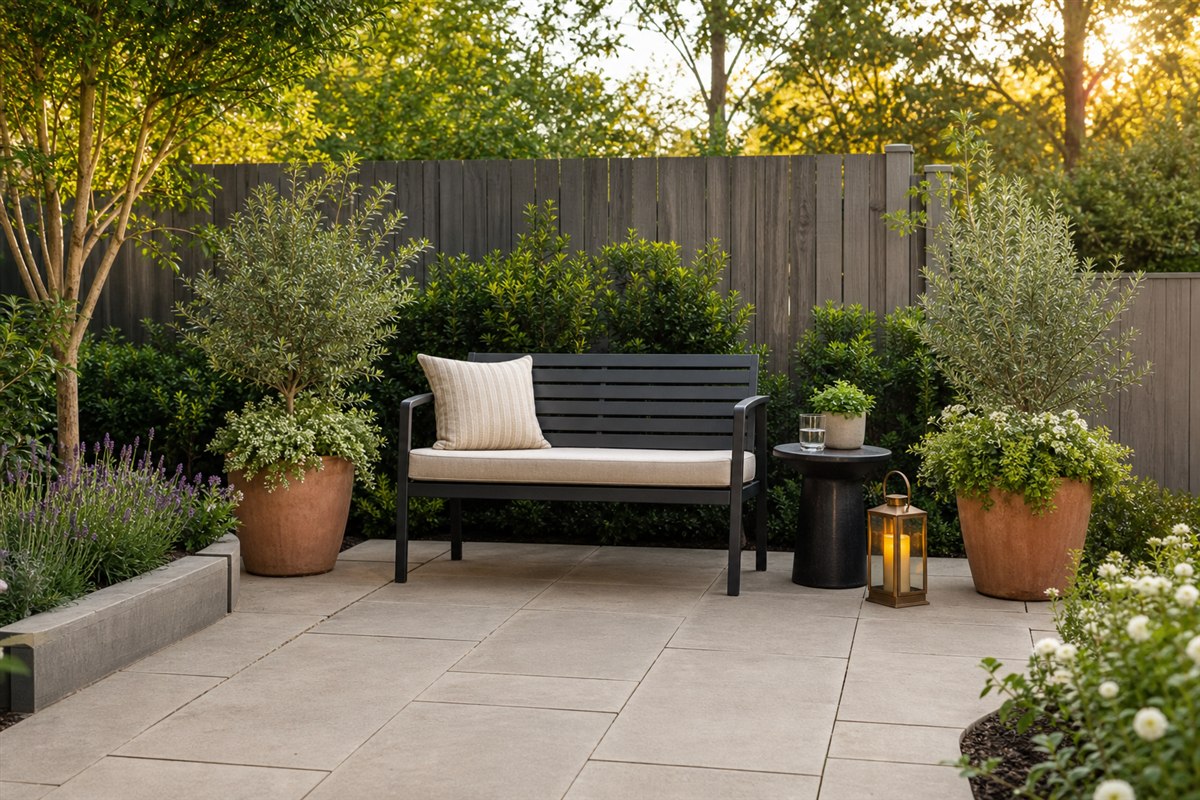
    Two substantial matching planters framing the edge of a patio entrance, leaving the middle completely open.

    A few repeated planters can frame a doorway, soften a fence, or mark the edge of a patio. Choose sizes that fit the mature plants and colours that work with the house. This gives you more value than many small ornaments.

    Put it into practice

    • Repeat one planter color.
    • Use taller planters for corners.
    • Group containers in odd numbers.
    • Match planter size to plant size.

    Add a small amount of warm light

    A short strand of warm outdoor lights above a simple seating corner at dusk, securely supported away from plant stems; restrained gentle glow, no dense foliage..

    Light the seating area or one path instead of the whole garden. Use outdoor-rated products, secure loose cords, and follow the maker’s installation instructions. Soft, warm light usually feels calmer than bright, cool light.

    Put it into practice

    • Frame a seating area with warm lights.
    • Use path lights sparingly.
    • Avoid harsh cool-toned lighting.
    • Follow product safety instructions.

    Repeat two colours and one accent

    A flat lay of a sage cushion, cream terracotta pot and one muted coral flower; only these three coordinated colour objects on a white background.

    Choose two main colours for planters, cushions, and larger pieces. Let flowers add one changing accent. Repeating the same colours makes inexpensive pieces feel connected.

    Put it into practice

    • Pick two main colors and one accent.
    • Repeat colors across planters and textiles.
    • Let flowers provide seasonal color.
    • Avoid buying decor in every trend color.

    Keep everyday care easy

    A garden stool and watering can stored at the edge of a patio, with clear access around two planters and no objects across the walking path.

    Before placing anything, carry a watering can through the space. Make sure you can reach every pot, sweep the floor, and open gates or doors. A storage bench or tool hook may improve the garden more than another ornament.

    Put it into practice

    • Keep tools easy to reach.
    • Choose weather-friendly materials.
    • Leave room around containers.
    • Avoid fragile items in high-traffic areas.

    Decor Purpose Board

    Choose decor by the job it does

    Garden decor works best when every piece has a purpose. Use this board before adding more objects to the backyard.

    Decor purpose path
    1Anchor
    2Frame
    3Light
    Anchor the seating Backyards without a clear place to pause
    • Start with one comfortable seat or bench.
    • Keep the front open so the area invites use.
    • Add a small table only if it will be used.
    Frame with planters Spaces that need softness or structure
    • Use planters to mark the edge of a zone.
    • Repeat two containers for a calmer look.
    • Let plants soften hard corners.
    Add evening warmth Gardens used after sunset
    • Light the path before adding decorative extras.
    • Use warm light near seating.
    • Keep cords and solar panels easy to manage.

    Quick rule: The space feels more modern when decor creates a clear experience instead of filling gaps.

    Related garden guides

    What to do next

    Choose another beginner guide, or use the free Garden Starter Planner to turn what you learned into a first-week plan.

    FAQ

    What garden decor should I buy first?

    Start with useful pieces like planters, seating, and lighting before buying purely decorative items.

    How do I make a backyard feel cozy on a budget?

    Create one seating area, repeat planter colors, add warm lighting, and keep the layout clean.

    Can garden decor make maintenance harder?

    Yes. Avoid decor that blocks watering, pathways, drainage, or access to plants.

  • DIY Garden Fountain Ideas for Small Backyards and Patios

    DIY Garden Fountain Ideas for Small Backyards and Patios

    ← All garden guides4 min read
    In this guide
    1. Decide what the fountain should do
    2. Choose a simple fountain type
    3. Test the position before buying
    4. Make cleaning and refilling easy
    5. Soften the edges with plants
    6. Related Beginner Garden Guides
    7. Next Step
    8. FAQ
    9. Sources and verification

    Before you act

    Water feature reality check

    1. Check the location: Measure the space and plan a safe way to power, refill, empty, and clean the fountain.
    2. Keep it manageable: Choose a fountain you can empty, clean, and protect in winter without special equipment.
    3. Run it for a week: Check the water level, splashing, noise, and cleaning needs before adding anything else.
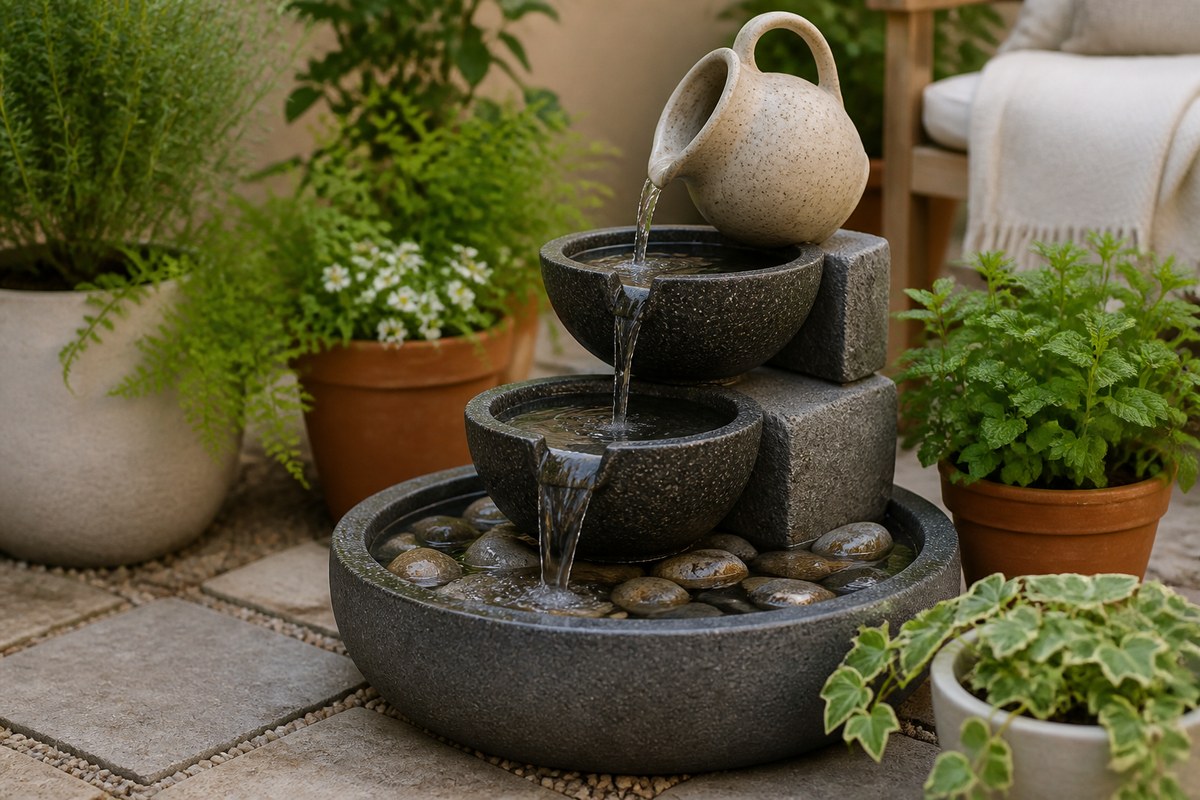
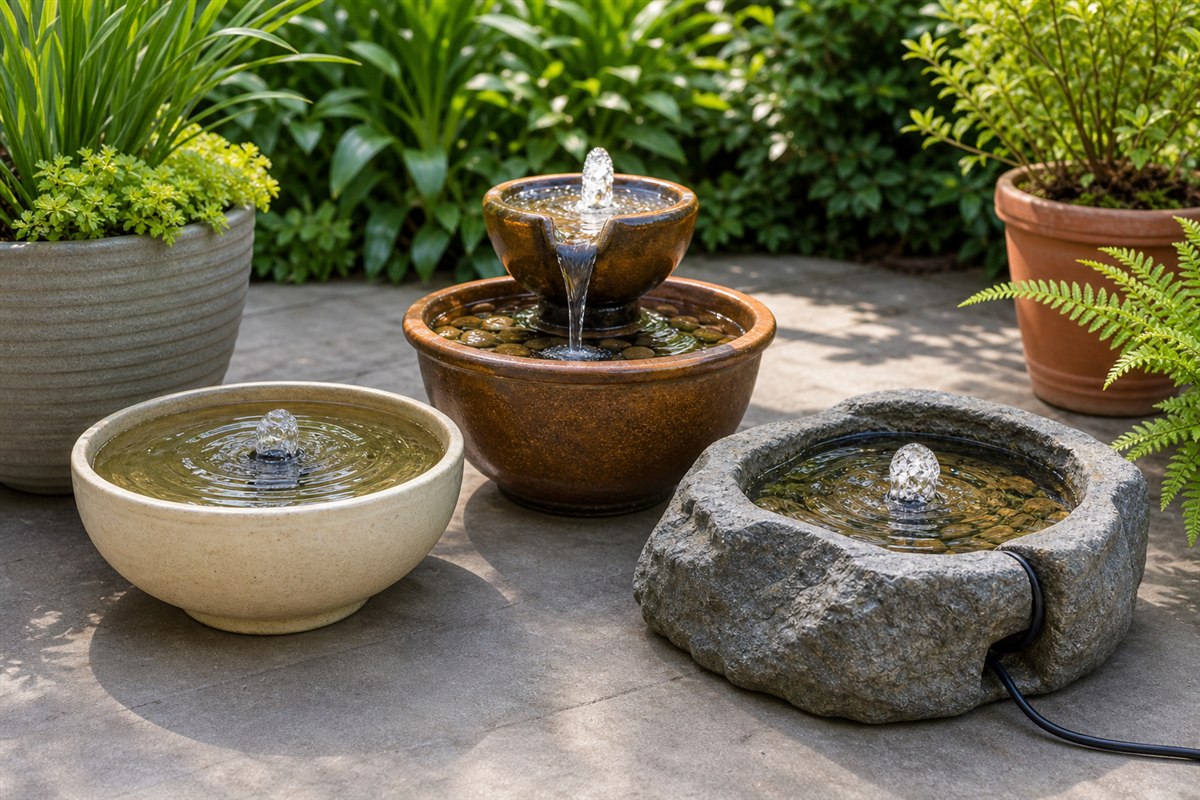
    Three small recirculating fountain types on stable patio surfaces with accessible maintenance space
    Reference: compare a bowl bubbler, a compact tier, and a stone-look basin by splash area, stability, pump access, and cleaning effort.

    A small fountain can bring gentle sound and movement to a patio or garden corner. It also needs a level base, a safe power source or enough sun, and easy access for cleaning and refilling.

    Choose the simplest fountain that suits your space and routine. A small bowl or self-contained unit is often easier for a first project than a permanent installation.

    Decide what the fountain should do

    A small tabletop water fountain with a gentle trickle near one outdoor chair.

    Do you want to hear water beside a chair, add movement to a patio, or soften an empty corner? Your answer decides the size and the best position. A tabletop fountain may be enough for a balcony; a wider container can suit a garden corner.

    Put it into practice

    • Create relaxing sound near seating.
    • Add a focal point to a patio.
    • Soften a plain wall or corner.
    • Bring movement into a container garden.

    Choose a simple fountain type

    A simple self-contained bowl fountain viewed close-up, water returning into its own basin, no external plumbing or elaborate decoration.

    Look for a self-contained fountain, a bowl with the right pump, or a small tabletop model. A DIY project can be as simple as assembling safe, compatible parts. Leave pump construction and electrical work to a qualified professional.

    Put it into practice

    • Self-contained patio fountain.
    • Container bowl fountain.
    • Tabletop fountain.
    • Solar fountain bowl.
    • Small wall-style fountain where safely installed.

    Test the position before buying

    A patio plan sketched on paper without text, showing a fountain circle away from the walking route and a chair beside it, with a pencil and tape measure.

    Mark the fountain’s width on the ground. Check that the base is level, the path stays open, and splashes will not make the surface slippery. Solar pumps need direct sun. Mains-powered fountains need an outdoor-rated setup installed and used according to local electrical rules and the maker’s instructions.

    Put it into practice

    • Place near seating but not in the walkway.
    • Check splash radius.
    • Keep access for cleaning.
    • Follow electrical and product safety instructions.

    Make cleaning and refilling easy

    A switched-off small fountain basin being wiped with a soft cloth, removable pump resting dry beside it and a disconnected plug fully away from water.

    Leave enough room to reach the pump and lift out debris. Decide how you will refill the water before placing a heavy container. Follow the product directions for cleaning, cold weather, and storage.

    Put it into practice

    • Plan how you will refill water.
    • Clean according to product directions.
    • Avoid setups that are hard to access.
    • Consider seasonal storage needs.

    Soften the edges with plants

    A low bowl fountain softly framed by two modest separate planters, one trailing over its own pot edge but not into the water; fountain basin fully accessible.

    Place one or two pots beside the fountain to connect it to the garden. Choose plants that suit the light and can tolerate any splash. Keep leaves clear of the pump and leave access for cleaning.

    Put it into practice

    • Frame with two matching planters.
    • Use trailing plants nearby.
    • Add stones or gravel for a clean base.
    • Keep the color palette calm.

    Fountain Placement Map

    Map the fountain before buying it

    A small fountain affects sound, splash, power, and cleaning access. Use this map to avoid choosing a beautiful piece that is annoying to maintain.

    Fountain placement path
    1Choose view
    2Check access
    3Plan splash
    View and sound A seating area or window-facing focal point
    • Place the fountain where you will actually see it.
    • Keep sound close enough to enjoy.
    • Frame it with plants after the position is set.
    Power and water Plug-in or refillable fountains
    • Check the cord route before buying.
    • Keep refill access open.
    • Use a level base so the water flows correctly.
    Splash and cleaning Tiny patios, decks, or narrow corners
    • Leave room to wipe and remove debris.
    • Avoid splash near cushions or wood edges.
    • Choose a size you can clean without moving furniture.

    Quick rule: The easiest fountain is the one with a beautiful view and boringly simple access.

    Related garden guides

    What to do next

    Choose another beginner guide, or use the free Garden Starter Planner to turn what you learned into a first-week plan.

    FAQ

    Are DIY garden fountains hard to maintain?

    They can be simple if the setup is small and accessible, but all fountains need some cleaning and refilling.

    Can I use a fountain on a balcony?

    Possibly, but check building rules, weight, drainage, splash, and safe power access first.

    What is the easiest water feature for beginners?

    A small self-contained fountain or tabletop fountain is usually easier than a permanent installation.