
In this guide
- 1. Start with the main sightline
- 2. Create a readable height rhythm
- 3. Style the window without blocking the light
- 4. Let useful pieces carry the decor
- 5. Check plant and household safety
- A simple weekend decor plan
- Continue with the matching guide
- Separate the styling decision from the plant-care decision
- Sources and verification
Before you act
Connect the spaces without compromising plant care
- Compare both sides of the door: Check light, moisture, temperature changes, drainage, and access for children or pets.
- Link the look, not the growing conditions: Repeat pot colours or leaf shapes while keeping each plant in the place it needs.
- Check the arrangement after a week: Move anything that blocks a door, makes watering difficult, or leaves a plant struggling.
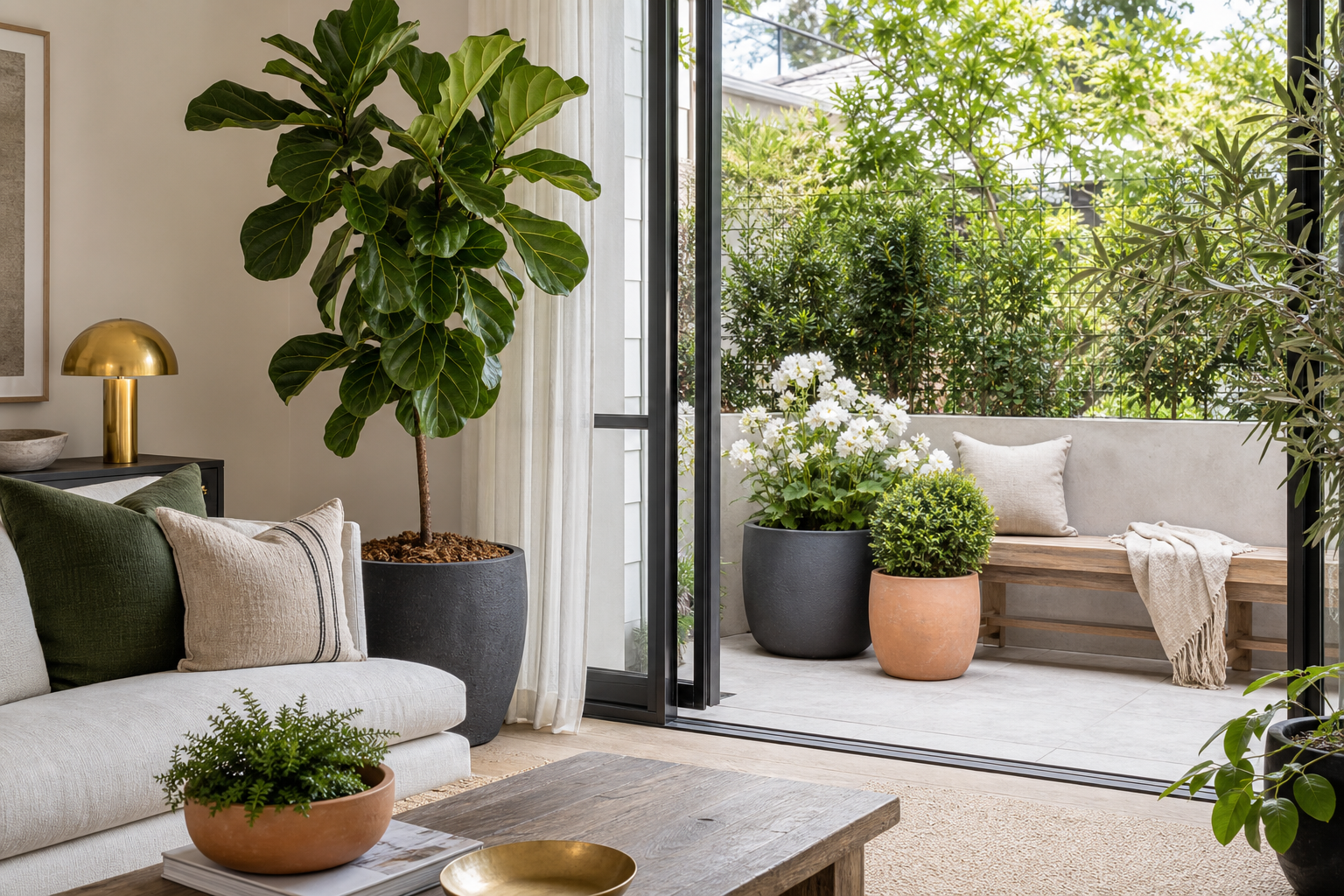
The easiest way to make home and garden decor feel connected is to repeat a few decisions across the window or doorway. You do not need matching furniture or dozens of plants. One planter family, one foliage shape, and one warm accent can make an indoor room and outdoor corner feel like one calm composition.
Repeat four details, not every object
Move from the room to the garden with a quiet sequence the eye can follow.
1. Start with the main sightline

Sit in the room you use most and look toward the garden, balcony, or window. The outdoor focal point should land inside that view. It might be a flowering container, a small tree, or a bench framed by plants. Move the focal point before adding smaller decor.
If there is no direct outdoor view, use the same idea at the entrance: a strong plant group near the threshold makes the transition feel deliberate.
2. Create a readable height rhythm
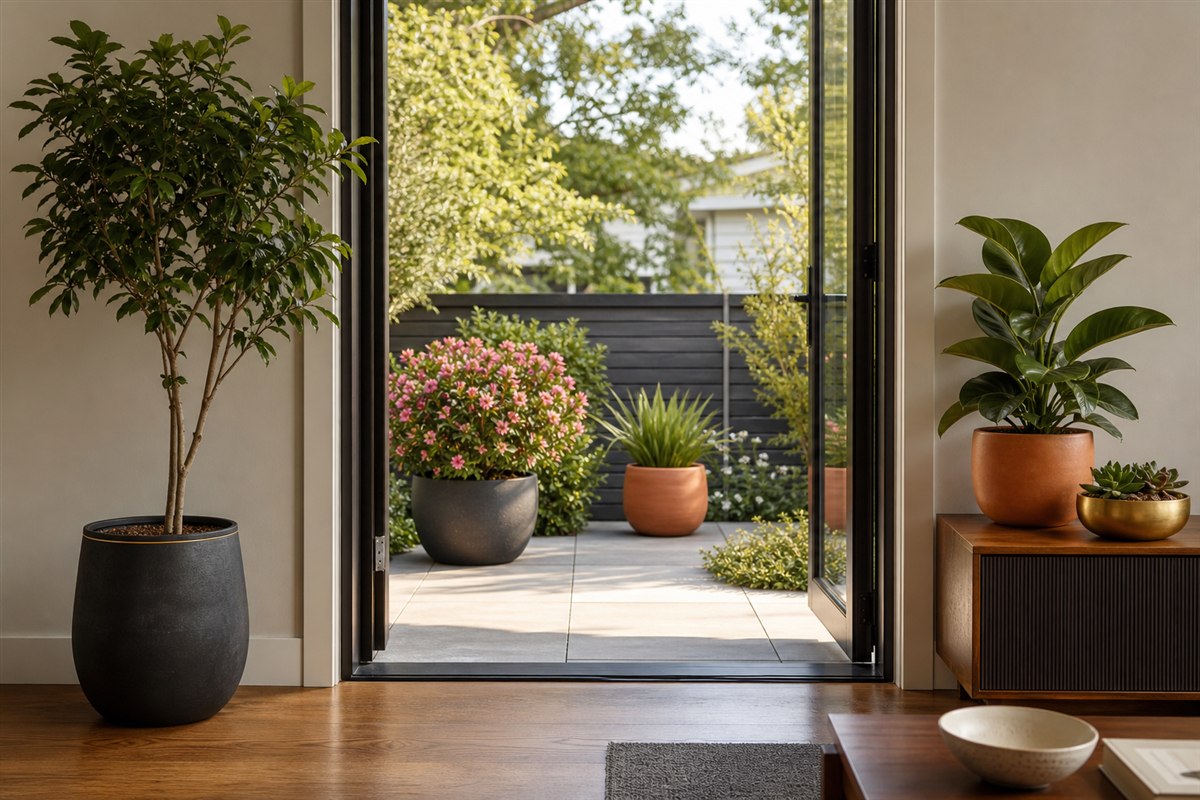
Use one tall element, one medium mass, and one low edge. Indoors, that might be a floor plant, a plant on a console, and a low bowl. Outdoors, it could be a compact shrub, a medium planter, and a trailing edge plant. Avoid placing every pot on the floor at the same height.
Keep visual height away from door swings, curtains, heaters, air vents, and narrow walking routes. Plants still need light and care access after the styling photograph is taken.
3. Style the window without blocking the light

A crowded windowsill can reduce useful light and make watering awkward. Use fewer, wider-spaced plants and leave the latch, blind, and glass accessible. Outdoors, position the strongest plant group slightly off-center so it frames the view rather than covering it.
4. Let useful pieces carry the decor

A good planter, watering can, storage bench, plant shelf, or weather-safe light can be both useful and beautiful. Choose one finish and repeat it. Before buying, ask what job the object performs and where it will live in winter.
For balconies and patios, confirm wet weight, wind exposure, railing safety, and runoff. For indoor plants, protect surfaces and floors while still allowing excess water to leave the root zone.
5. Check plant and household safety

- Check whether each plant is safe around the pets and children in your home.
- Confirm that outdoor nursery plants match your growing zone and are not being treated as indoor plants.
- Keep heavy pots on stable surfaces and away from railing edges.
- Use weather-rated lighting and keep cords away from water routes.
- Leave enough room to clean glass, sweep floors, and inspect leaves.
A simple weekend decor plan

- Remove unrelated objects from the main sightline.
- Choose one planter material and one accent color already present in the room.
- Place one tall anchor, then one medium group, then one low detail.
- Live with the arrangement for two days and test watering and walking.
- Add only the missing useful piece; do not refill every empty corner.
Transition workbook
Separate the styling decision from the plant-care decision
Indoor and outdoor areas can look connected without asking one plant to tolerate two incompatible environments. Repeat a planter color, leaf shape, material, or height rhythm first. Choose the actual plants only after comparing conditions on both sides of the door.
| Condition | Indoor check | Outdoor check | Decision |
|---|---|---|---|
| Light | Note direct sun on the leaves, not general room brightness. | Record midday heat and reflected light from walls or glass. | Use different plants if the exposures do not match. |
| Water | Protect floors and confirm drainage can be emptied safely. | Check rain exposure, runoff, and how quickly containers dry. | Keep similar-looking pots but adjust the growing mix and care routine. |
| Temperature | Notice heating, cooling, and drafts near the doorway. | Consider wind and ordinary seasonal swings. | Move plants gradually only when their requirements allow it. |
| Safety | Check pets, children, and unstable stands. | Check railing edges, wind, and trip routes. | Change placement before adding decorative layers. |
A calmer styling sequence: begin with one repeated material, add a single height echo, then use foliage as the final connector. Review the view from indoors and outdoors separately. If an object blocks watering, catches a door, or creates an unstable perch, it does not belong in the finished arrangement even when it matches the palette.