
In this guide
Before you act
Plan vertical weight and maintenance
- Record: Identify the fixing surface, mature plant weight, wind exposure, drainage path, and safe reach height.
- Decide: Use one supported vertical zone and keep routine care within comfortable reach.
- Review: Recheck the result after one ordinary week before expanding the project.
Plan the frame or stand before choosing plants. A safe setup carries the weight of wet growing mix and mature plants, gives roots enough room, drains without damaging the surface below, and stays within easy reach. Then choose plants that suit the container depth, light, and wind.
Choose a structure you can safely use
Before you count pots, check that the roots will have room and that you can reach every plant.
1. Check the support with wet pots

Wet growing mix is much heavier than dry mix. Check the wall or railing material, use the fixings named by the manufacturer, and add up the full wet weight before hanging anything. Keep every planter away from places where it could fall on a person, nearby property, or a public path. If you rent, choose a freestanding shelf or tower unless you have written permission to drill.
Follow the product instructions for any space needed behind the planter. Keep every drainage hole open, and protect the wall and floor if runoff could leave marks or cause damage.
2. Match the plant to the container depth

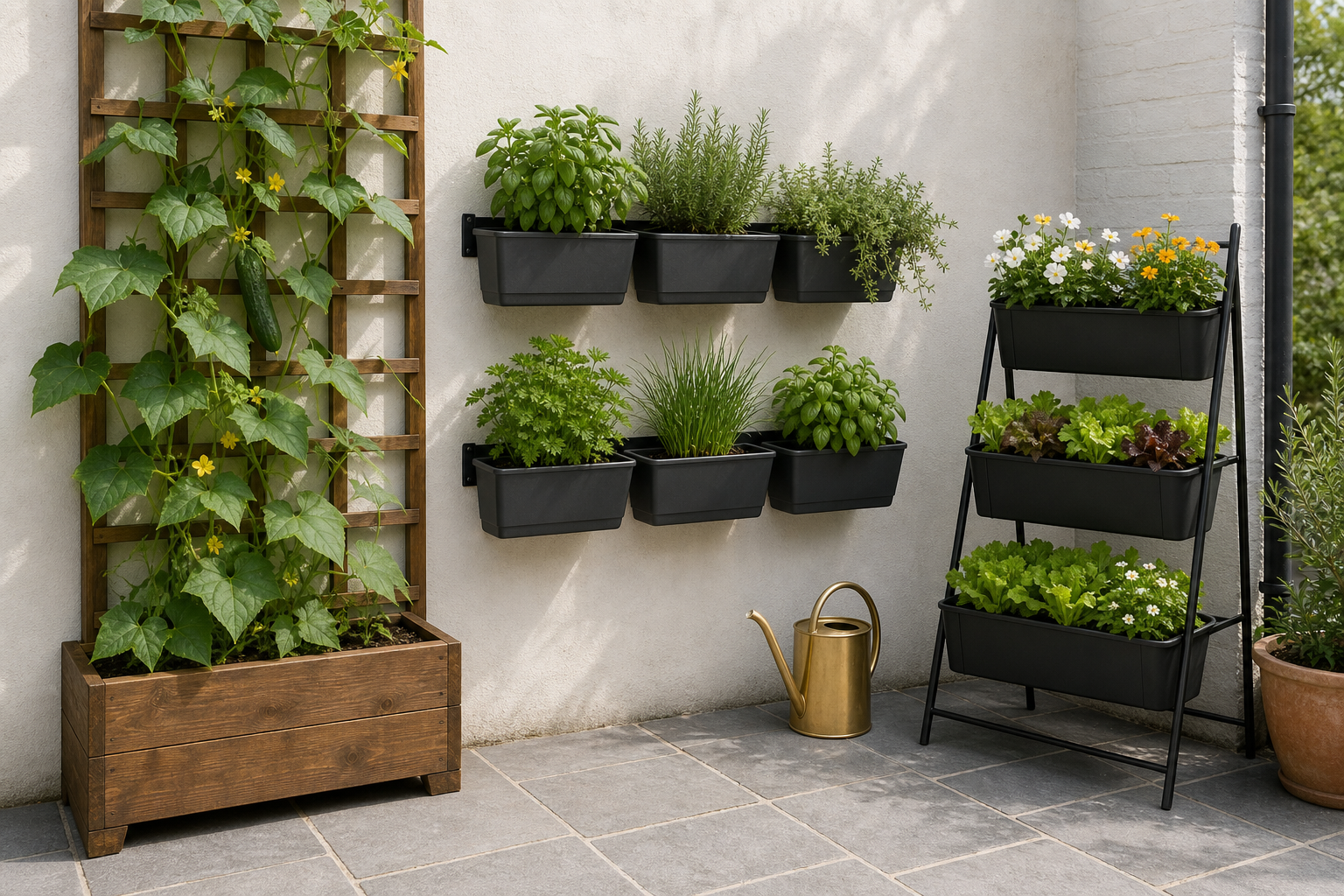
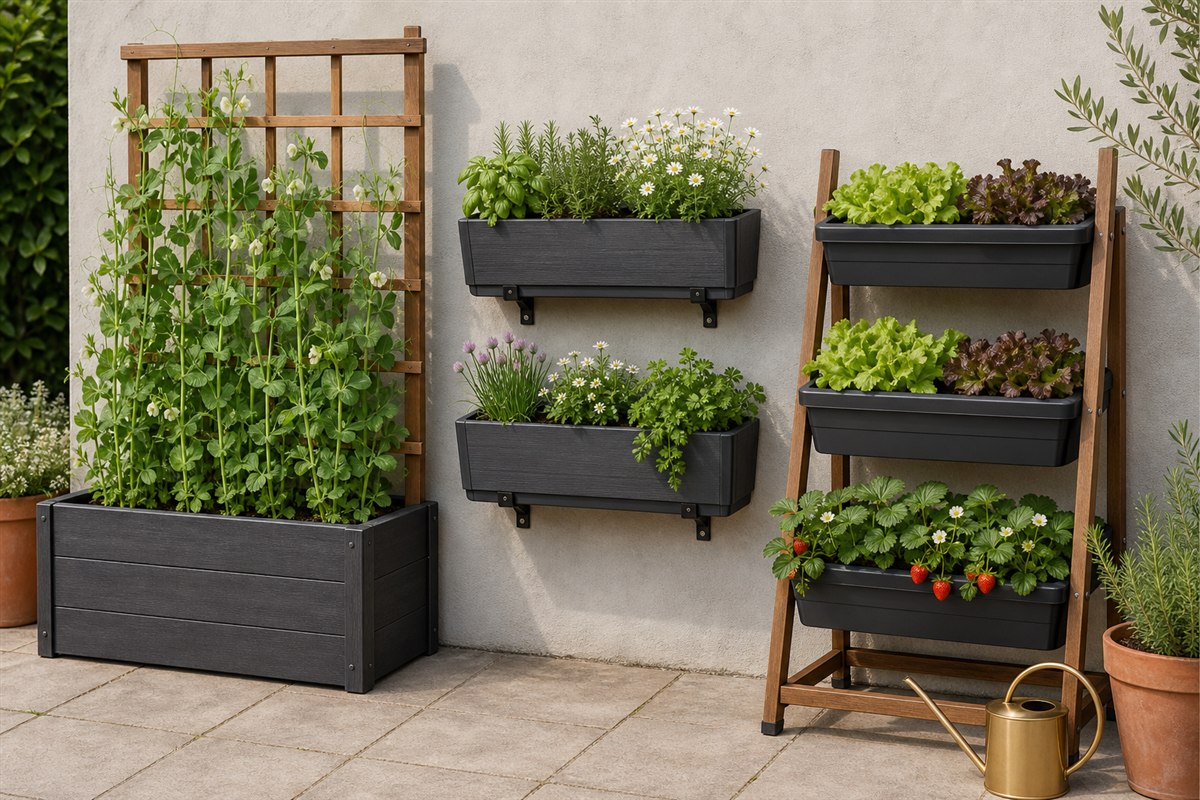
Small wall pockets dry quickly and leave little room for roots, so keep them for compact plants. Troughs hold more growing mix and keep moisture steadier for many herbs and salad crops. Put climbing crops in a deep pot at floor level and give them a firm support above.
- Shallow pockets: baby lettuce, other baby leaves, and compact seasonal flowers.
- Medium-depth troughs: parsley, chives, thyme, compact basil, and strawberries when the light and local climate suit them.
- Deep pots at floor level: container varieties of climbing beans, peas, cucumbers, and other vigorous vines.
Read the plant label before buying. Check its full height and spread, whether it is safe around children and pets, the right season, and local growing advice. Some climbers will outgrow even a deep container.
3. Plan how you will water every level

Wind and heat often dry the top pots first. Runoff can leave the lower pots too wet. Feel the growing mix at each level before watering instead of treating the whole wall as one large pot. A narrow-spout watering can or simple drip line can help, but check often for dry pots, leaks, and blocked drainage.
Leave enough space under the lowest pot to clean the floor. Keep the highest pot within comfortable reach from the ground. If you need a stool every time you water, lower the setup.
4. Pick one simple layout
Herbs near the kitchen
Place two or three roomy troughs near the kitchen. Group herbs that need similar light and watering, and keep the ones you pick most at the easiest height. Grow mint in its own pot so its roots do not take over the others.
Salad leaves on a freestanding tier
Fill a freestanding tier with baby leaves and compact herbs. Place the tallest level where it will not shade the lower ones. Sow a little at a time so the leaves do not all become ready at once.
One climber with flowers below
Place one deep pot at floor level and secure a trellis above it. Add one low container of flowers beside the pot. You get height without covering the whole wall with small pockets.
5. Check the garden from top to bottom each week

- Feel the growing mix in every pot before you water.
- Check hooks, screws, ties, shelves, and the base for any movement.
- Guide long stems back toward the support before they block the path.
- Lift out trapped leaves and make sure water can still drain.
- Look for water marks, damp patches, or overflow on the wall and floor.
Before you build
Check the support, runoff, wind, and reach
A trellis rising from a pot puts its weight on the ground. Wall planters put the full load on the wall or railing. Before fixing anything in place, check the product instructions, the surface, the wet weight, and any rules for your home or rental. Never guess which fixings or load limit are safe.
| What to check | Why it matters | Change the plan when |
|---|---|---|
| Support and fixings | Check how it attaches and whether the wall or railing can carry the full wet load. | The fixing is improvised, or you are unsure about the surface. |
| Where water goes | Watch where runoff lands and which pots dry first. | Water could stain a surface, damage property, or fall on people below. |
| Wind | See whether the frame moves or the leaves and pots catch strong gusts. | The frame shifts, rattles, or cannot be secured as instructed. |
| Can you reach it? | Make sure you can water, prune, inspect, and harvest from the ground. | Routine care needs climbing or unsafe stretching. |
Start with the easiest safe option. A freestanding trellis works when you cannot fix supports to a wall. A stable shelf or plant stand is enough when the pots only need more height. Choose fixed wall pockets only after checking the support and drainage. Set up one section, water it fully, and watch it for a week before adding more.