
In this guide
Before you act
Test the layout at full size
- Mark the layout on the ground: Use tape, cardboard, or empty pots to show paths, doors, chairs, and containers.
- Test it before buying: Walk the route, open every door, sit down, and pretend to water the farthest pot.
- Leave the outline in place for a week: Notice where daily use feels tight or awkward.
A small garden feels larger when every area has one job. Before buying plants or furniture, decide where you will walk, where you will pause, and where the main planting will live. That simple order prevents the most common tiny-space problem: useful things competing for the same square meter.
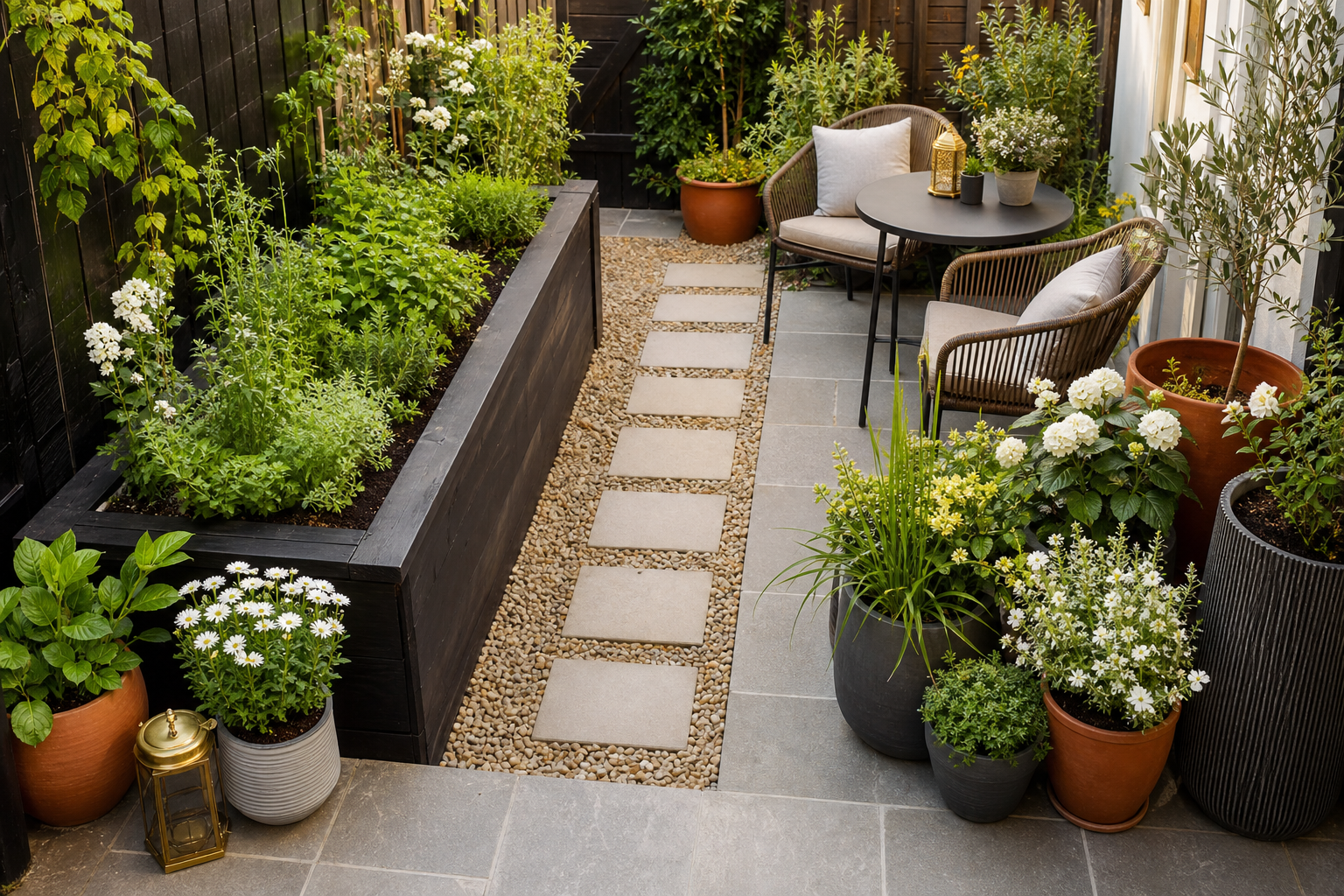
Give the floor three jobs
The proportions can change, but the access route should never disappear.
1. Mark what cannot move

Stand at the entrance and note doors, drains, taps, steps, bins, air vents, utility boxes, and the route used to carry groceries or a watering can. Watch the space at morning, midday, and late afternoon. A bright wall is not proof that the floor receives enough direct sun for sun-loving vegetables.
Measure the narrowest part of the walking route as well as the garden’s total width. Keep drains and doors easy to reach. In a rental or shared building, confirm what may be fixed to walls and where runoff must go.
2. Choose one main garden job

Pick the result that matters most for the next season: herbs near the kitchen, a calm sitting corner, flowers visible from indoors, or a small edible bed. A compact space can support several pleasures, but one priority should decide where the best light and easiest access go.
- Food first: reserve the brightest reachable area for crops and keep water nearby.
- Rest first: place the seat where it has shade or comfortable evening light, then frame it with plants.
- View first: compose the strongest group where it can be seen from the main window.
3. Build depth with three plant layers

Use the back or boundary for height, the middle for the main plant mass, and the front edge for low plants that do not spill into the route. Height can come from a trellis, shrub, or tall container, but confirm mature spread so it does not swallow the small garden later.
Repeat one container color or material two or three times. Repetition makes mixed plants feel intentional and is usually more effective than adding many decorative objects.
4. Adapt one of these starter layouts
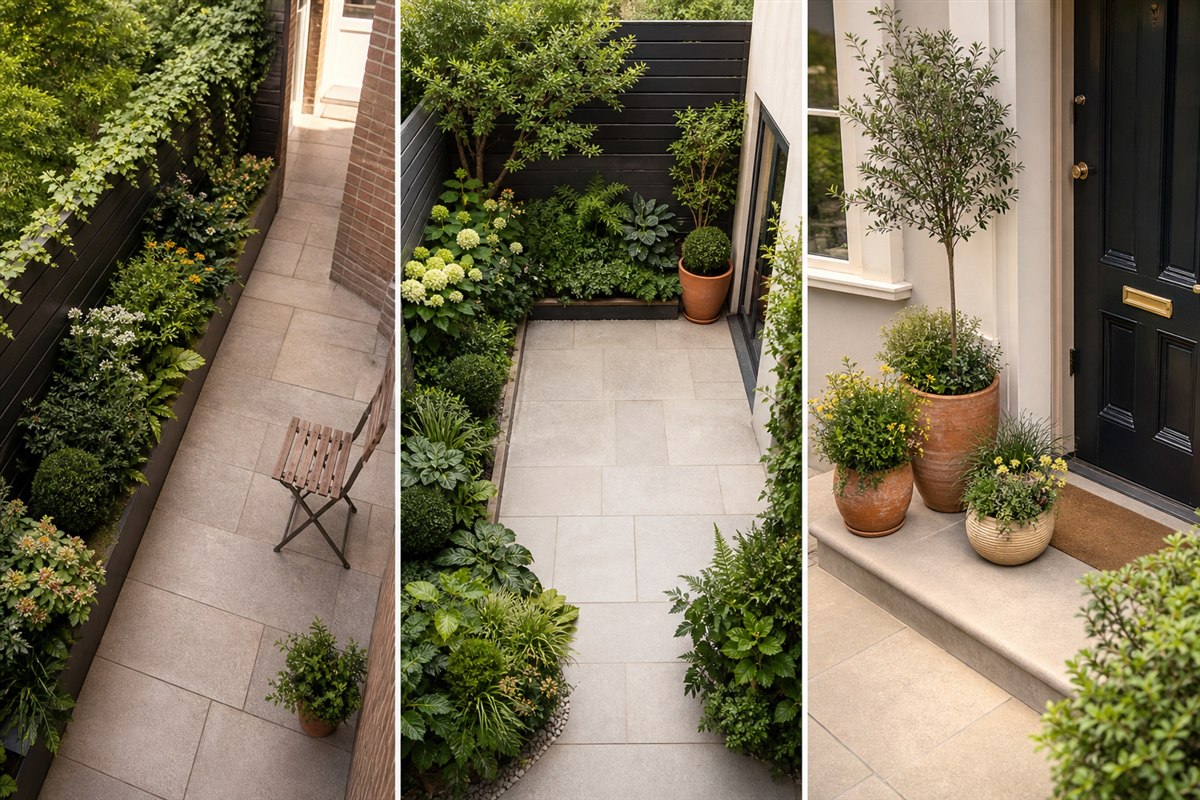
Narrow patio
Keep one long edge planted and the opposite edge mostly open. Put the tallest element at the far end so the eye travels through the space. Use a folding chair instead of permanent deep seating when the route is tight.
Square tiny yard
Use an L-shaped planting edge with a small open center. One corner can hold a compact bench or focal pot. Avoid placing unrelated pots around all four sides; the broken outline makes the garden feel busier.
Doorstep or compact terrace
Group two or three containers beside the door while keeping the door swing and landing completely clear. Choose plants with similar watering needs and use a tray or saucer only where it will not leave roots standing in water.
5. Test the plan before spending

- Carry a full watering can through the planned route.
- Open every door and gate without moving a pot or chair.
- Reach the back planting area without stepping into soil.
- Confirm filled container weight, drainage, and surface protection.
- Leave enough room for each plant at mature size, not shop size.
Layout workbook
Turn measurements into one testable plan
A useful layout records more than the outside dimensions. Sketch the door swing, the route from the water source, the area where sunlight actually reaches leaves, and the mature spread of the largest plant. Then mark furniture and containers at their real footprint. This exposes conflicts before anything becomes heavy or expensive.
| Layer to mark | Question to answer | What changes if it fails? |
|---|---|---|
| Access | Can you enter, turn, sit, and reach every plant? | Remove or relocate the least useful object. |
| Path for watering | Can water reach the farthest container without crossing seating? | Regroup thirsty plants or simplify the route. |
| Light pattern | Which areas receive direct light, and for how long? | Move the plant group rather than forcing an unsuitable plant list. |
| Mature size | Will leaves, stems, or supports block the path later? | Use fewer plants or choose one that stays smaller. |
Test before buying: outline the largest pieces with tape, cardboard, or empty pots. Walk the route with a full watering can, open every door, and sit in the planned chair. Photograph the mock layout from the main viewing point. If the space still feels clear and every care task is reachable, the plan is ready for a small first purchase.