
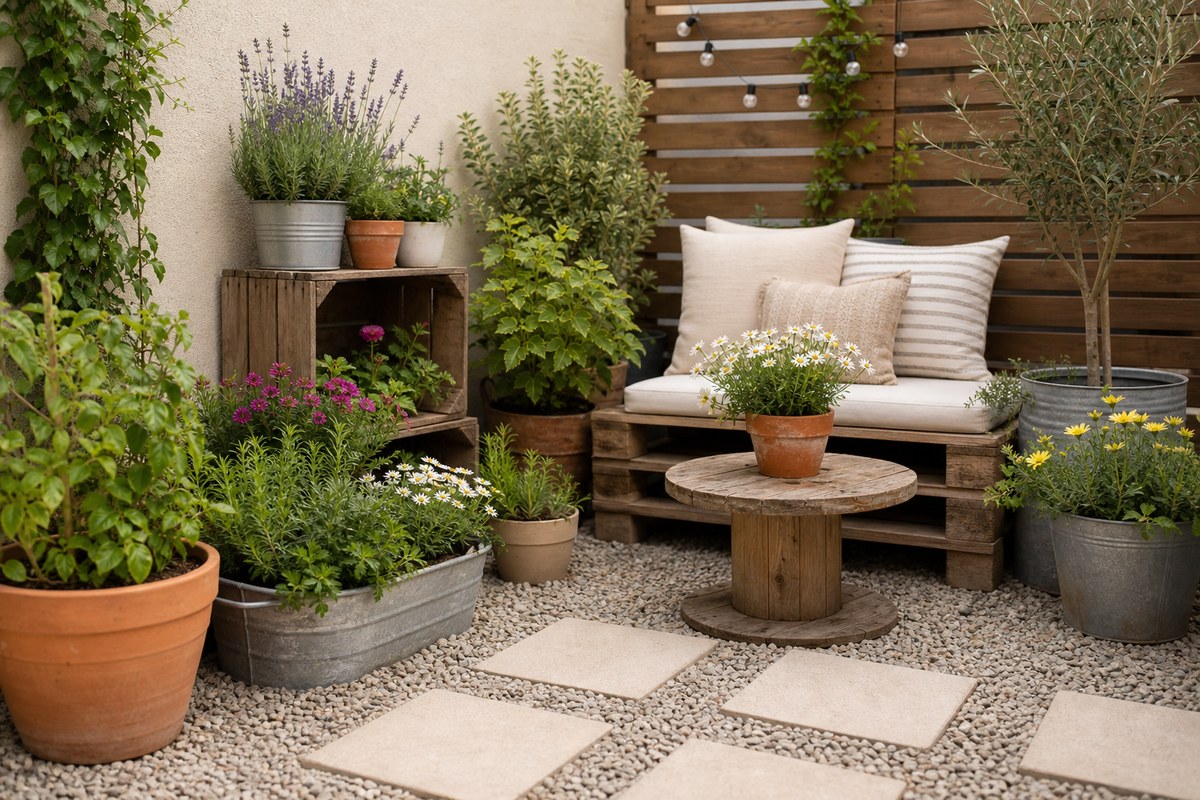
In this guide
Before you act
A makeover with a stopping point
- Choose one problem: Set your full budget, then name the one view or practical issue you most want to improve.
- Spend in a useful order: Clear clutter, fix access or soil problems, then make one visible improvement.
- Live with the change for a week: Add something else only if the space still needs it.
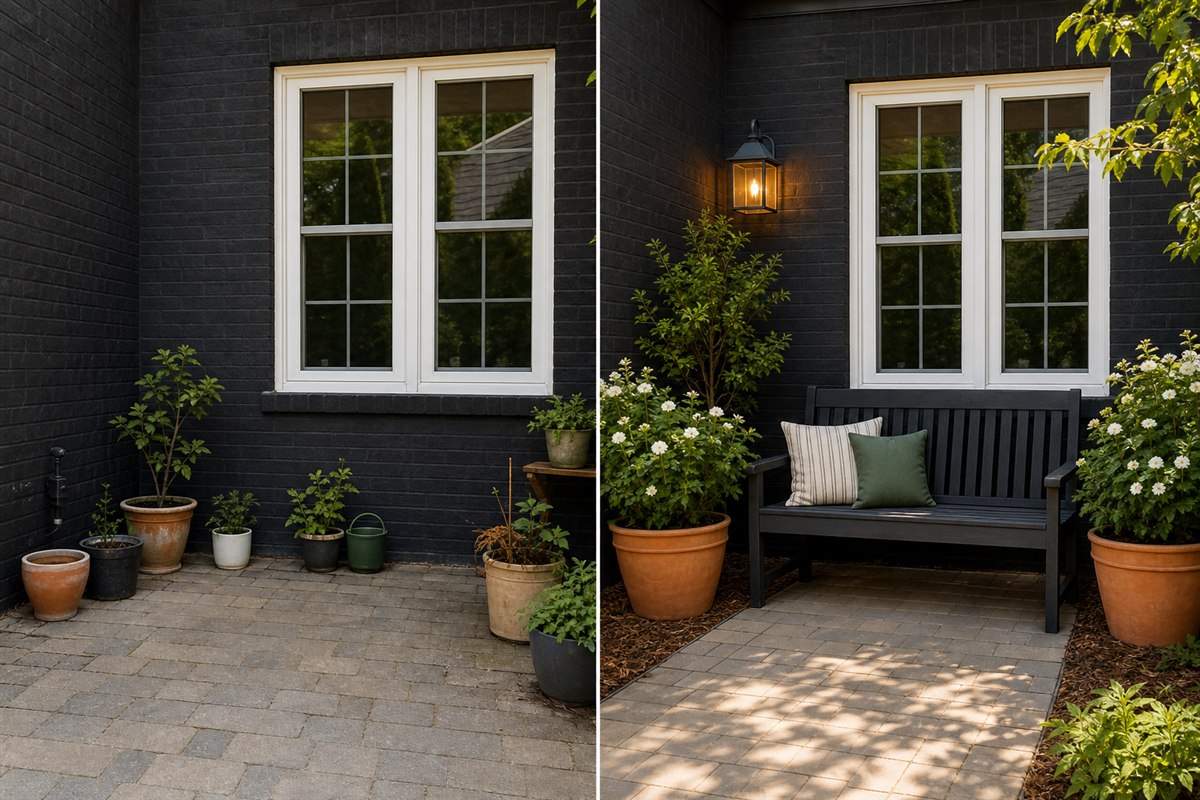
You can improve a garden without replacing everything. Clear the space, choose one area to change, reuse what still works, and spend only on items that solve a real problem.
Follow this order so small purchases create one finished result instead of more clutter.
Clear the space before shopping

Remove dead plants, broken pots, and anything you no longer use. Put tools together and clear the paths. Once the area is calm, you can see what is missing and what can be reused.
Put it into practice
- Remove broken or unused items.
- Group tools in one place.
- Clear pathways.
- Keep useful containers that fit the plan.
Choose one result

Pick one clear result: a comfortable chair beside flowers, a welcoming front step, a small herb corner, or a tidier balcony. Every purchase should help create that result.
Choose what fits
- Cozy seating corner.
- Container garden cluster.
- Budget herb garden.
- Simple raised bed setup.
- Front step planter refresh.
Repeat colours and materials

Paint or group mismatched pots in one colour family. Repeat two or three plant types and one material, such as terracotta or natural wood. Repetition makes separate budget finds look like one plan.
Put it into practice
- Repeat one planter color.
- Use two or three flower colors.
- Choose similar materials.
- Keep decor styles consistent.
Spend first on changes you will use

Spend on the problem you actually need to solve. A healthy plant can fill an empty corner, while a chair can make the garden usable. A better watering tool may save more time than decoration. Fresh mulch can tidy a bed and help suitable plants hold moisture.
Put it into practice
- Planters.
- Starter plants.
- Outdoor lights.
- Add mulch or gravel only where it suits the plants and drainage.
- Watering supplies.
Avoid cheap purchases that create clutter

Measure before buying furniture or pots. Check the light before buying plants. Skip an item if it has no clear place, blocks a job, or needs more care than you can give it. Fewer useful pieces usually create a stronger makeover.
Watch out for
- Buying plants before planning light and space.
- Buying tiny decor instead of useful structure.
- Choosing furniture too large for the patio.
- Ignoring care requirements.
Budget Priority Selector
Put the budget where it changes the view
Use this selector before shopping. It keeps the makeover focused on visible, useful changes instead of small impulse buys.
Clean and edit A messy space that already has usable pieces
- Remove broken decor before buying anything.
- Trim edges and clear the main sightline.
- Keep the strongest existing planter or chair.
Repeat planters A space that feels random or mismatched
- Buy fewer pieces in a repeated finish.
- Use repetition near the entrance or seating.
- Let plants add variety, not every container.
One focal upgrade A patio that needs one visible improvement
- Choose the upgrade seen from indoors.
- Spend on one bigger improvement instead of many tiny ones.
- Stop after the focal zone looks finished.
Quick rule: A budget garden looks more expensive when the first dollars create order.
Related garden guides
What to do next
Choose another beginner guide, or use the free Garden Starter Planner to turn what you learned into a first-week plan.
FAQ
What is the cheapest way to improve a garden?
Clean, edit, group containers, repeat colors, and focus on one high-impact area before buying new decor.
What should I buy first for a budget garden makeover?
Buy practical structure first, such as planters, healthy plants, lighting, or watering supplies that support your plan.
How can I make cheap garden decor look better?
Use repetition, a limited color palette, and fewer pieces placed intentionally.